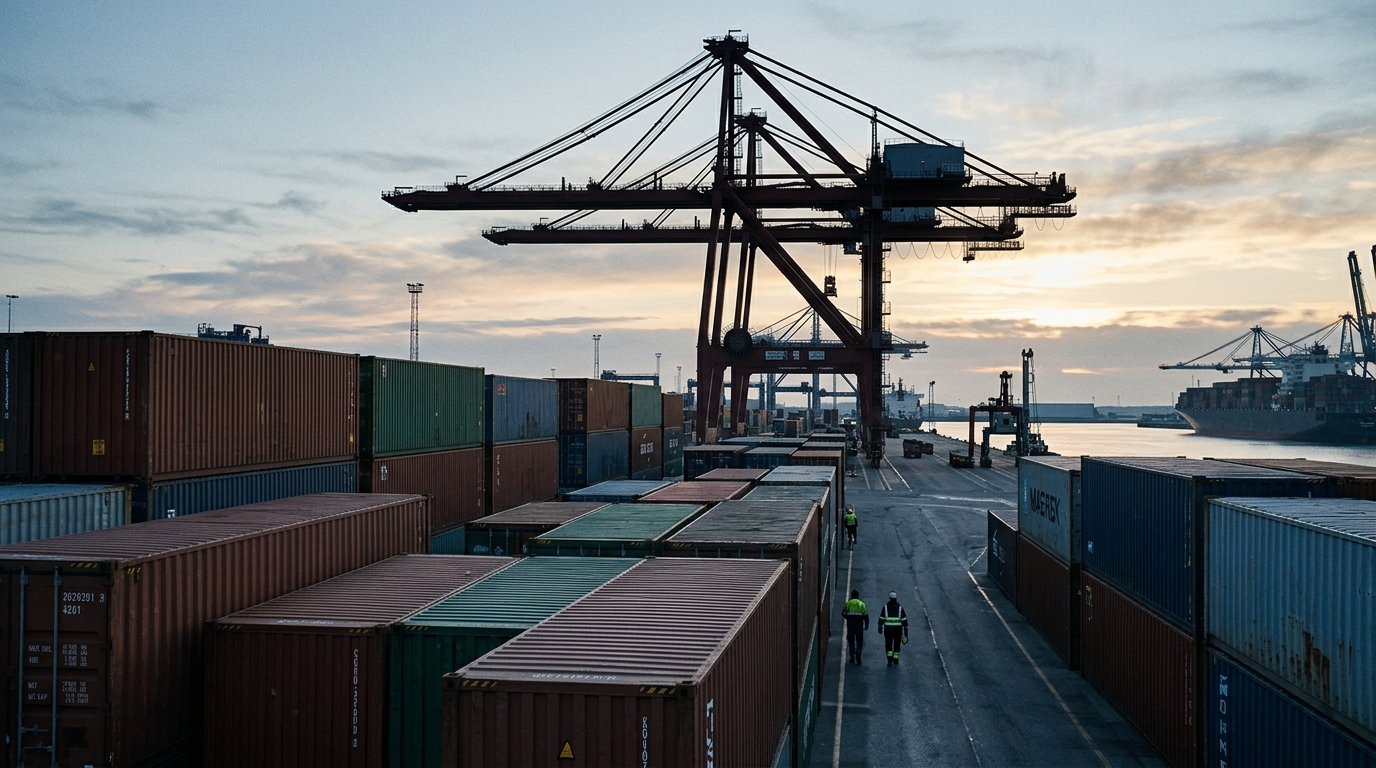
The White House Office of Trade and Manufacturing Policy published the report "The Great Transshipment Scam" on August 13. According to The Hill, the document places Mexico among more than 40 countries at elevated risk of transshipment of Chinese goods, and estimates annual fiscal losses for the United States of between $19 billion and $26 billion.
The report argues that, following the Section 301 tariffs of 2018, Chinese exporters built a transshipment network that reroutes goods through countries like Mexico, where they undergo minimal processing and relabeling to declare a false origin. By presenting products as Mexican, operators gain access to the preferential tariff treatment under the USMCA, as Aristegui Noticias detailed. The warning comes as Mexico and the United States prepare the next round of the agreement's review, scheduled for September; Economy Secretary Marcelo Ebrard confirmed the agenda's key items, including rules of origin and economic security, as reported by El Financiero.
The report classifies Mexico under "Level 1" of "Diversified Scale Leaders," a category reserved for countries where transshipment is embedded in high-volume legitimate trade flows. The Commerce Department's Office of Economic and Trade Analysis calculated that approximately $67 billion in goods were transshipped from China via Mexico, India, and Vietnam in 2025, representing roughly $28 billion in tariffs uncollected by the U.S. Treasury. The document identifies the Guanajuato-Querétaro industrial corridor as an operations hub for electric motors, generators, and transformers under HS tariff codes 8501-8504. In response, the U.S. administration deployed "Frontera Detectiva," an artificial intelligence system designed to verify cargo routes and production capacity.
The next round of USMCA review is scheduled for September, and Washington's allegations are now a declared item on that bilateral agenda. The report warns that the era of undetectable illegal transshipment is over and that intermediary countries risk losing access to the U.S. market.
This article was drafted with artificial intelligence assistance based on verified sources and reviewed by a human editor before publication.