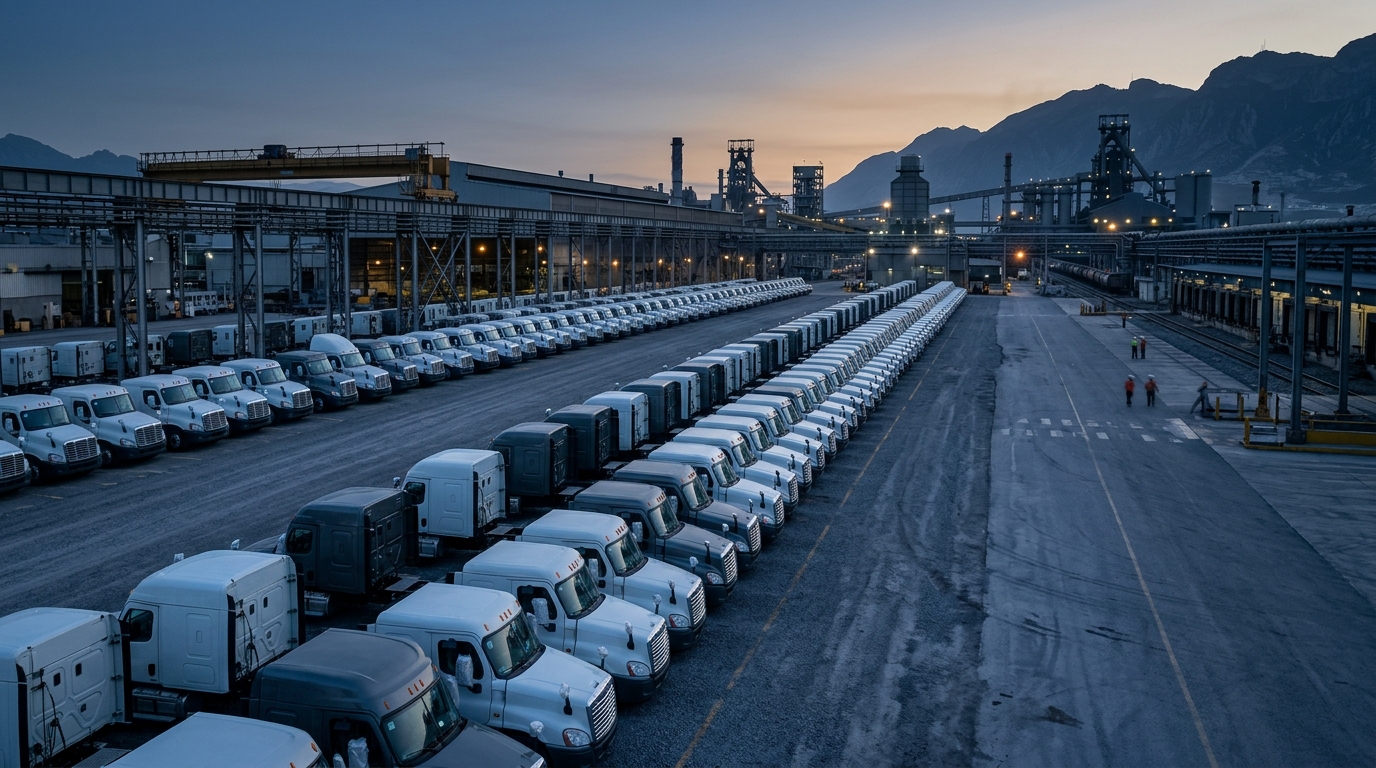
Volvo Group now assembles heavy trucks at its plant in Ciénega de Flores, Nuevo León, and ships finished units to Canada, while it defines the United States as the main destination for production of the Volvo brand. In statements published on October 9, 2026, the company said that the first stage of the factory is already operating.
The plant was designed to complement the capacity that Volvo and Mack already operate in the United States and to serve North American demand for tractor-trailers from Mexico. The export launch occurred on August 19, 2026: a first shipment of four Volvo VNR 300 tractor-trailers left Ciénega de Flores for Ottawa and Kingston, Canada, through the Colombia-Laredo customs, according to Milenio. The trade environment is different from the one that existed when Volvo defined the project: tariffs and protectionist measures led other companies to rethink their manufacturing and export strategies. For Nuevo León, the data confirms that industrial investment associated with nearshoring is beginning to translate into operational export flows to North America, not only investment announcements.
Rafael Kisel, president of Volvo Group México, explained the production split to Expansión: "Volvo production will be 100% exported to the United States, basically for the West Coast and the South, while MACK production will be for both the United States and Mexico and some countries in South America." The company has not revealed how many models it will assemble in Nuevo León or the plant's expected volume. The government of Nuevo León specified that the initial units, of up to 455 horsepower and automated transmission, traveled with the Mexican company MEXLOG as logistics operator. At the same time, the State of Mexico plant already ships models to Europe, and Mexican design teams collaborate with other areas of the group globally.
The next step for the company is to scale manufacturing in Nuevo León to the volume planned to supply export markets. Kisel noted that the current tariff scenario is not the most favorable for exporting and that the company trusts that trade conditions will normalize to sustain sales in the United States.
This article was written with artificial intelligence assistance based on verified sources and reviewed by a human editor before publication.