The revocation of tourist visas for Mexican border residents is already producing observable effects in Ciudad Juárez: a private school recorded 15 new enrollments from students who had been attending school in El Paso in the last week, according to El Universal on August 27, 2026.
The measure involves the revocation of visas from individuals who gave birth in the United States, a practice U.S. authorities call "birth tourism," and from those who used the document for medical care or plasma donation. Immigration attorney Arturo Vázquez reported the cancellation of visas for 94 Ciudad Juárez residents over the weekend, according to Milenio. The effects extend to everyday mobility: mothers who have stopped crossing for fear of losing their documents, fathers who used to take their children to schools in Texas, and families who shopped in El Paso. For Mexico, the northern border functions as a direct gauge of how U.S. immigration policy translates into economic and social mobility in a binational city.
Immigration attorneys note that at least 900 visas have been withdrawn or revoked in the region due to "birth tourism" and other circumstances. In El Paso, employees at a shoe store near the Paso del Norte International Bridge estimate a 50% drop in customers, while in Juárez, shopping centers reported a 10% increase in the last week, according to the National Chamber of Commerce. In education, unofficial data puts at least 100 new enrollments in Juárez private schools, with a full picture expected next week when the school year begins. In some families, only the father or the children cross, while mothers avoid risking their documents. Plasma donors, who received between $50 and $80 per week, have also suspended their crossings.
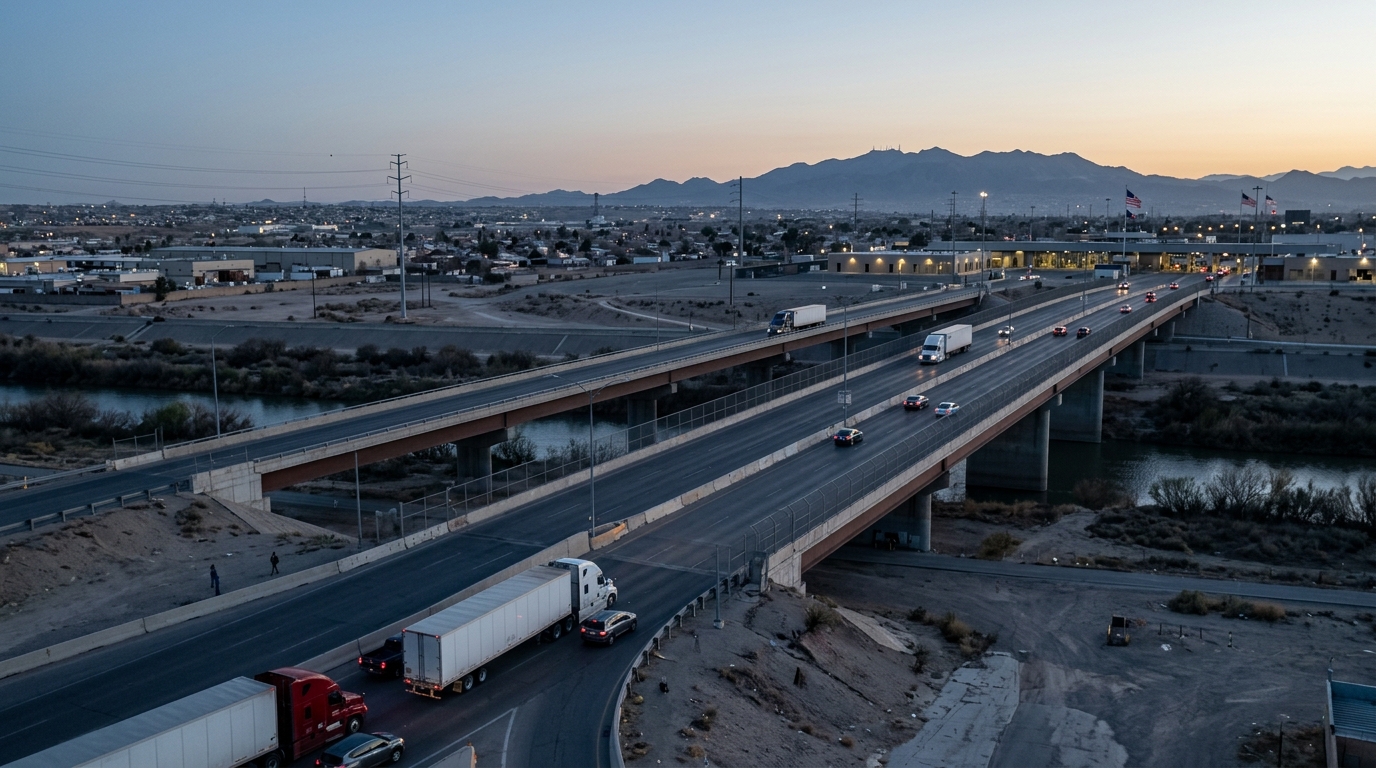
The start of the school year will provide the first complete measure of the enrollment shift in the coming days. The evolution of crossings at the Paso del Norte, Córdova-Américas, and Zaragoza-Ysleta bridges will continue to track how binational mobility in Ciudad Juárez adjusts.
This article was written with the assistance of artificial intelligence based on verified sources and reviewed by a human editor before publication.