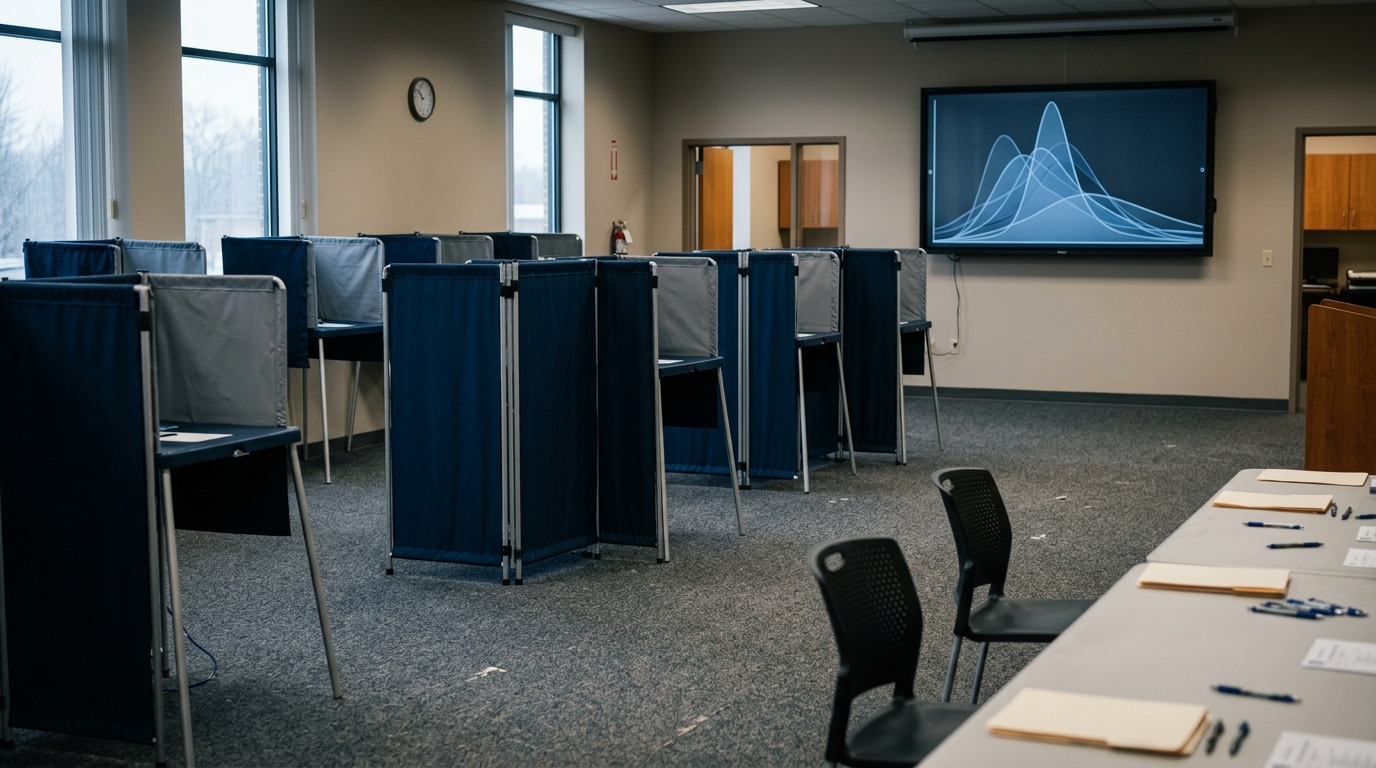
With fewer than 100 days to November's midterm elections in the United States, authorities in Delaware County, Pennsylvania, added a clause to their election workers' oath prohibiting any direct or indirect interest in betting or prediction markets such as Kalshi and Polymarket. Some 2,500 people signed the declaration, according to Wired.
The measure addresses a regulatory gap dating to 2024, when a court ruling prevented the Commodity Futures Trading Commission (CFTC) from blocking this type of betting. An NBC News analysis counted roughly $200 million in trading volume on election outcomes across Kalshi and Polymarket, and Votebeat, a publication specializing in election administration, noted that most states have laws prohibiting betting on elections, though many predate the era of these platforms. For election administrators in the region, the U.S. case is an early signal of the regulatory direction these markets are heading as their volume grows.
The figures put the challenge in perspective. A survey by the Partnership for Large Election Jurisdictions found that 75 percent of respondents could not explain what prediction market odds represent, and 35 percent believed they were counted votes or official projections. In last week's Wisconsin primaries, Kalshi and Polymarket showed candidate Francesca Hong as the favorite until vote-counting began. Dean Logan, Los Angeles County's chief election official, noted that the markets fueled volatility after the June elections and translated into threats or hostility toward people involved in the process. In Pennsylvania, the expanded declaration covers some 2,500 people, including permanent staff and temporary employees.
November's elections will put these protocols to the test. When market odds diverge from certified results, election administrators will have to explain the discrepancy, and the experience documented by specialized outlets will provide input for designing safeguards in other jurisdictions, including Mexico's.
This article was written with artificial intelligence assistance from verified sources and reviewed by a human editor before publication.