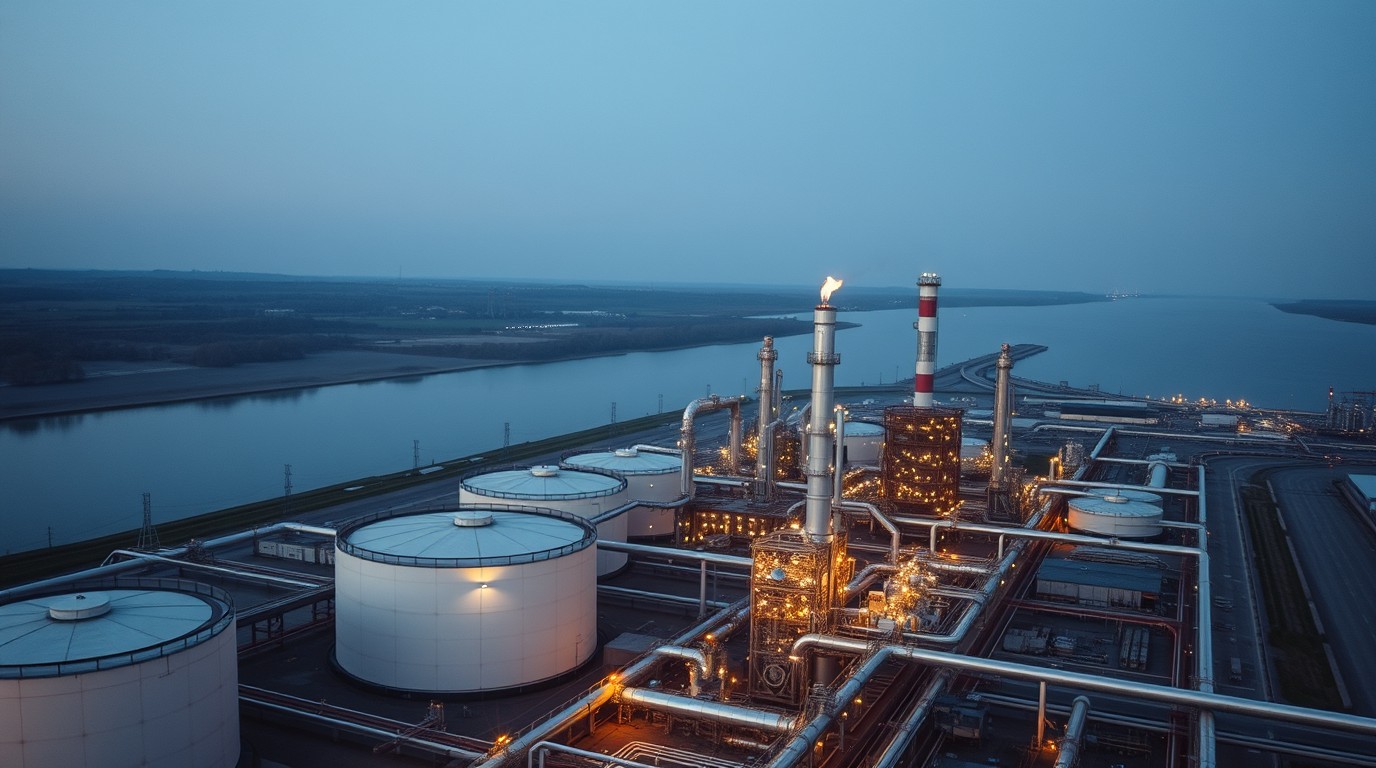
Ukrainian President Volodymyr Zelensky announced on October 13, 2026 that his forces suspended attacks on Russian oil refineries for two days, in response to the energy ceasefire that U.S. President Donald Trump announced on October 11. The same Ukrainian leader noted that Russia did not heed that call.
The October 11 announcement covers attacks on oil refineries, not a general cessation of hostilities. According to The Guardian's tracking, 19 Ukrainian regions were attacked over those two days and the country's energy infrastructure continued to take hits. The outlet Infobae carried the same presidential statement, in which Zelensky said Ukraine remains open to reciprocal de-escalation steps. For Mexico and Latin America, the relevant signal is the price channel: an energy truce that holds tends to reduce volatility in crude and refined products, a variable that feeds into the cost of the fuels the region buys on the international market.
In his report for the day, Zelensky detailed that Russia deployed more than one hundred types of weapons, including jet-powered drones, loitering munitions and ballistic missiles, with a residential building destroyed in Kharkiv that left four people dead and 41 wounded in a single night, and five ballistic missiles against civilian infrastructure in Kyiv, with no early warning from partners, according to The Guardian. According to the same account, Washington's authorization for purchases of Russian diesel drew questions from European allies, and European Commissioner for Economy Valdis Dombrovskis told the AFP news agency that those volumes lack macroeconomic significance for the international price of diesel. The U.S. president said on October 12 that he sees more willingness from Vladimir Putin than from Zelensky to reach a deal, according to Infobae.
The next checkpoint is whether the Ukrainian pause extends beyond the two days and whether Russia stops striking energy infrastructure. For Mexico, whose gasoline and diesel consumption is partly covered by imports, the trajectory of international refined product prices is the variable to watch.
This article was drafted with artificial intelligence assistance from verified sources and reviewed by a human editor before publication.