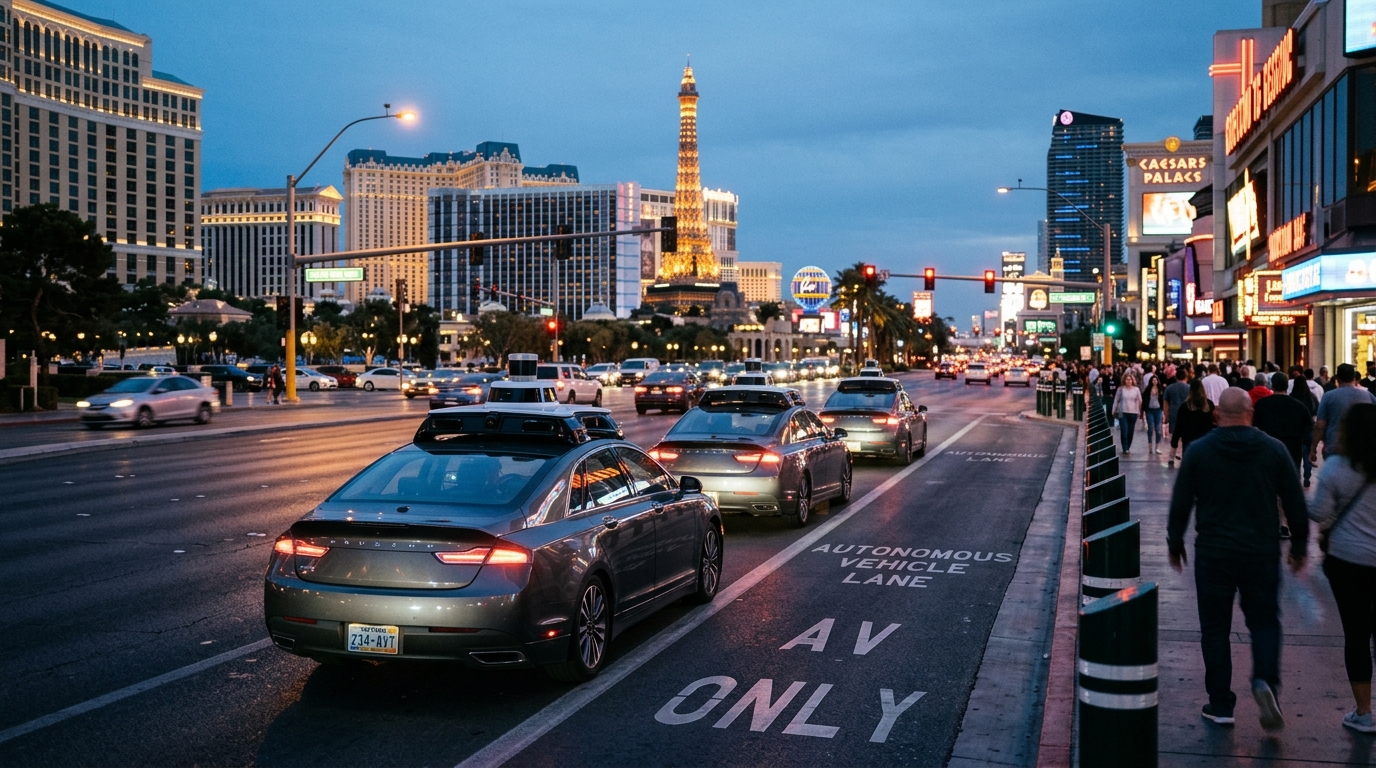
The Nevada Transportation Authority approved three permits on Thursday, August 20, authorizing Tesla, Uber, and Waymo to operate commercial robotaxis in Clark County, where Las Vegas is located, with a combined ceiling of up to 8,000 vehicles over the next 12 months, according to TechCrunch.
Tesla's approval followed a cautious start: in July, the same authority had granted it a maximum of 10 vehicles on a Las Vegas corridor, with a 45 mph speed limit and no passenger pickups near the airport, according to Fortune. The regulator followed the template of Zoox's gradual rollout, the Amazon subsidiary, which started with 65 vehicles in 2025 and expanded its permit to 100 with paid fares in July 2026. The decision positions Nevada as the state that establishes in writing the ceilings, corridors, and conditions before allowing thousands of autonomous for-hire vehicles to circulate.
The allocation gives Tesla up to 5,000 units, Waymo 1,000, and Uber 1,000, which will operate through Motional, a Hyundai subsidiary, and Zoox. Eric Early, Tesla's Cybercab chief engineer, said at the hearing that the 5,000 figure is a ceiling and that he expects to deploy around 2,500 in the coming year. The Livery Operators Association, which represents the state's transportation operators, and local taxi companies opposed the package over sector oversaturation and congestion in the Golden Triangle, the area between the airport and Las Vegas Boulevard. Uber proposed a hybrid model in which robotaxis coexist on the same network with human drivers, a position that sets it apart from Waymo.
The next step is scale: the authority has treated the initial caps as provisional figures subject to revision at hearings, and Zoox has been charging fares since August 10 following a federal exemption. Nevada's framework now stands as a regulatory precedent for jurisdictions, including Mexican ones, that are studying autonomous mobility.
This article was drafted with artificial intelligence assistance from verified sources and reviewed by a human editor before publication.