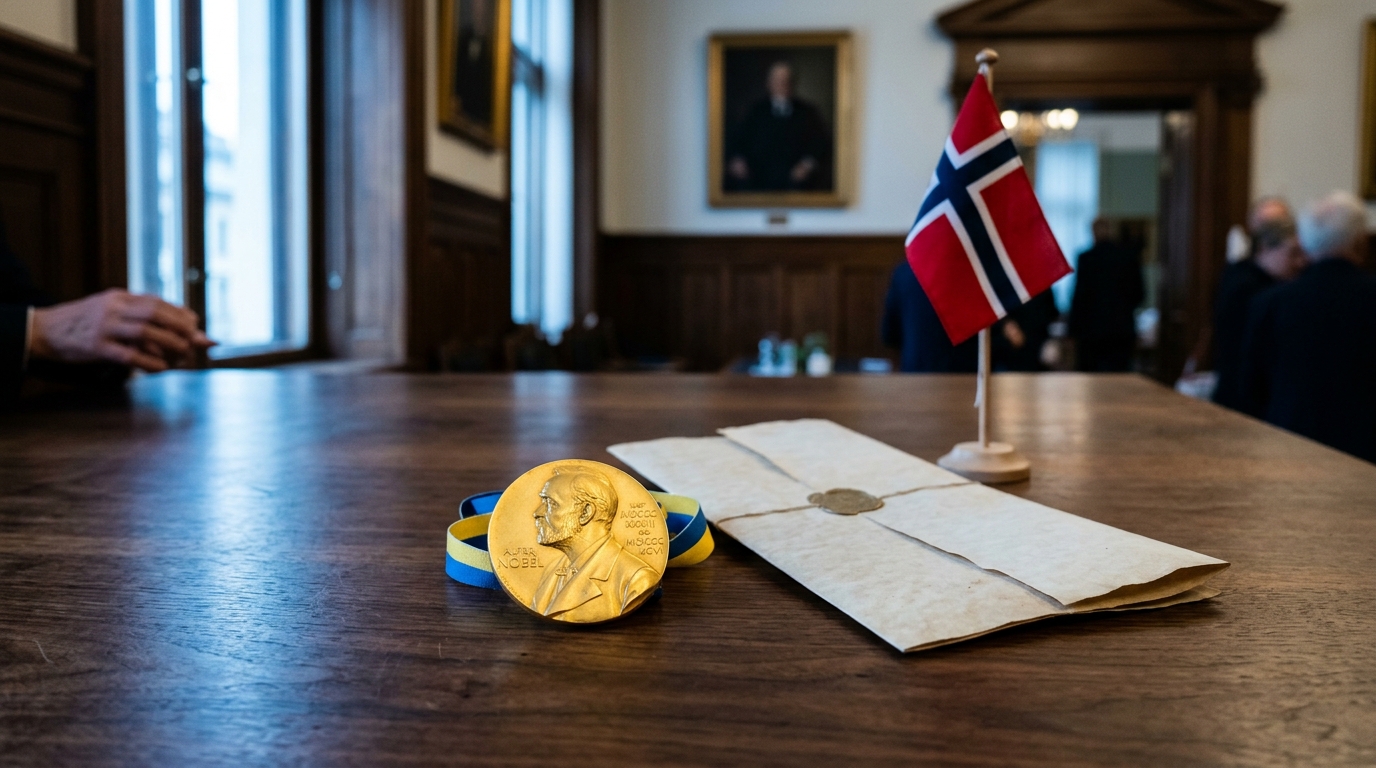
On 9 October 2026, the Norwegian Nobel Committee awarded the Peace Prize to South African jurist Navanethem Pillay, 85, a judge at the International Court of Justice, for her efforts to promote peace and international law. The committee highlighted her role in ensuring that war crimes and genocide are prosecuted in court.
According to The Guardian, Pillay defended Nelson Mandela during apartheid, was the first non-white woman to serve on South Africa's Supreme Court, and chaired the International Criminal Tribunal for Rwanda, where it was established that rape and sexual violence can constitute crimes against humanity. She was a judge at the International Criminal Court and served as UN High Commissioner for Human Rights between 2008 and 2014. The Norwegian committee argued that the rule of law, both national and international, is the foundation of the system for resolving conflicts without violence. Latin America is no stranger to this terrain: in 2025 the award went to Venezuelan opposition leader María Corina Machado, and the committee has maintained that the distinction is not transferable.
The commission Pillay chaired between 2021 and 2025 concluded that Israel committed genocidal acts in Gaza; Israel did not cooperate with the investigation, called it biased and rejected the report. According to The Guardian's live coverage, committee chair Jørgen Watne Frydnes specified that the body he heads is not a court and that it is up to the international courts to rule. For International Criminal Court President Tomoko Akane, the recognition comes at a moment of profound challenges to the international legal order. Pillay now sits on the International Court of Justice, where she is involved in the Gambia v. Myanmar case concerning the Rohingya population. According to SBS News, the committee received 287 nominations, 208 for individuals and 79 for organizations, and the prize is endowed with 12 million Swedish kronor, around 1.7 million dollars.
The prize will be presented in Oslo on 10 December, the anniversary of Alfred Nobel's death. In the meantime, Pillay retains her seat on the International Court of Justice, where the Gambia v. Myanmar case awaits resolution, and the Norwegian committee leaves open the debate over the role of international tribunals in the face of political pressure.
This article was written with the assistance of artificial intelligence from verified sources and reviewed by a human editor before publication.