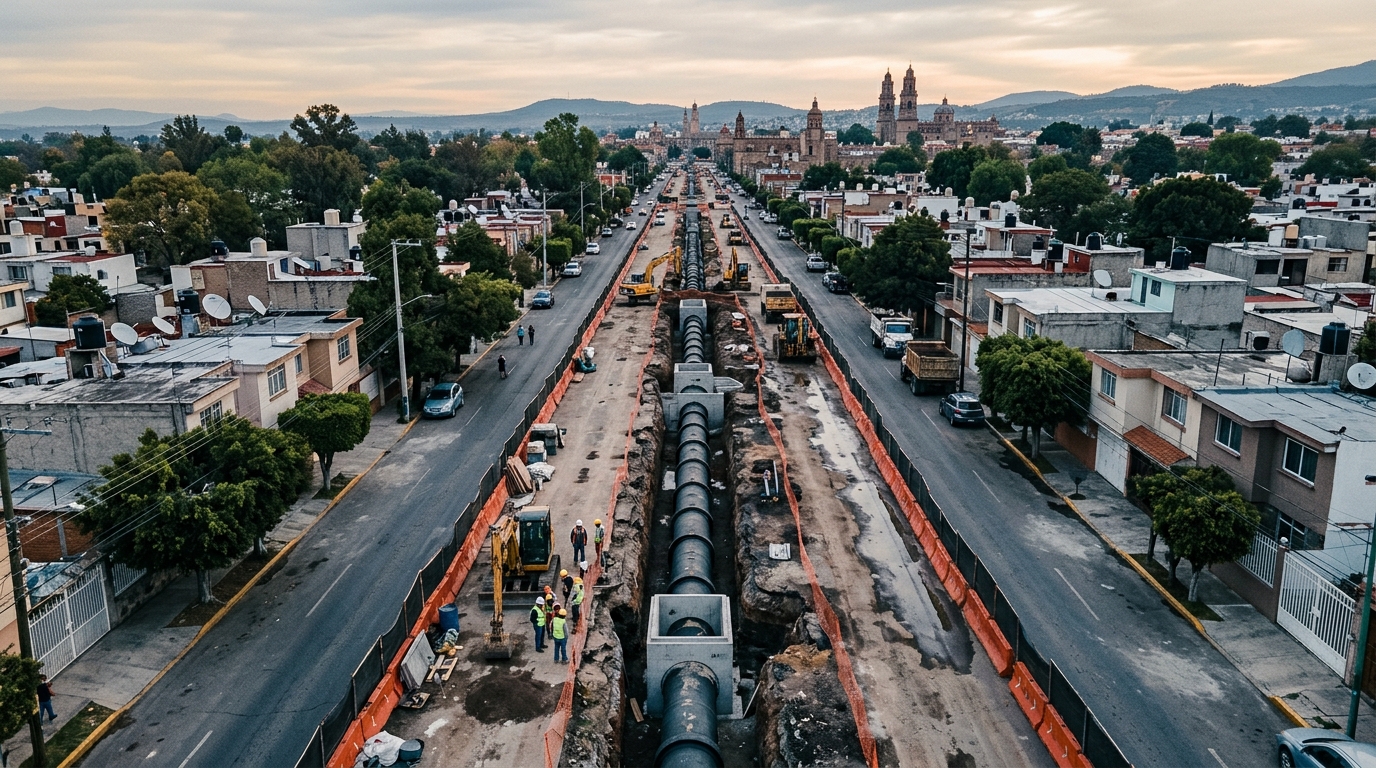
Michoacán's Secretariat of Urban Development and Mobility (Sedum) reported on September 7, 2026, that construction of the Morebús in Morelia incorporates stormwater drainage works along 15 kilometers of the route, with 3.1 kilometers already completed. The report, published by Quadratín Michoacán, details that the project is being executed to optimize rainwater drainage and mitigate the risk of waterlogging and flooding in the western part of the city.
The project turns the modernization of public transit into a vehicle for addressing an infrastructure backlog that, as Section 2 revealed, is not always captured in agency records. Sedum director María Elena Huerta Moctezuma explained that the work is carried out in parallel with construction of the dedicated lane, so each excavation front allows the hydraulic network to be addressed at the point where the need is detected. The same information was published by MiMorelia. The scheme combines, in a single project, transit renewal and stormwater network upgrading, a challenge that other Mexican cities face when modernizing their mobility corridors.
The work includes desiltation and rehabilitation of stormwater networks, replacement of deteriorated pipes, sewer renewal, improvement of access points, construction of new storm drains, and adaptations to collection systems. In Section 2, between Avenida Escuadrón 201 and Avenida Cointzio, the agency found pipes and other stormwater elements not identified in official records, showing significant deterioration. "We found infrastructure that had not been identified and that, in some cases, had gone more than 20 years without maintenance," said Huerta Moctezuma, adding that the replacements aim to allow water to drain properly and eliminate chronic waterlogging at those points.
The stormwater intervention advances at the pace of the Morebús: as excavation reaches new fronts, Sedum will continue upgrading the network across the western part of the city. The 3.1 kilometers addressed in early September serve as the benchmark for measuring progress in the weeks ahead.
This article was drafted with artificial intelligence assistance from verified sources and reviewed by a human editor before publication.