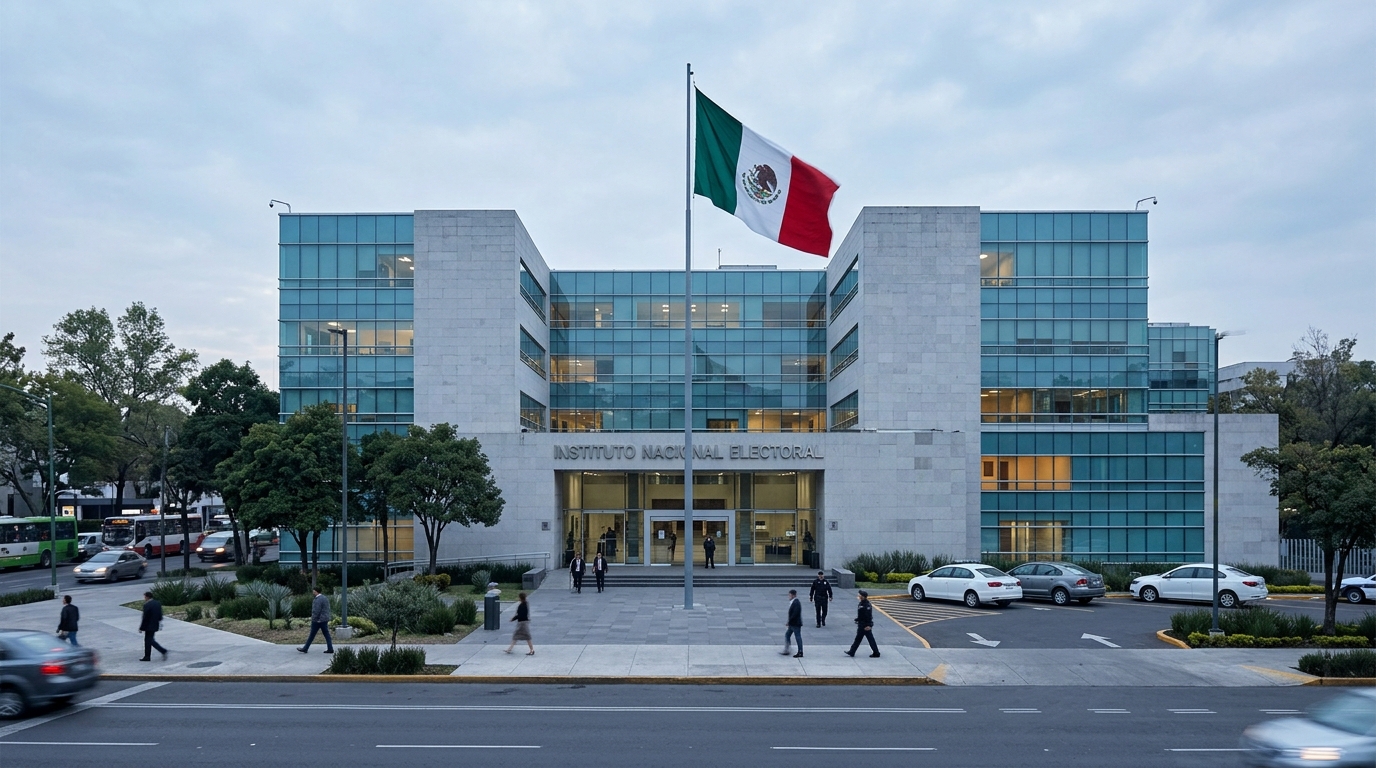
Mexico's National Electoral Institute (INE) installed on Monday, September 7, the Candidacy Integrity Verification Commission, composed of three councilmembers and coordinated with seven federal authorities, according to El Universal. The mechanism will operate ahead of the 2027 electoral cycle and is chaired by councilmember Arturo Chávez López.
The commission introduces a stage that was not previously part of the process: the three councilmembers may request information directly from state prosecutors regarding candidates, and the review will run from pre-candidacies through final nominations, including alternates, according to El Financiero. The INE presented it as a mechanism to prevent the risk of criminal infiltration, emphasizing that the presumption of innocence and strict confidentiality will prevail at all times. Information received will not constitute eligibility declarations and will not alter political-electoral rights. For the 2027 calendar, the institutional novelty is that the vetting of ties to organized crime becomes embedded within the candidate-selection process, prior to registration, with state prosecutors serving as the primary data source.
The commission is rounded out by councilmembers Norma De La Cruz Magaña and Uuc-kib Espadas Ancona. The interinstitutional coordination network includes the Secretariat of Security and Citizen Protection, the Secretariat of Finance and Public Credit, the Tax Administration Service (SAT), the Attorney General's Office, the National Intelligence Center, the Financial Intelligence Unit, and the National Banking and Securities Commission. Chávez López stated that "organized crime has no political ideology and seeks to infiltrate wherever it can, regardless of party affiliation." The INE clarified that the inclusion of candidates on review lists will be voluntary and that, should a reasonable risk emerge, the final decision on whether to maintain a nomination rests solely with the political parties and independent candidates.
The mechanism's first application will come once state prosecutors respond to requests as the 2027 electoral calendar advances, making it the first contest in which candidacies will pass through this filter before registration. How the commission resolves cases of reasonable risk, always under the presumption of innocence, will set the precedent for that process.
This article was drafted with artificial-intelligence assistance from verified sources and reviewed by a human editor before publication.