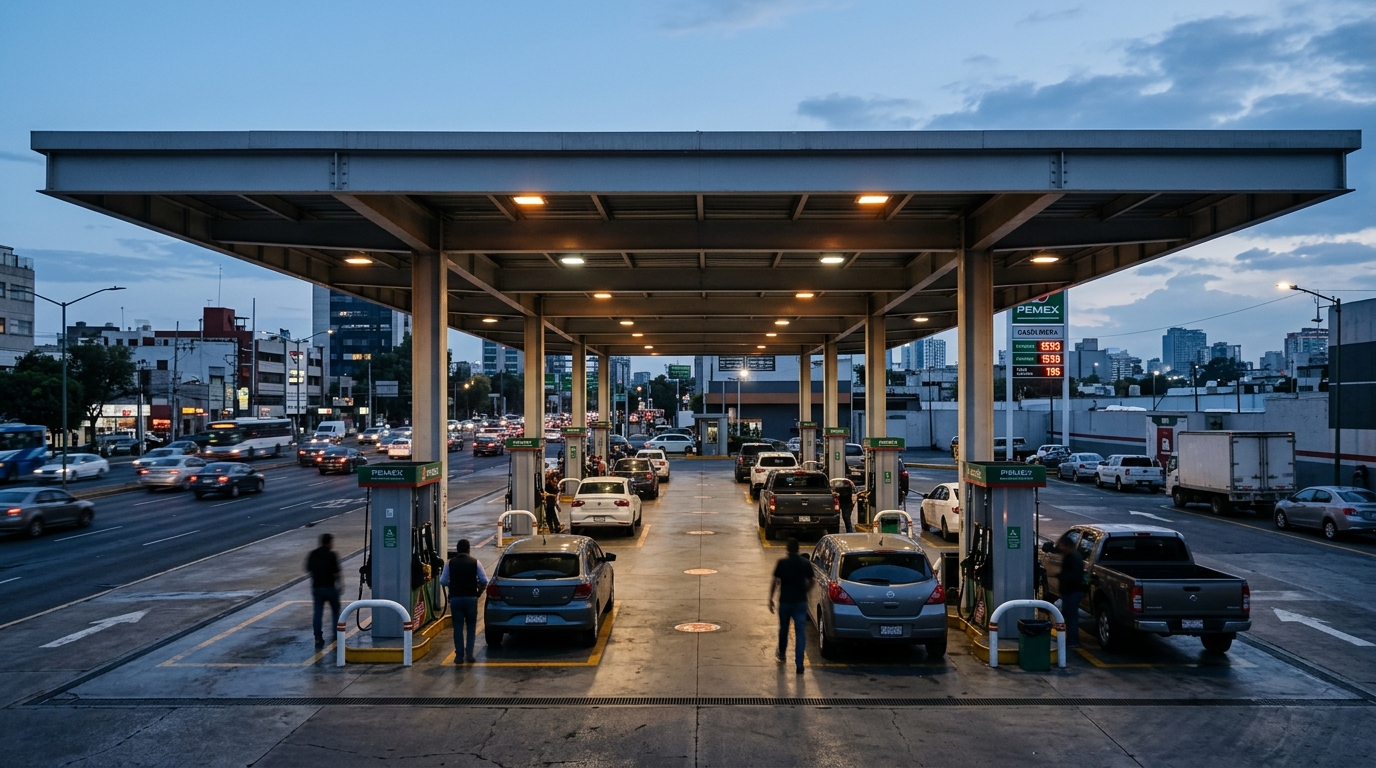
Mexico's Finance Ministry (Secretaría de Hacienda y Crédito Público) quadrupled the subsidy on Premium gasoline for the week of September 5-11: the IEPS excise tax stimulus moved from 6% to 23.9% per liter, from 0.30 to 1.35 pesos, according to Bloomberg Línea, which cites the agreement published in the Diario Oficial de la Federación.
The adjustment is the mechanism the Finance Ministry uses to moderate rising international fuel costs: when crude oil prices climb, it reduces the IEPS rate so that the full increase does not reach consumers, Expansión explains. The external pressure stems from the conflict between the United States and Iran and the closure of the Strait of Hormuz, through which approximately 20% of the world's crude oil flows, according to Bloomberg Línea. The support was not limited to Premium gasoline: the stimulus for regular gasoline, known as Magna, rose from 22.8% to 31.4% of the tax per liter (2.10 pesos), and the diesel subsidy (the fuel used in freight transport) climbed from 81.5% to 90.8%. Mexico remains a net importer of gasoline from the United States, which exposes domestic prices to external price swings.
In peso terms, the IEPS rate paid by consumers falls to 4.31 pesos per liter for Premium, one peso less than the previous week, and to 4.59 pesos for Magna; for diesel, the discount leaves a rate of 0.68 pesos per liter, Expansión reports. The national average price stood at 28.58 pesos per liter for Premium and 23.69 pesos for Magna, against the voluntary price cap of 24 pesos agreed with industry operators and renewed for six months, according to PetroIntelligence figures cited by that outlet. Premium is the 91-octane gasoline required by high-compression engines, common in sports and luxury vehicles, energy analyst Ramsés Pech of Caraiva y Asociados explained to Bloomberg Línea.
The Finance Ministry updates the rates every Friday in the Diario Oficial de la Federación, so the next publication, for the week of September 12-18, will indicate whether the support holds while crude remains elevated. The variable to watch is the size of the subsidy: it tracks how much of the external shock the government absorbs, collecting less IEPS revenue per liter while moderating the price consumers pay, according to Expansión.
This article was written with the assistance of artificial intelligence from verified sources and reviewed by a human editor before publication.