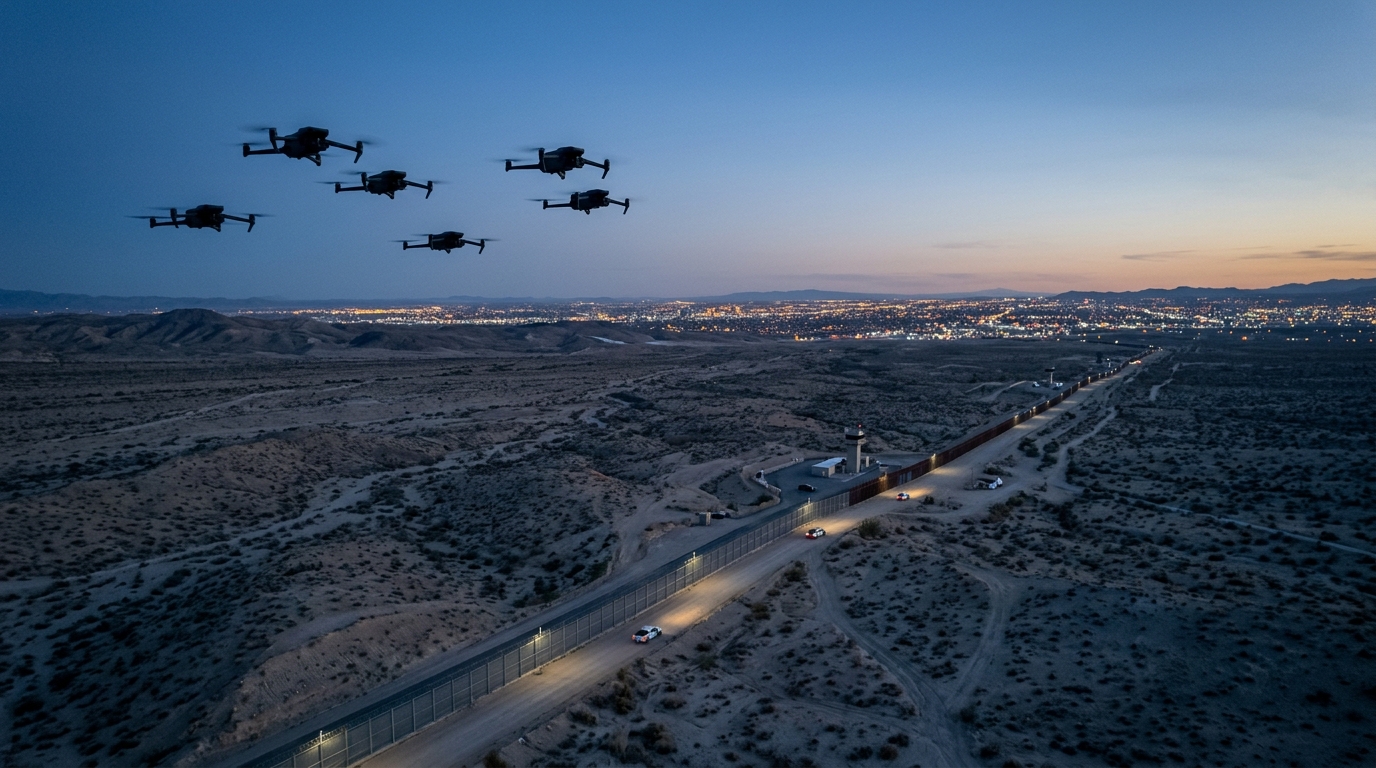
On August 11, Mexico signed a letter of intent with the United States for access to drone systems and counter-drone technology. The signing came as Foreign Policy documented, in its August 13 report, that the drone warfare refined in Ukraine has migrated to armed groups in Colombia and Mexico, with 137 attacks recorded in Colombia so far this year.
The non-binding declaration was signed by Major General Héctor Ávila Alcocer and U.S. Secretary of the Army Daniel Patrick Driscoll, and opens Mexico's access to the U.S. market for unmanned aerial systems (UAS) and C-UAS technology designed to detect, track, and neutralize unauthorized aircraft, according to the Ministry of National Defense, as reported by Infobae. Driscoll's visit took place within the framework of bilateral military cooperation mechanisms established since 2016. For Mexico and the region, the signal is significant: drone warfare has ceased to be an interstate phenomenon and is now a documented public security factor across the continent.
ACLED records cited by Foreign Policy illustrate the scale: Colombia went from one drone attack in 2023 to 38 in 2024 and 149 in 2025. According to analyst Tiziano Breda, Colombian groups learned from Mexican organizations, which have been using drones since at least 2015, and both have drawn on tactics observed in Ukraine, where drones accounted for 69 percent of attacks against Russian forces in mid-2025. Groups purchase commercial drones and adapt them with grenades or other explosives, and Colombian ex-combatants from Ukraine have transmitted that knowledge to Mexican organizations, according to the report. In Mexico, cooperation with Washington has deepened over the past year in response to drone attacks by the Jalisco New Generation Cartel and the Sinaloa Cartel, both designated by the United States as terrorist organizations.
The declaration enables the acquisition of drone operational systems and C-UAS technology, and the bilateral framework provides for periodic meetings between both institutions. The next variable to watch is how that access is operationalized within shared border security mechanisms.
This article was drafted with artificial intelligence assistance from verified sources and reviewed by a human editor before publication.