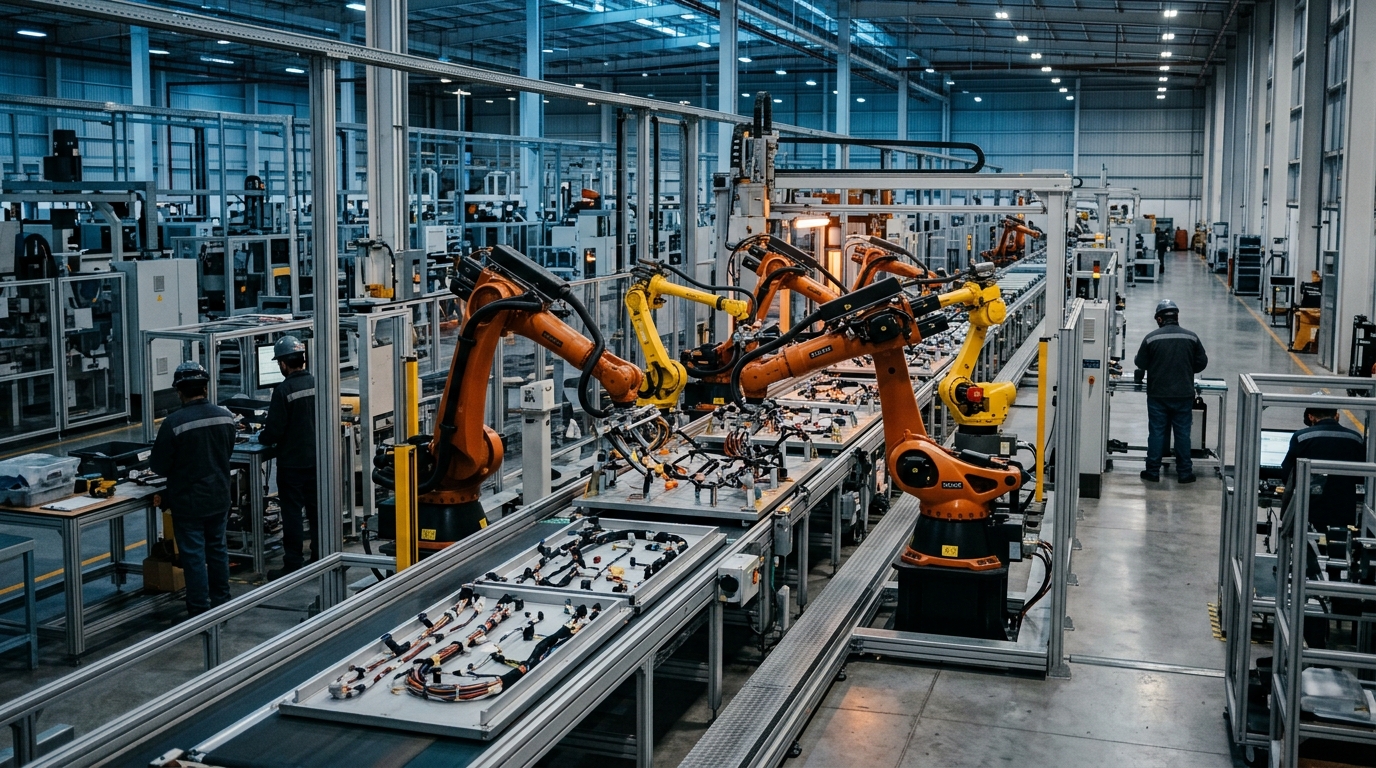
Mexico's auto parts industry lost roughly 90,000 jobs over two years, according to data from the Industria Nacional de Autopartes (INA) published by Expansión on September 3. The decline coincides with U.S. tariff policy, though the sector notes that the adjustment cannot be attributed to tariffs alone.
Auto parts account for 41.5% of automotive industry employment in Mexico, per the INA. The adjustment is unfolding as the supply chain is also being reshaped on the imports front: Mexico purchased 247,963 light vehicles from Asian countries in the first half of 2026, 24.1% fewer than a year earlier, according to data from the Secretaría de Economía cited by La Jornada. China, which accounts for 63.9% of those purchases, cut its shipments by 31.1% following the 50% tariff Mexico has applied since January on vehicles from countries without a trade agreement. That Asian flow is, La Jornada reports, one of the sensitive points in negotiations over the future of the North American trade agreement.
In an interview with Expansión, INA director general Gabriel Padilla noted that the workforce reductions combine lower production volumes with accumulated labor cost increases, regulatory pressures, and a drive for greater efficiency with existing installed capacity. The impact is concentrated in regions such as Puebla and the centro-Bajío corridor, where reduced output at an assembler ripples through multiple tiers of suppliers. At the same time, the industry has solidified its position as a supplier to the United States: 44.7% of U.S. component imports are Mexican auto parts, the highest level in INA records, and 80% of parts manufactured in Mexico meet USMCA rules of origin, compared with roughly 50% before the tariff wave.
The result is a supply chain more deeply integrated into U.S. production, with reduced exposure to Asian vehicles, precisely as that trade relationship becomes a sensitive point in negotiations over the future of USMCA. Upcoming employment and trade data for the sector will show how that reshuffling continues.
This article was written with artificial intelligence assistance based on verified sources and reviewed by a human editor before publication.