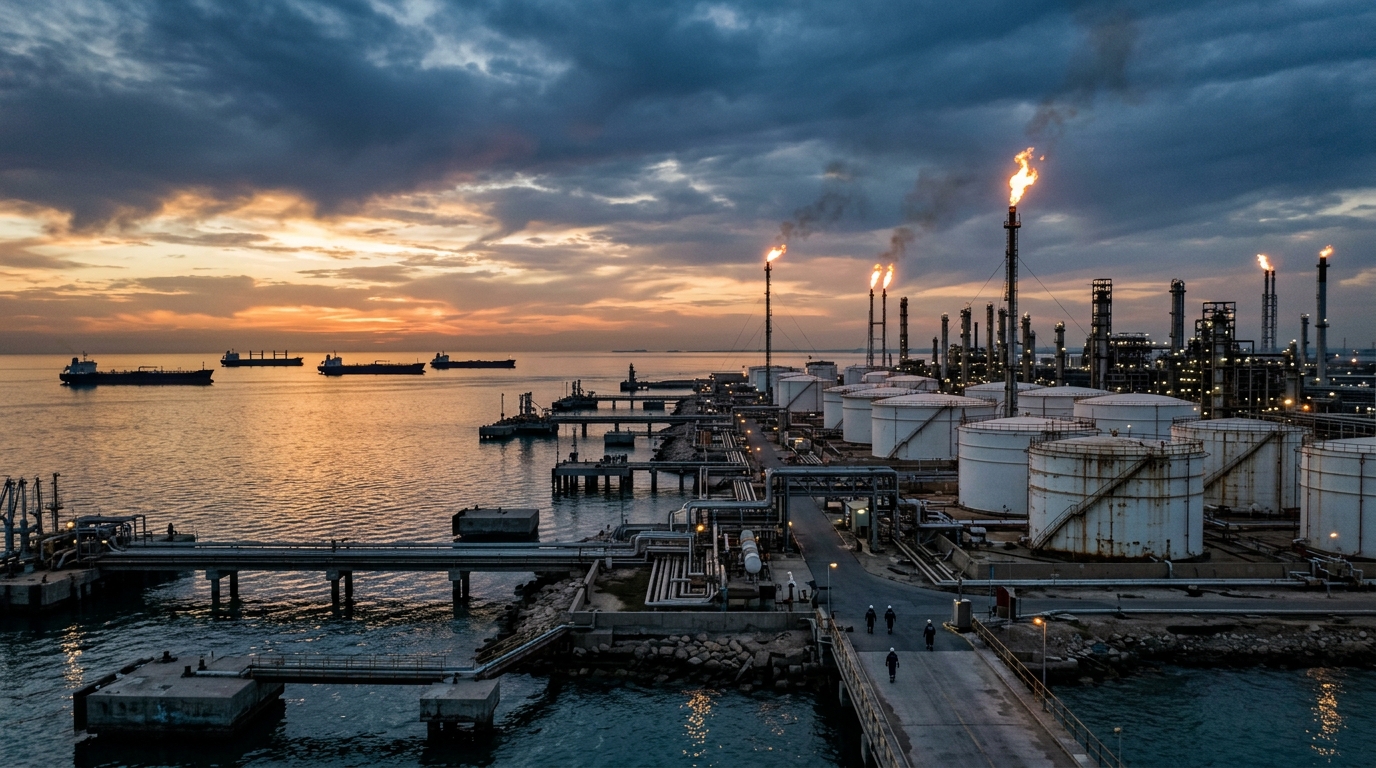
On August 31, the US and Israel's war against Iran reached the six-month mark, and according to Al Jazeera, an economic scorecard with winners and losers by sector has already emerged. Transit through Hormuz fell to a fraction of its normal levels, and Brent crude approached $120 per barrel in April, according to the Atlantic Council.
For import-dependent economies like Mexico, the signal lies in the cost of energy and inputs that move through those routes: more expensive crude and higher freight rates drive up the cost of gasoline, diesel, and natural gas the country purchases abroad. The Atlantic Council argues that the Gulf will carry those costs on its balance sheets long after the strikes end, and that the challenge is not producing energy but moving it: with Hormuz semi-closed, countries in the region turned to alternative pipelines, such as Saudi Arabia's East-West pipeline, to maintain flows.
Al Jazeera's breakdown places oil companies among the winners: ExxonMobil reported profits of $14.5 billion in the second quarter, Chevron reported $12 billion, and Saudi Aramco reported $33.4 billion, a third more than in 2025. Among the losers, according to the same report, are American taxpayers, who bear a cost the Pentagon estimated at $37.5 billion, and food consumers: the FAO food price index rose 0.6% in July, reaching its highest level since January 2023, and the World Food Programme estimates that 7.1 million additional people in Somalia, Afghanistan, and Sri Lanka are struggling to access sufficient food. The defense industry is another winner: the Pentagon signed a $22.9 billion contract with RTX for Tomahawk missiles.
The Atlantic Council places the real test in the coming weeks, when the return of residents will determine the Gulf's tourism recovery; in the meantime, energy, transportation, and insurance costs will not return to previous levels without investment in alternative routes. For Mexico, the figure to watch is how much of that pressure reaches the fuels and inputs the country imports.
This article was written with the assistance of artificial intelligence drawing on verified sources and reviewed by a human editor before publication.