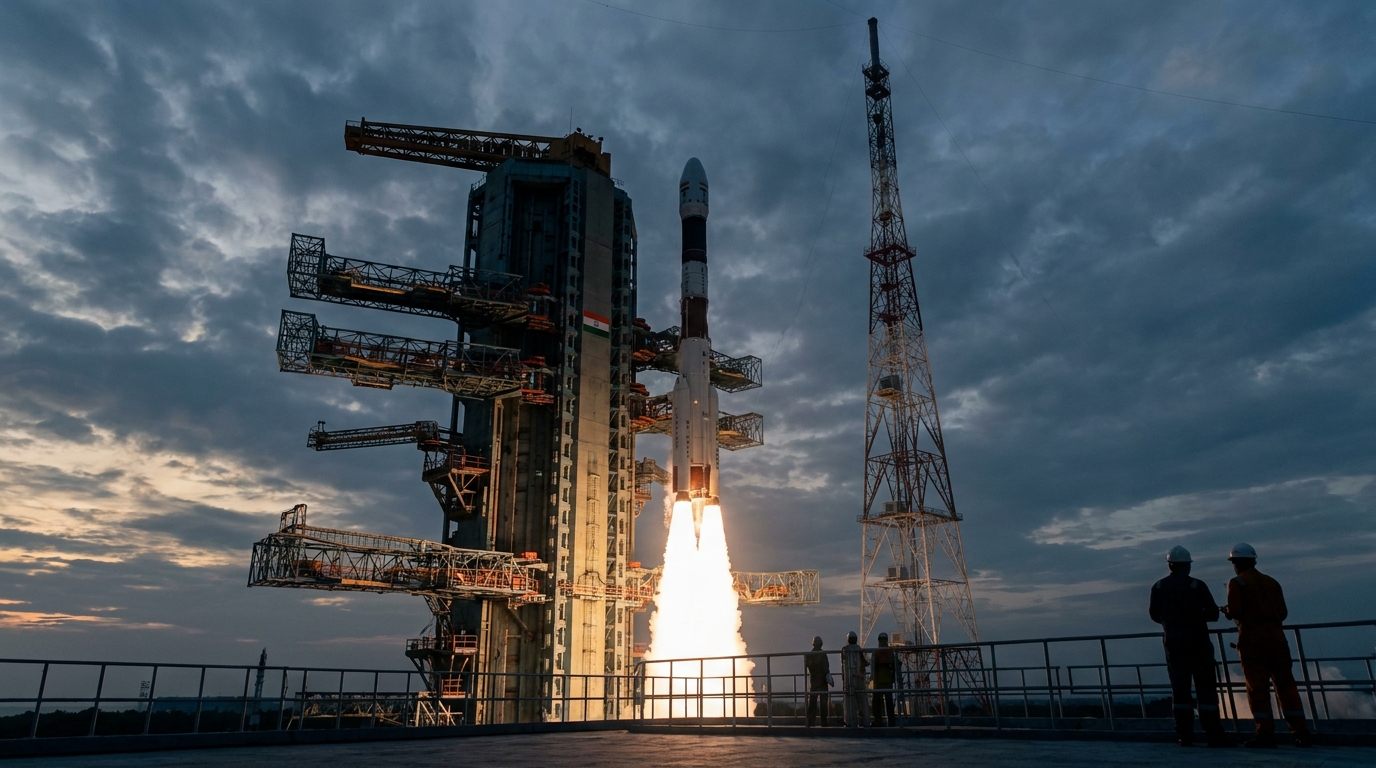
On July 18, 2026, India became the third country in the world with private orbital launch capability, following the successful flight of Skyroot Aerospace's Vikram-1 rocket. The launch from the Satish Dhawan Space Centre in Sriharikota places India alongside the United States and China in having this capability in private-sector hands.
The milestone is the direct product of India's space sector liberalization. In 2020, the Indian government created the Indian National Space Promotion and Authorisation Centre (IN-SPACe), an autonomous agency serving as a single-window platform to authorize, promote, and supervise space activities by non-governmental entities. According to data from the Indian Parliament published in February 2026, IN-SPACe had granted 94 authorizations and registered nearly 400 startups in the sector. Skyroot Aerospace, founded in 2018 by former engineers from India's space agency ISRO, raised $60 million in May 2026 to scale Vikram-1 production.
The Vikram-1 is a three-stage solid-fuel rocket with an additional liquid-propellant upper stage, capable of placing up to 350 kilograms into low Earth orbit. The mission, named Aagaman ("arrival" in Sanskrit), deployed two cubesats, one from Skyroot and one from Grahaa Space, along with payloads from Dcubed and Cosmoserve Space, a firm that included robotic arms for space debris removal. The flight also carried an 18-karat gold sculpture featuring figures of Vikram Sarabhai, C.V. Raman, and A.P.J. Abdul Kalam, pioneers of the Indian space program. Skyroot CEO Pawan Kumar Chandana told SpaceNews that the launch represents a historic moment for the company, for India, and for the global space sector.
Skyroot plans up to two additional Vikram-1 launches for the remainder of 2026 and is developing the Vikram-2, a higher-capacity rocket. The Indian model, built around a specialized regulator that moved from legal reform to orbital flight in under three years, offers a concrete reference for how strategic technology sectors can be opened to private investment within a framework of state oversight.
This article was drafted with artificial intelligence assistance from verified sources and reviewed by a human editor before publication.