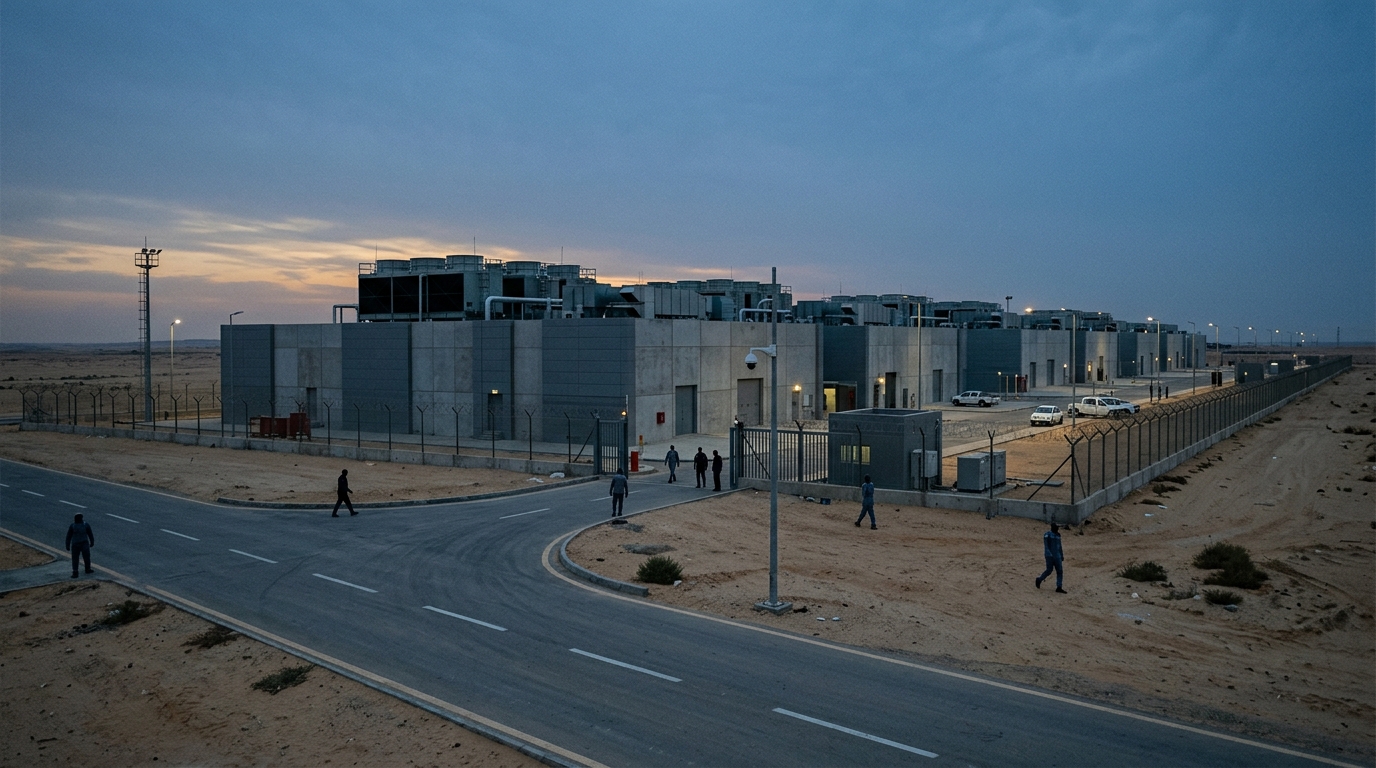
On August 28, Bloomberg revealed that Huawei offered Egypt 1,408 Ascend 950 processors for its AI data centers, while the U.S. State Department is preparing a counteroffer featuring Nvidia, AMD, and Microsoft. The bid is described as the first direct competition between Beijing and Washington over the same government AI project.
Xi Jinping's three-day visit to Egypt, his first in a decade and his first to the Middle East in four years, coincided with the 70th anniversary of bilateral relations. Al Jazeera documents the balancing act Cairo faces: it receives roughly $1.3 billion annually in U.S. military aid, yet China is its largest trading partner in non-oil goods, with bilateral trade reaching $20.7 billion at the close of 2025. Whoever wins the contract will deepen its political and economic ties with a country that controls the Suez Canal. For Mexico, which is expanding its data and AI infrastructure, the terms Cairo accepts will serve as the first public reference point for how these agreements are structured with the world's two largest providers.
The Chinese proposal includes, beyond the 1,408 Ascend 950 chips for model training, an additional 600 Ascend 950 or 910B processors for two computing clusters, with a 12-month construction timeline. Documents reviewed by Bloomberg describe the intended use as covering Egypt's military operations, surveillance, and other public services. Human rights activist Mohamed Ramadan told Al Jazeera that the dispute centers on data and the ability of both powers to integrate information from different regions. Ramadan added that Huawei has operated in Egypt for years, with prior telecommunications agreements, and that its prices are typically lower than those of U.S. companies. Egypt imported $10 billion in Chinese goods in the first half of 2026, 14% more than a year earlier.
The award, with no public timeline yet, will determine which AI provisioning model prevails in this first direct competition, and its terms will serve as a benchmark for other governments, including Mexico, as they structure similar agreements. The direction of that decision will be the next signal of how government artificial intelligence is negotiated.
This article was written with artificial intelligence assistance from verified sources and reviewed by a human editor before publication.