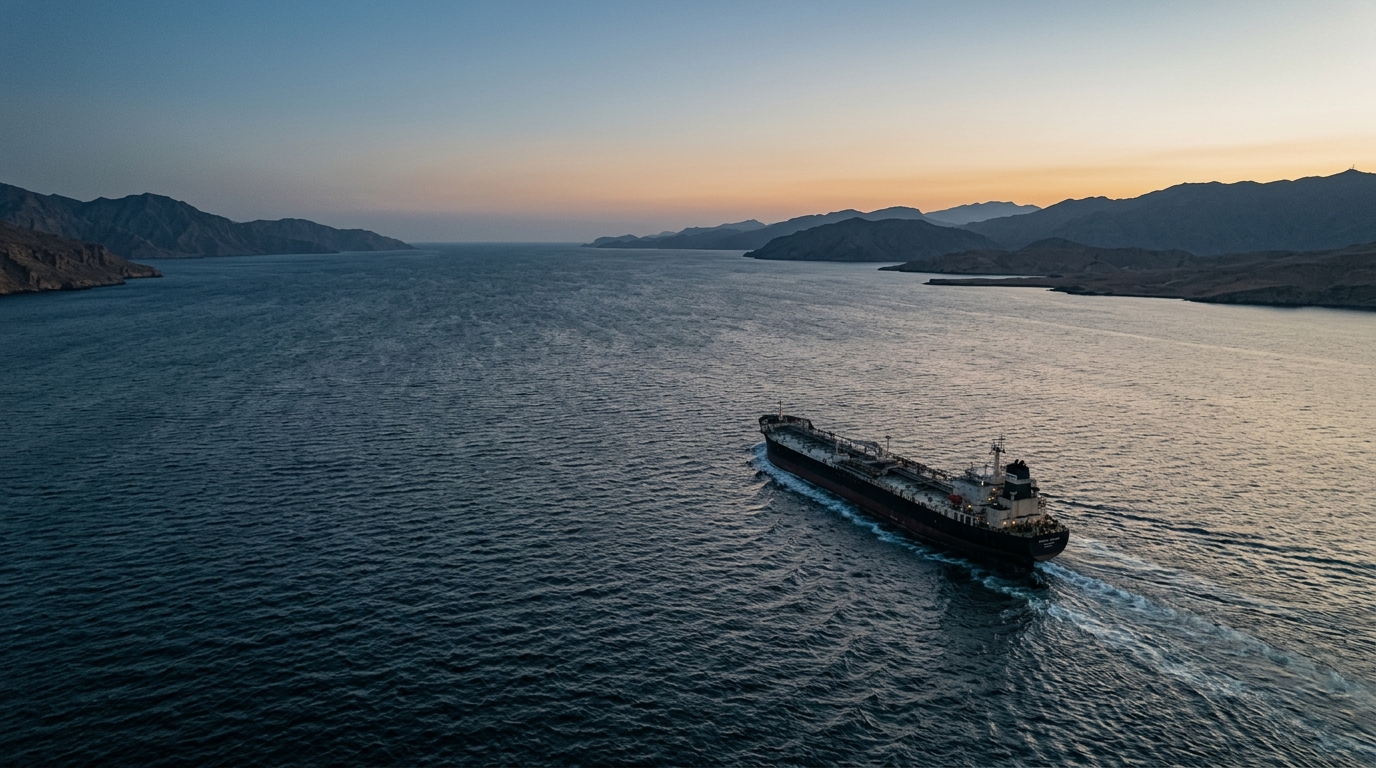
August 28, 2026 marks six months since the start of the war between the United States and Israel against Iran, and the Strait of Hormuz remains a combat zone for maritime navigation. The passage that handled at least 100 vessels per day before the conflict now averages seven per day, according to Al Jazeera's count.
Transit collapsed within days of the start of hostilities. Iran's Revolutionary Guard announced the closure of the strait on March 2, and the flow fell to five vessels per day. An interim agreement on June 17 raised the average to 20, but the reinstatement of the U.S. blockade on Iranian ports on July 14 pushed traffic back to five. El País reports the same picture: before the war, around 130 ships crossed those waters each day; now fewer than 20 do, with more than 70 commercial vessels attacked. For Mexico and Latin America, the transmission channel is direct: Brent has accumulated a 22 percent increase since the start of the conflict, a pressure that flows straight into higher energy bills for crude-importing economies.
The six-month toll stands at at least 7,900 deaths, according to official figures compiled by Al Jazeera: 4,350 in Lebanon, 3,527 in Iran, and 28 in Gulf countries, plus 60 Israelis and 18 U.S. military personnel. The International Maritime Organization has recorded 70 confirmed attacks on vessels in the strait, with 19 sailors killed as of August 26, and ACLED tallies more than 5,500 attacks by both sides. Brent moved from $72.48 per barrel at the start of the war to $88.58 on this August 28, with a peak of $120.88 on April 30. The U.S. Strategic Petroleum Reserve fell to 290 million barrels, its lowest level since 1982, following the coordinated release of 400 million barrels by the International Energy Agency.
The signal to watch is in the Gulf of Oman. On August 25, Tankertrackers counted 15 ship-to-ship transfers involving approximately 25 million barrels of crude and refined products, activity that shows how shippers are actively seeking a stable alternative route around the strait, with Oman as a key support hub.
This article was drafted with artificial intelligence assistance from verified sources and reviewed by a human editor before publication.