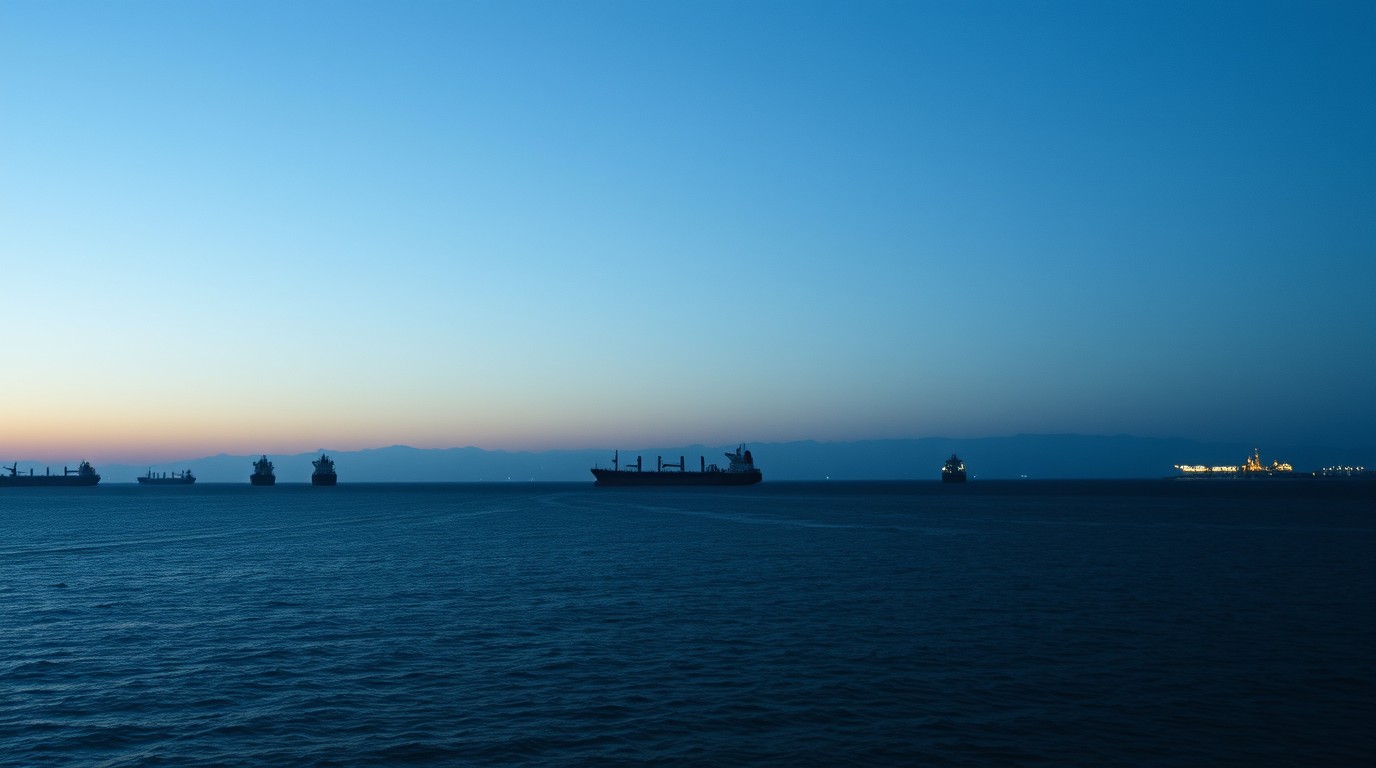
The Strait of Hormuz closed the week of October 16, 2026 with at least 12 ships attacked and Brent at $109.86 per barrel, its highest close since May. Before the war, the passage carried close to a fifth of the world's oil and gas, and today the United States and Iran contest control of it with contradictory accounts.
According to Al Jazeera, the maritime agency UKMTO reported on Friday the 16th that at least 12 vessels were attacked in the week ending that day, the highest number since the war between the United States and Israel against Iran began on February 28. The organization warned that its count understates the threat because most of the ships attacked do not report the incidents. CNBC documented at least nine tankers and cargo ships attacked since Sunday, October 11, and that flows through Hormuz fell to 9.4 million barrels per day in the week ending Wednesday, close to 70% of the pre-conflict average. For Mexico the channel is indirect but verifiable: international crude benchmarks feed into the cost of the fuels the country imports.
Accounts of the source of the damage diverge. Iran's Revolutionary Guard maintains that a supertanker carrying more than two million barrels caught fire after striking a naval mine on an unauthorized route, and that the strait remains closed. U.S. Central Command states that the passage has been cleared of mines and that the ships are being hit by projectiles; its head, Brad Cooper, said Hormuz is under the control of the United States and its regional partners, not Iran. In the market, Brent rose 3.7% on Friday and West Texas Intermediate closed at $101.41, according to CNBC, while U.S. diesel averaged $6.33 per gallon, more than 70% above the same period in 2025.
The immediate calendar adds another variable: the U.S. midterm elections on November 3. Reports from U.S. media cited by Al Jazeera indicate that the White House has a larger military response ready after those elections. The signal to watch is logistical: UKMTO reported that half of the 12 confirmed ships completed their crossing.
This article was drafted with the assistance of artificial intelligence from verified sources and reviewed by a human editor before publication.