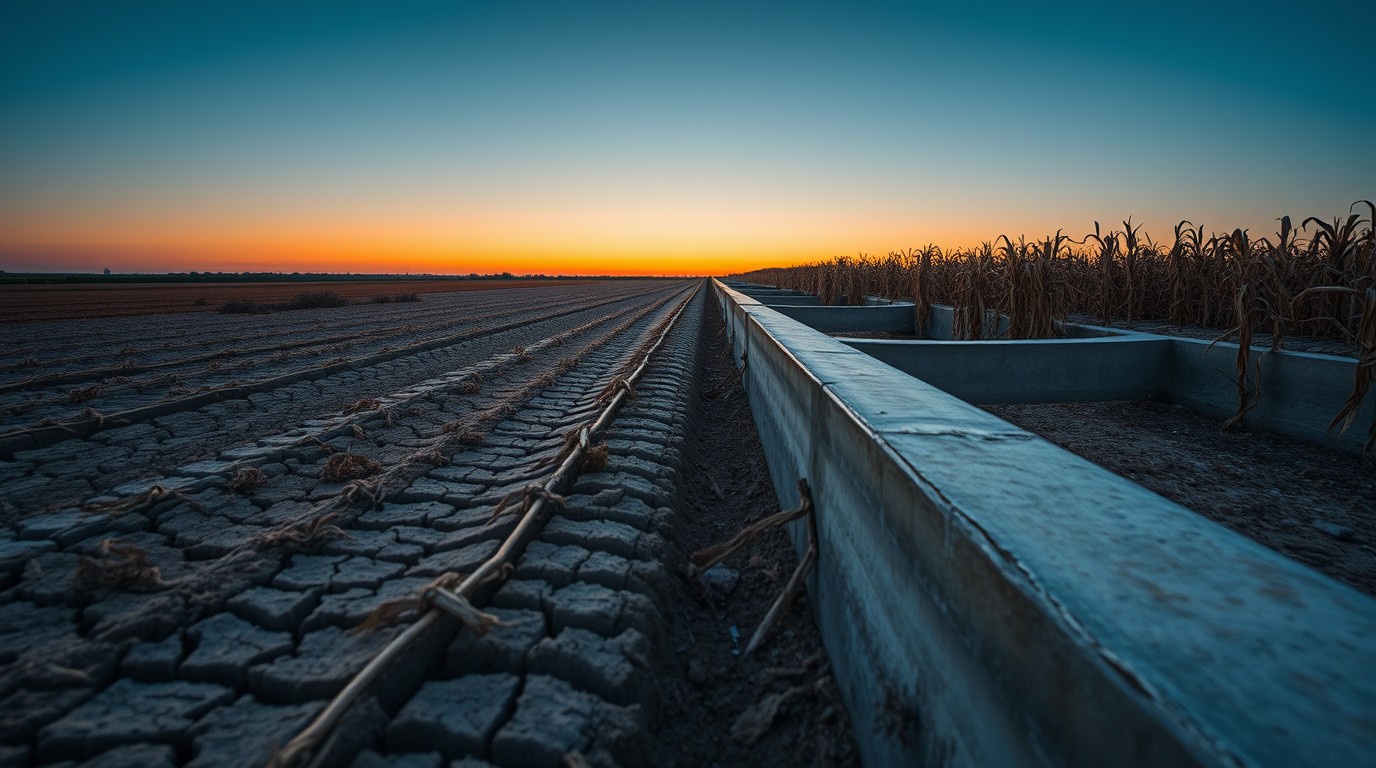
The 2026 El Niño is advancing toward peak intensity in December, and projections from NOAA, the U.S. oceanic and atmospheric agency, assign an 83% probability that the phenomenon will remain strong or very strong in early 2027, according to the analysis Foreign Policy published on November 10, 2026. The economic cost tied to that signal is already measured at one trillion dollars per year.
The phenomenon occurs every two to seven years and lasts up to 18 months, but each episode has its own footprint. The difference now lies in the starting point. In Mexico, grain and oilseed production fell 16% between 2018 and 2026, from 40 to 33.6 million tons, and 16.5 of the 24 million agricultural hectares depend on rainfall, according to GCMA data cited by Expansión on November 8. Only 3% of producers have agricultural insurance. That is why the global report is not foreign to the region: Latin America appears among the areas with the greatest agricultural exposure to the pattern.
Cullen Hendrix, a researcher at the Peterson Institute for International Economics, estimates a cost above 7 trillion dollars for the global economy over five years and around one trillion in a single year, a magnitude he compared to erasing an economy the size of Mexico's. The damage is already being recorded: Peru and Bolivia declared states of emergency, with a drought hitting nearly 80,000 Bolivian families; India faces its weakest rainy season in a decade, and Indonesia is battling large-scale fires. The UN Office for the Coordination of Humanitarian Affairs and the World Meteorological Organization launched an assistance appeal last month.
The peak of the phenomenon is expected in December, but the impact on food arrives with a lag: Richard Choularton, of the World Food Programme, places the delay between six and nine months, up to a year. The critical window the Organization of American States identifies for action on agriculture, water and energy runs from October 2026 to March 2027.
This article was written with the assistance of artificial intelligence from verified sources and reviewed by a human editor before publication.