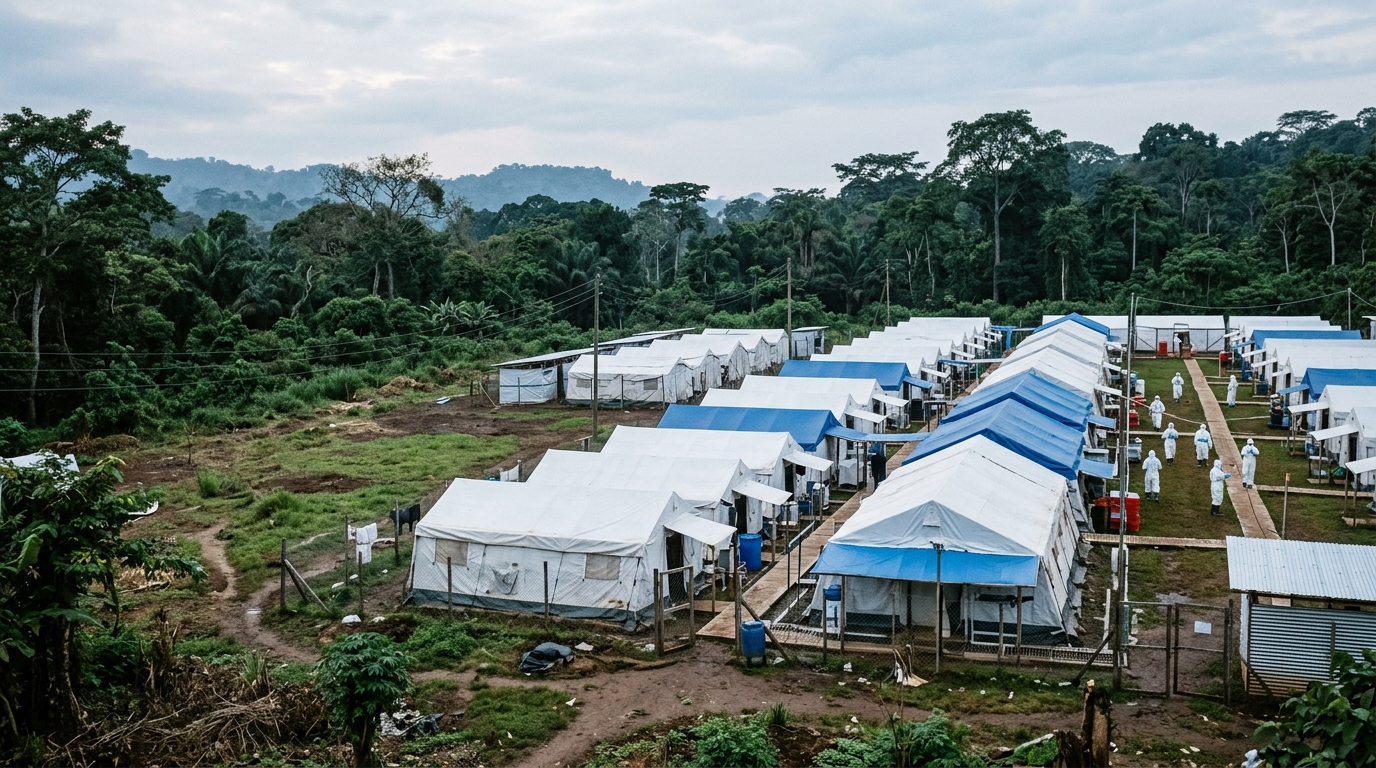
The World Health Organization (WHO) revealed on Monday, August 10, according to AP, that genomic sequencing places the start of the Ebola outbreak in eastern Democratic Republic of the Congo in February, four months before the epidemic was declared on May 15. Some early cases were attributed to malaria and typhoid fever.
The finding comes as the outbreak reaches 4,200 confirmed cases and more than 1,900 deaths, according to the latest figures from the Congolese government. WHO Director-General Tedros Adhanom Ghebreyesus said last week that Ebola is spreading faster than efforts to contain it, a warning that El Financiero reported on August 5 during the official's visit to Kinshasa. The gap between the virus's actual circulation and the official declaration is fueling debate over early genomic surveillance, a tool that the WHO promotes among its member states and that Latin American countries follow through PAHO.
The outbreak is caused by the Bundibugyo variant, with no approved vaccines or treatments; initial tests were oriented toward the most common type of Ebola, which delayed detection. The WHO regional director for Africa, Mohamed Yakub Janabi, said teams are chasing a virus that is running ahead of them. Between 60% and 70% of new cases are recorded outside the contacts under surveillance, according to authorities cited by El Financiero, and the fatality rate is 45%. The outbreak is advancing faster than the 2014-2016 West Africa one, which accumulated more than 28,000 cases, although that one took eight months to reach 1,000 deaths. In Ituri, the epicenter, a strike by health workers over unpaid wages limits care in an area where conflict with rebel groups already made it difficult.
The WHO has insisted on expanding the response across all pillars, as Tedros said during his visit to Kinshasa. The Congolese Health Ministry's weekly data will show whether that expansion reduces the share of infections occurring outside contact surveillance.
This note was written with artificial intelligence assistance based on verified sources and reviewed by a human editor before publication.