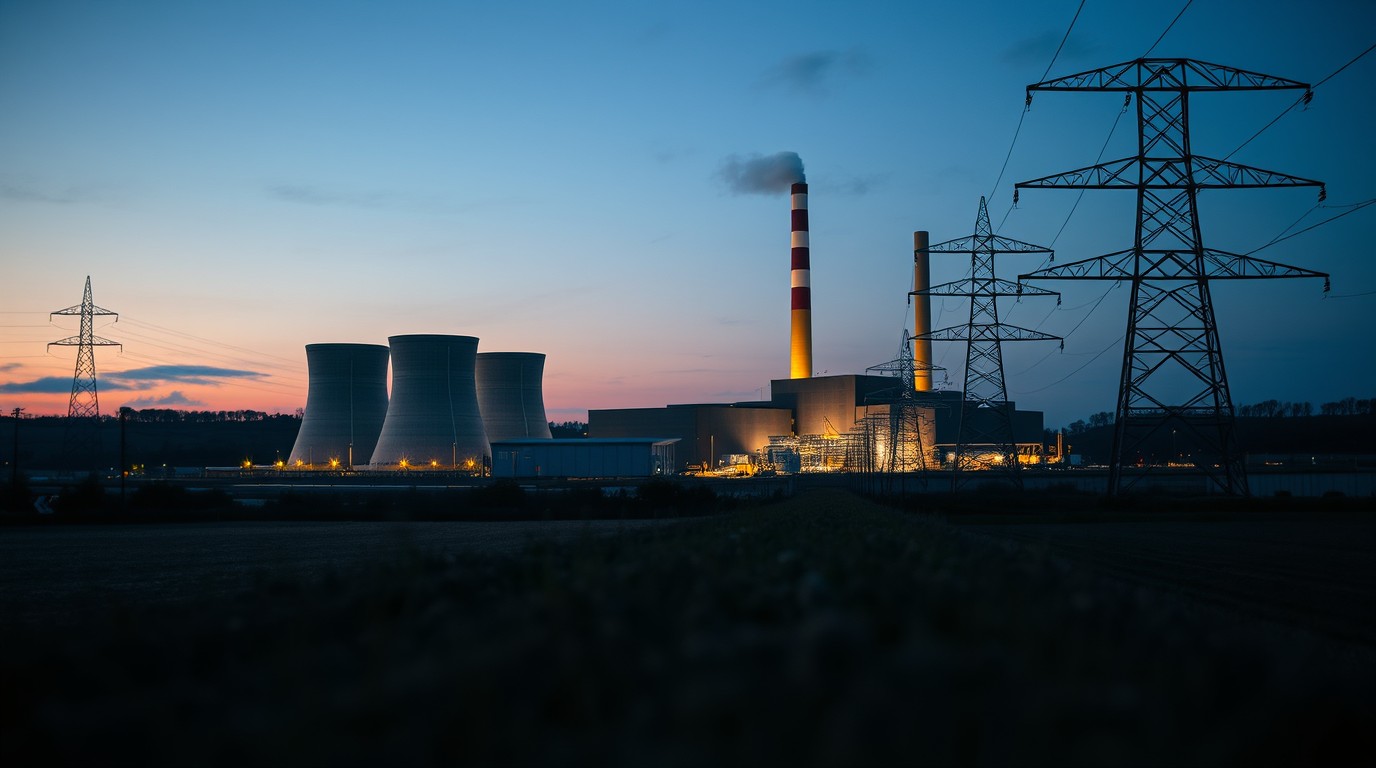
British utility Drax announced on November 3, 2026 a partnership with the Brookfield fund and the AI infrastructure platform Radiant to build a data center of more than 1 gigawatt at the site of its North Yorkshire power station, with an estimated investment of more than £20 billion ($26.8 billion).
The deal places artificial intelligence computing on top of a plant that generates nearly 5% of the UK's electricity by burning biomass pellets and that, according to analysts cited by The Guardian, is the country's largest single emitter of carbon dioxide. The British government said Drax will have a much more limited role after 2027 and will access half of its current subsidies between 2027 and 2031. The transaction comes a week after the government published a draft national policy statement on data centers, in which it described them as infrastructure as fundamental as rail and power networks. That equation between available connection and computing demand is the one being watched by markets planning capacity for artificial intelligence, Mexico included.
The project is organized in three phases. The first envisages up to 100 megawatts operating from the first quarter of 2028 with grid electricity and an initial investment of £2.5 billion. The second adds 500 megawatts between 2028 and 2031, and the third expands capacity after 2031 to exceed the gigawatt. Drax contributes the land and 4 gigawatts of grid access; Radiant handles design and commercialization, and Brookfield the capital through its joint venture with Qai, the Qatari fund. The start depends on planning, regulatory and grid permits, an anchor tenant and the final investment decision. Drax shares rose about 8% the same day, according to CNBC. Will Gardiner, CEO of Drax, said the project will help secure the site's long-term future and protect hundreds of jobs.
The immediate next step is the public consultation planned for this month and the planning application the company is preparing, steps prior to a final investment decision. The signal for energy planning is that existing power stations are positioning themselves as the site of AI computing: the race is no longer decided only on chips, but on who controls land, generation and connection permits.
This article was written with the assistance of artificial intelligence from verified sources and reviewed by a human editor before publication.