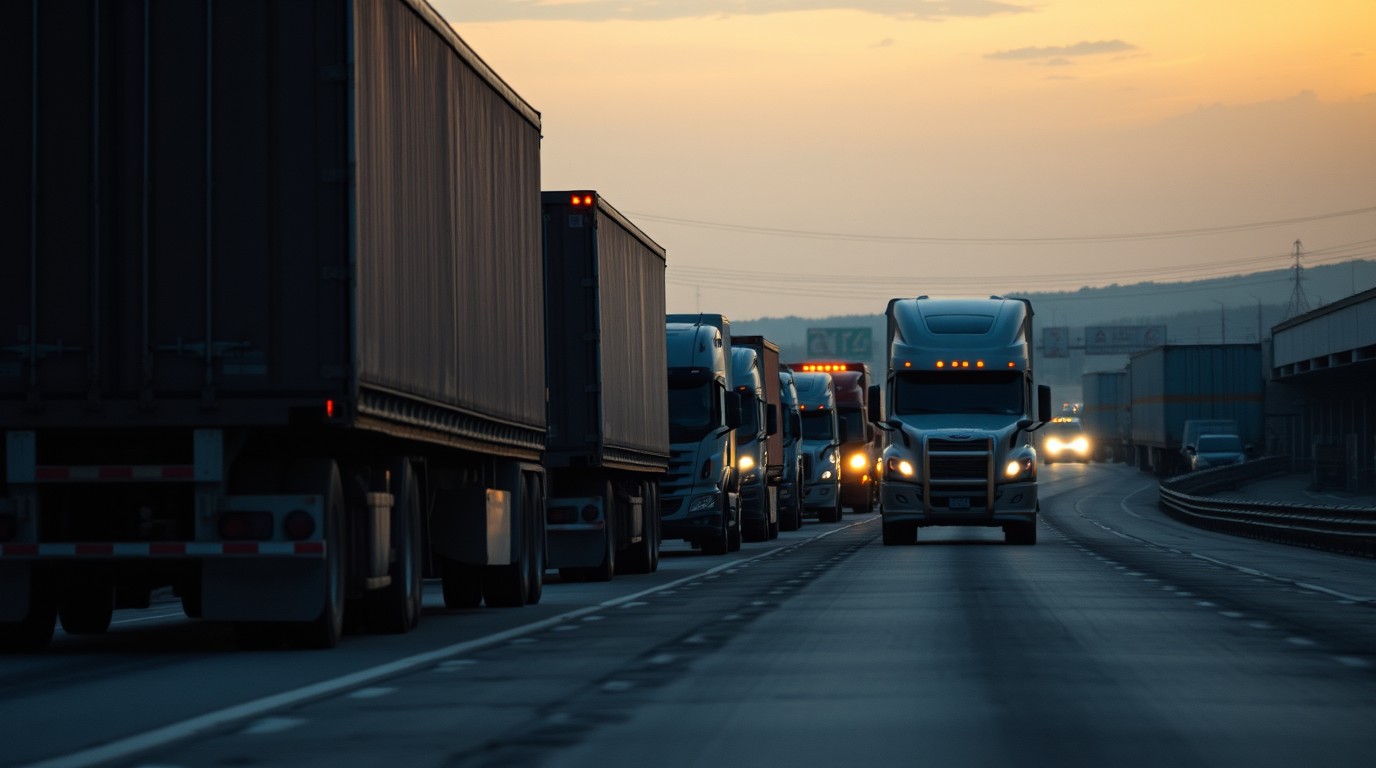
The national cargo truckers' strike called by the National Chamber of Cargo Trucking (Canacar) began this Monday, October 26, 2026, with units halted or moving slowly on federal highways in at least 16 states, including the main expressways of central Mexico.
The call, circulated by Canacar together with Fematrac, Hamotac and Indeco, envisions roadside demonstrations without full closures, according to Milenio. The cargo trucking organizations maintain that the mobilization responds to insecurity on the routes, extortion and rising operating costs. The strike was announced as indefinite until they receive a response to their demands, although the sector left open the possibility of agreements with the federal government. The Secretariat of the Interior (Gobernación) indicated that most of the organizations agreed to dialogue, according to Infobae. For Mexico the sensitive point is logistical: the affected expressways concentrate the movement of goods between the center, the Bajío and the borders.
The map of disruptions is broad and uneven. Milenio reported gatherings on the Culiacán-Mazatlán highway at the El Venadillo area, at the San Cristóbal de las Casas toll booth, on the highway to Laredo and on the Mexico-Puebla expressway, among other points. Infobae documented toll booths and interchanges in Guadalajara, Monterrey, Puebla, Querétaro, Veracruz and Zacatecas, as well as port and airport access points in Baja California. Canacar reported that through September 2026 there were 1,105 robberies against cargo trucking and 15 drivers murdered in the year. Among the guild's demands are better infrastructure conditions, regulation of tow truck and impound lot rates, and adjustments to the sector's tax costs.
The path for the coming hours runs through the negotiating table with the Secretariat of the Interior and through the decision of state delegations to maintain or lift the gatherings. The data point to watch is the operation of the Bajío industrial corridors and the border crossings of Tamaulipas and Nuevo León, where the country's largest volume of cargo is concentrated.
This article was written with the assistance of artificial intelligence from verified sources and reviewed by a human editor before publication.