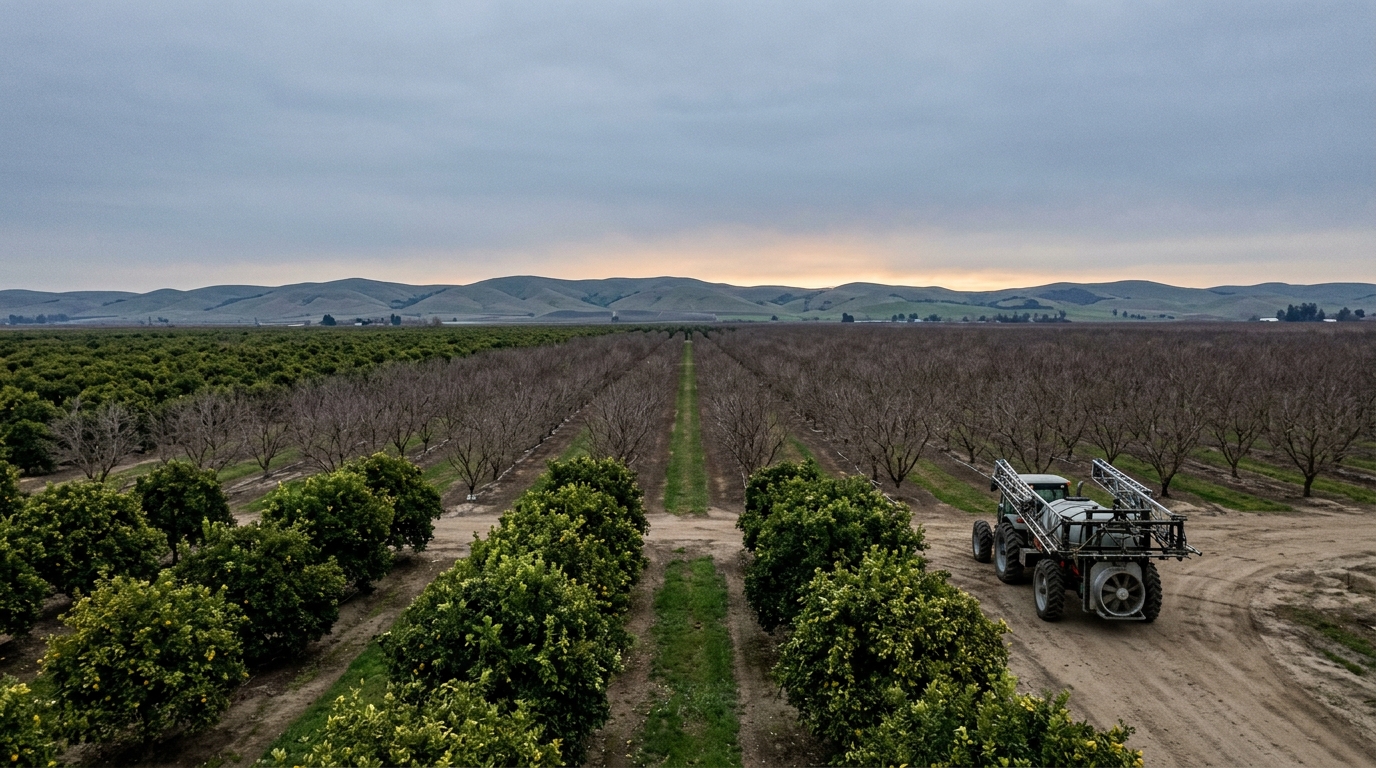
California's Department of Pesticide Regulation (DPR) announced on August 10 the cancellation of all paraquat registrations in the state, with a two-year phaseout. California is the largest user of this herbicide in the United States and the second state, after Vermont, to ban it.
The decision closes a process that began in 2024, when the state legislature passed a law requiring the regulator to reassess the herbicide's health risks. The DPR's preliminary review confirmed associations between exposure to the compound and thyroid damage, birth defects, and risks to birds and mammals. Faced with demands for new scientific studies, manufacturers including Syngenta chose to voluntarily withdraw their registrations starting in April, with the last doing so on August 6. The standard California is now adopting has been in force in more than 70 countries, including China, the United Kingdom, and the European Union, according to The Guardian.
Paraquat is applied to millions of acres of American crops: roughly 14 million pounds are used each year on wine grapes, pistachios, almonds, citrus, soybeans, and cotton, concentrated in California's Central Valley. Exposure has been linked to Parkinson's disease, and there is no antidote for poisoning. The DPR also noted that the compound can persist in soil for potentially decades, complicating use restrictions as an environmental protection measure. Syngenta, which produced the majority of the herbicide, withdrew its permit in April and announced it will stop manufacturing it. Under state law, distributors may sell canceled products for up to two years after each cancellation, while the agency funds research into sustainable pest management alternatives.
The registration withdrawals will be complete within two years, in a process running parallel to a public health groups' lawsuit against the federal Environmental Protection Agency over the herbicide's reauthorization. The California case offers a template for regulatory design: a legally mandated periodic risk reassessment that, in this instance, ended with the industry's voluntary withdrawal.
This article was drafted with artificial intelligence assistance based on verified sources and reviewed by a human editor before publication.