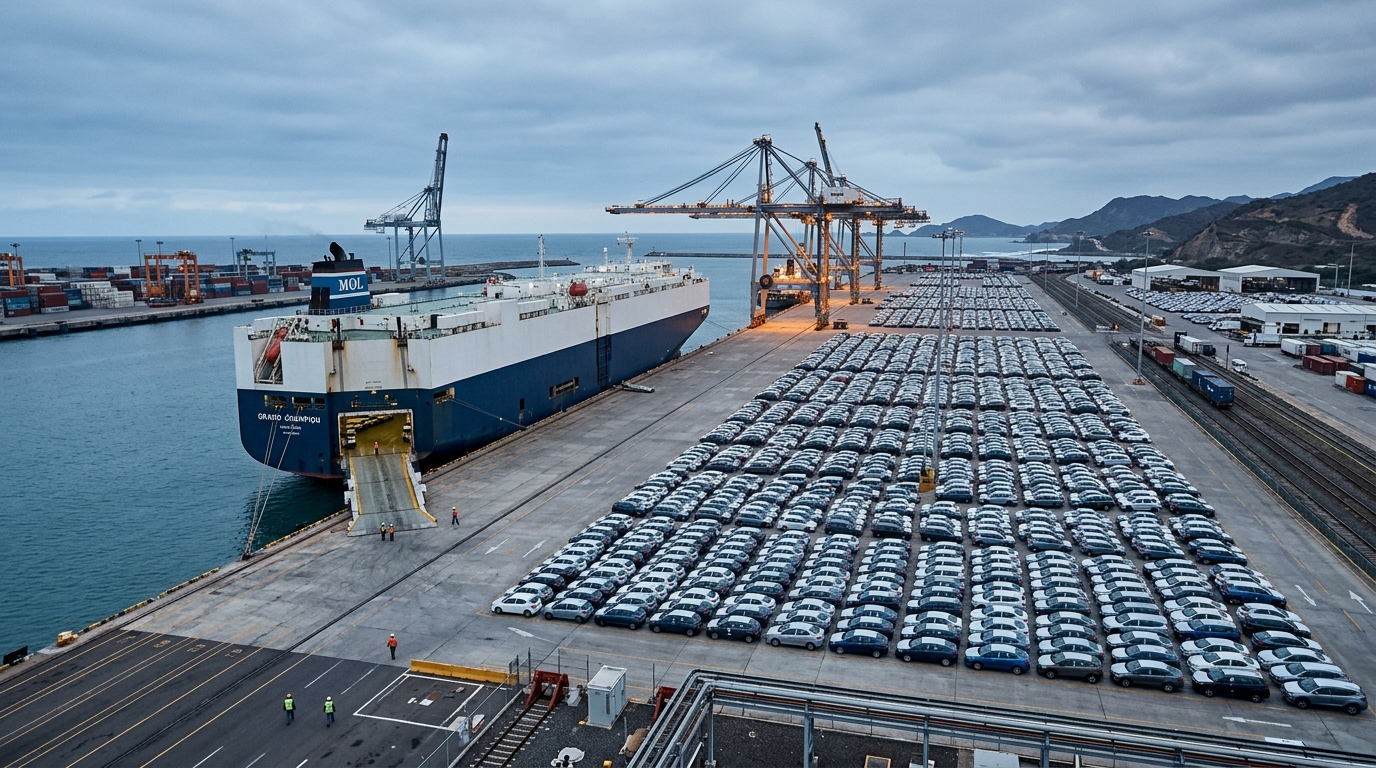
The up-to-50% tariff on vehicles from countries without a trade agreement with Mexico, in effect since January 2026, pushed vehicle traffic at the port of Lázaro Cárdenas down 7.2% between January and July, according to data from the Secretaría de Marina cited by Forbes México. The terminal processed 378,347 units, compared with 407,897 in the same period of 2025.
The decline is not limited to Lázaro Cárdenas. At Mazatlán and Altamira, the other main entry points for Asian vehicles, volumes fell 15% and 13.8%, respectively, and combined the three terminals moved 1,155,496 units between January and July, 4.9% less than a year earlier. The drop follows the entry into force of the up-to-50% tariff that Mexico applies to vehicles from China, India, Thailand, Indonesia, and South Korea, a measure that Forbes México links to the protection of manufacturers with plants and production lines in the country. Before the tariff took effect, most Chinese brands reinforced their inventories to import under the previous conditions, Expansión reported.
At the SSA terminal, which specializes in vehicles, each unit stays an average of seven days, although during the months of heaviest arrivals from Asian brands the dwell time stretched to 35 or 40 days, according to Expansión. The congestion led the Administración del Sistema Portuario Nacional (Asipona) to open two yards covering 5.7 hectares for storing vehicles of Asian origin and to restrict access for brands holding inventory longer than usual. These ports serve as the entry point for brands such as BYD, MG Motor, and Geely, which sell their vehicles in the Mexican market. By contrast, the port of Veracruz grew 4.4% between January and July, handling 435,539 units.
The Transisthmian Corridor, which in July moved 3,000 vehicles from a South Korean automaker compared with 900 a year earlier, is the latest signal of a vehicle entry network in active diversification. The Secretaría de Marina's next report will show whether that route is gaining ground against the Pacific ports.
This article was drafted with artificial intelligence assistance from verified sources and reviewed by a human editor before publication.