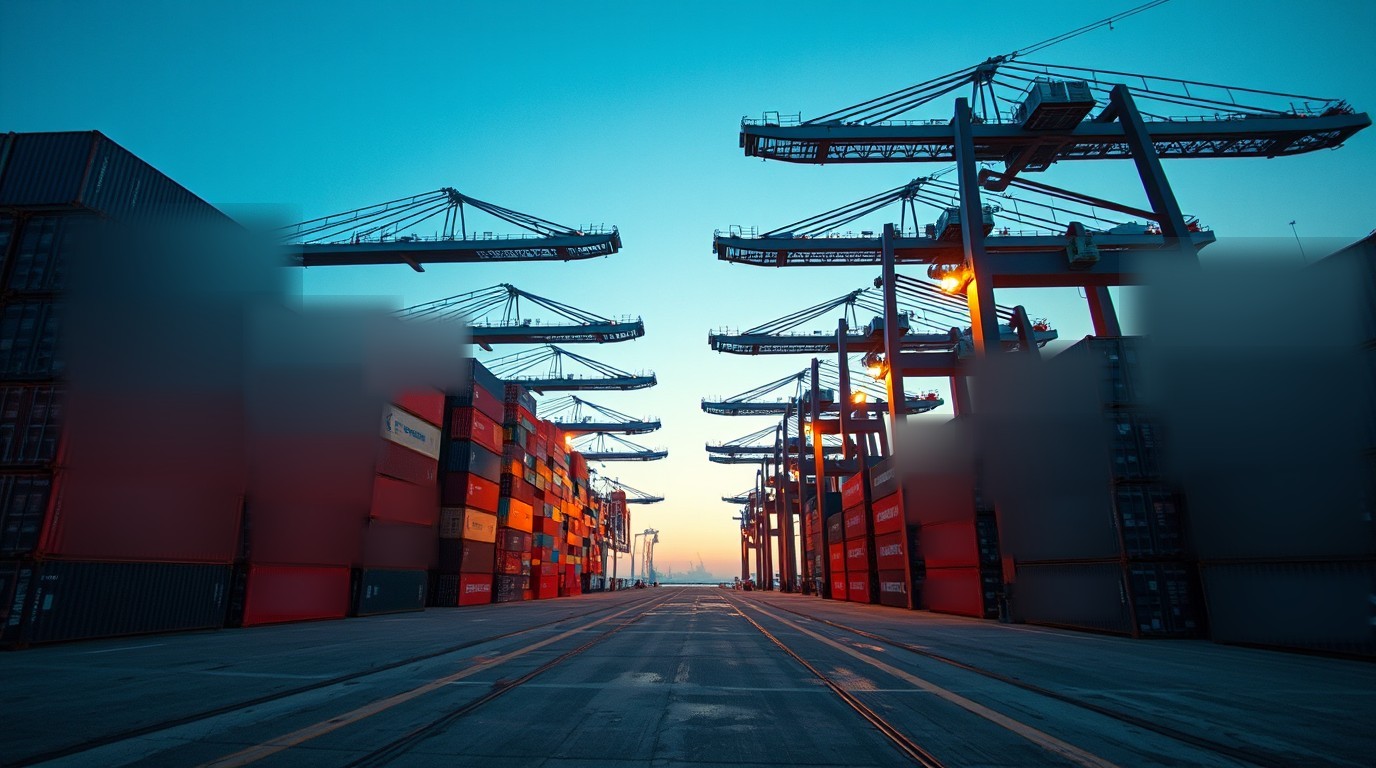
The freight rate for a 20-foot container between China and Mexico rose from $2,000 to nearly $6,000 since the start of the conflict between the United States and Iran on February 28, according to the Mexican Association of Shipping Agents (Amanac). The group warned on November 2 that this cost will pressure the prices paid by Mexican consumers.
The mechanism is direct: Mexico moves 33% of its goods by sea, according to data from the Ministry of Infrastructure, Communications and Transport cited by El Universal Cartera. Freight surcharges are passed first to the importer and then to the shelf. The most recent price data comes from INEGI: annual inflation was 3.62% in the first half of October 2026, with a biweekly increase of 0.41% in the National Consumer Price Index. For an economy that imports inputs and consumer goods from Asia, freight becomes a channel through which geopolitical tension reaches the basic basket and production costs.
Roberto Meillón Covarrubias, president of Amanac, explained that the conflict affects transport supply and anticipated that the high-cost scenario will last between six and eight months. The World Container Index placed the Shanghai-Los Angeles route at $7,514 at the end of October, compared with $2,438 a year earlier. During the pandemic, the comparable rate exceeded $20,000. Carriers note that the adjustment is passed first to users and then to consumers, and the Asia-Mexico route also operates with longer transit times and fuel surcharges that shipping lines review every month. Grupo Bursátil Mexicano and Masari Casa de Bolsa project inflation of 4.3% at the close of 2026, according to El Universal.
The next INEGI biweekly reading, corresponding to the second half of October, will show whether the higher freight costs are already appearing in goods prices. Amanac expects the pressure to last at least half a year, a period that crosses the highest-consumption season of the Mexican calendar.
This article was written with the assistance of artificial intelligence from verified sources and reviewed by a human editor before publication.