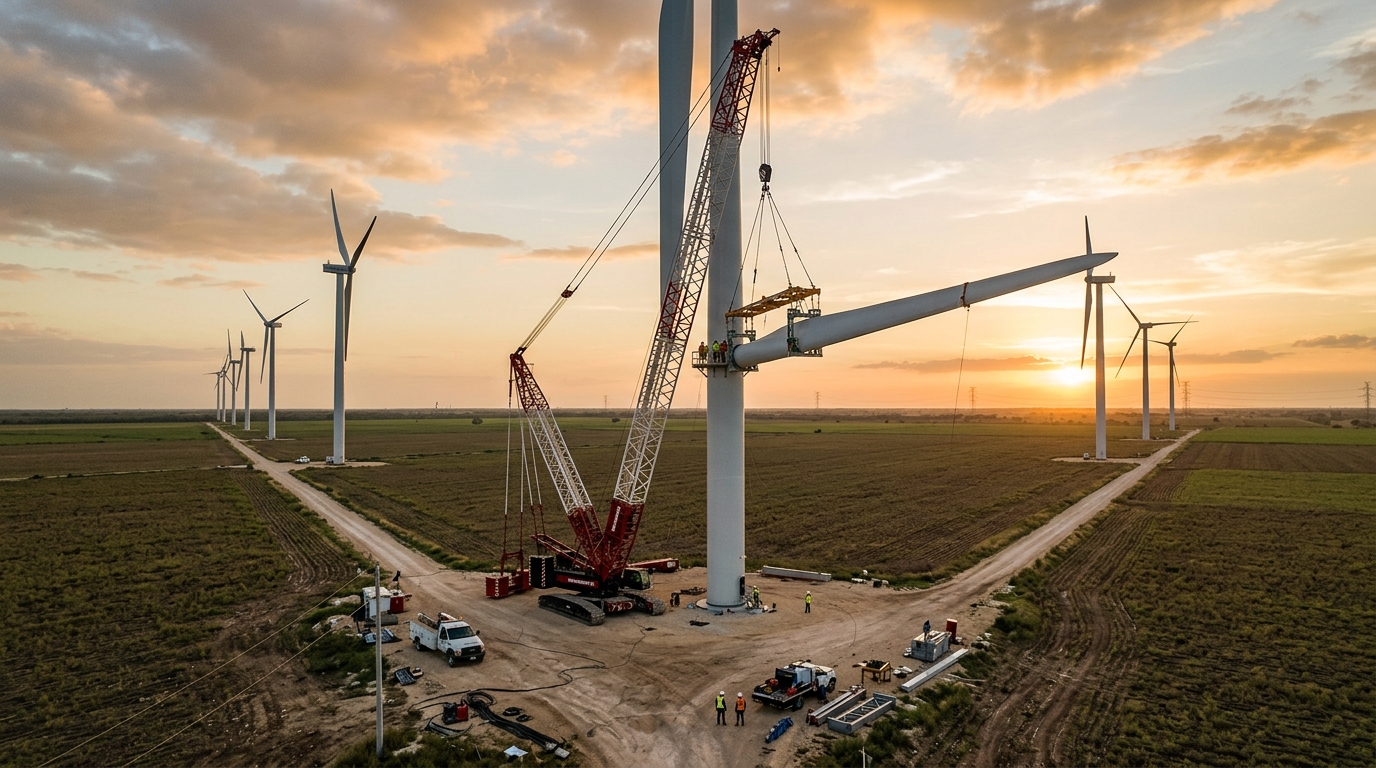
In early August 2026, the Tizimín II Wind Farm entered its construction phase in Yucatán with the arrival of its components at the Progreso deep-water port: 75 megawatts of capacity, private investment of 2,600 million pesos and commercial operation scheduled for 2028.
It is the first wind farm to begin construction under the energy framework issued in 2025 by the administration of President Claudia Sheinbaum, which opened wind and photovoltaic generation to private players. According to El Financiero, the entire national project pipeline remains pending and the next one, in Tamaulipas, will not start construction until December; no wind farm had been built in the state for almost six years. Demand in the peninsula grows by around 3.8 percent a year, driven by tourism and agribusiness, and its transmission links limit energy imports, which makes local generation strategic. El Diario de Yucatán details that Governor Joaquín Díaz Mena witnessed the unloading of 4,380 tonnes at pier 7 of the port and that the revival rests on coordination between the state government, the federal government and the Federal Electricity Commission.
The park will be located in the Yohactún Hidalgo commissariat, 47 kilometers north of Tizimín, and will be interconnected to the Federal Electricity Commission's 115-kilovolt Tizimín substation. Its estimated annual generation of 272 gigawatt-hours is equivalent to the consumption of around 140,000 homes, according to El Diario de Yucatán. The private investment of 2,600 million pesos, around 140.6 million dollars, includes port operations, specialized road transport, civil works and electromechanical assembly with local suppliers from Tizimín and Progreso. The project foresees 320 direct and 680 indirect jobs during construction and operation.
Commercial operation of the park is scheduled for 2028, and the next project on the calendar, the Tamaulipas wind farm, begins construction in December. The Yucatán cycle, the first to complete the path from permit to construction under the new framework, marks the starting point for the rest of the country's renewable pipeline.
This article was written with the assistance of artificial intelligence based on verified sources and reviewed by a human editor before publication.