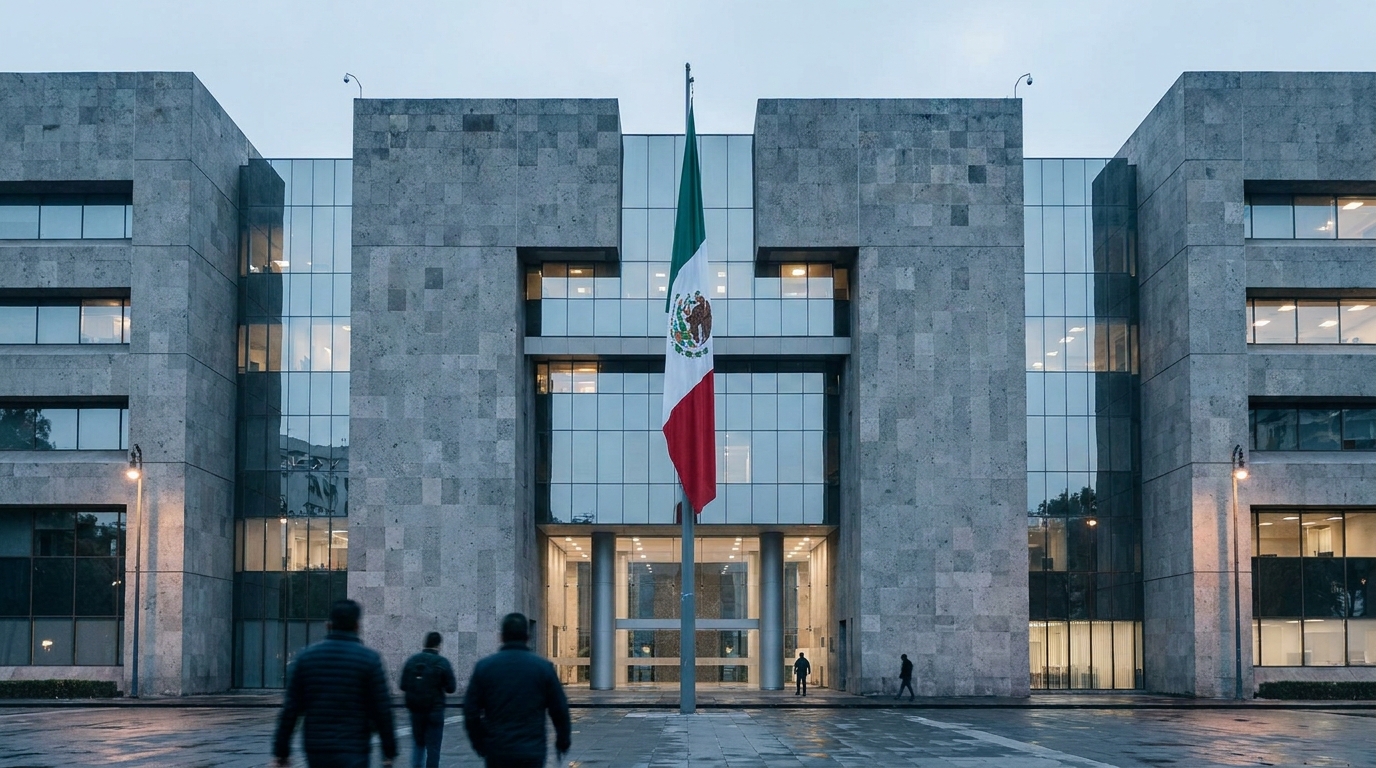
The third joint review round of the USMCA opens on July 21 in Mexico City. The United States delegation, led by Trade Representative Jamieson Greer, will meet with President Claudia Sheinbaum at the National Palace following the technical sessions. Six areas anchor the agenda: steel and aluminum, the automotive sector, economic security, labor issues, agriculture, and electronic payment services.
This is the third bilateral meeting since Washington activated the joint review mechanism. Greer described the US trade deficit with Mexico as a structural challenge; the deficit reached $197 billion in 2025, a 17 percent year-over-year increase, during his remarks at the Aspen Security Forum, according to La Jornada. Mexico arrives at the table having reduced outstanding issues from 54 to 14, according to the Economy Secretariat led by Marcelo Ebrard, with the objective of preserving zero tariffs on at least 85 percent of Mexican exports to the United States.
The advances recognized by Washington ahead of this round are concrete. On July 3, Mexico updated its dual-use goods export control framework, aligning it with the international regimes of the Wassenaar Arrangement and the Australia Group, as reported by Infobae. On the environmental front, the ProForest Avocado program certifies approximately 90 percent of Michoacán's avocado exports as free of illegal deforestation, and Mexico has blocked around 2,000 orchards lacking proof of legal origin, with a zero-deforestation target extendable to berries, mango, and citrus by 2030. On the northern border, the reactivation of the San Antonio de los Buenos treatment plant aims to contain wastewater discharges into the Tijuana River. On the customs front, the modernization of the Single Window for Foreign Trade and a new customs agents program at all ports round out the package of measures, according to El Financiero.
The round runs through July 23, and the Greer-Sheinbaum meeting marks the convergence of accumulated technical progress with the highest level of political validation. The outcome of these sessions will define the negotiating terrain for the remainder of 2026.
This article was drafted with artificial intelligence assistance from verified sources and reviewed by a human editor before publication.