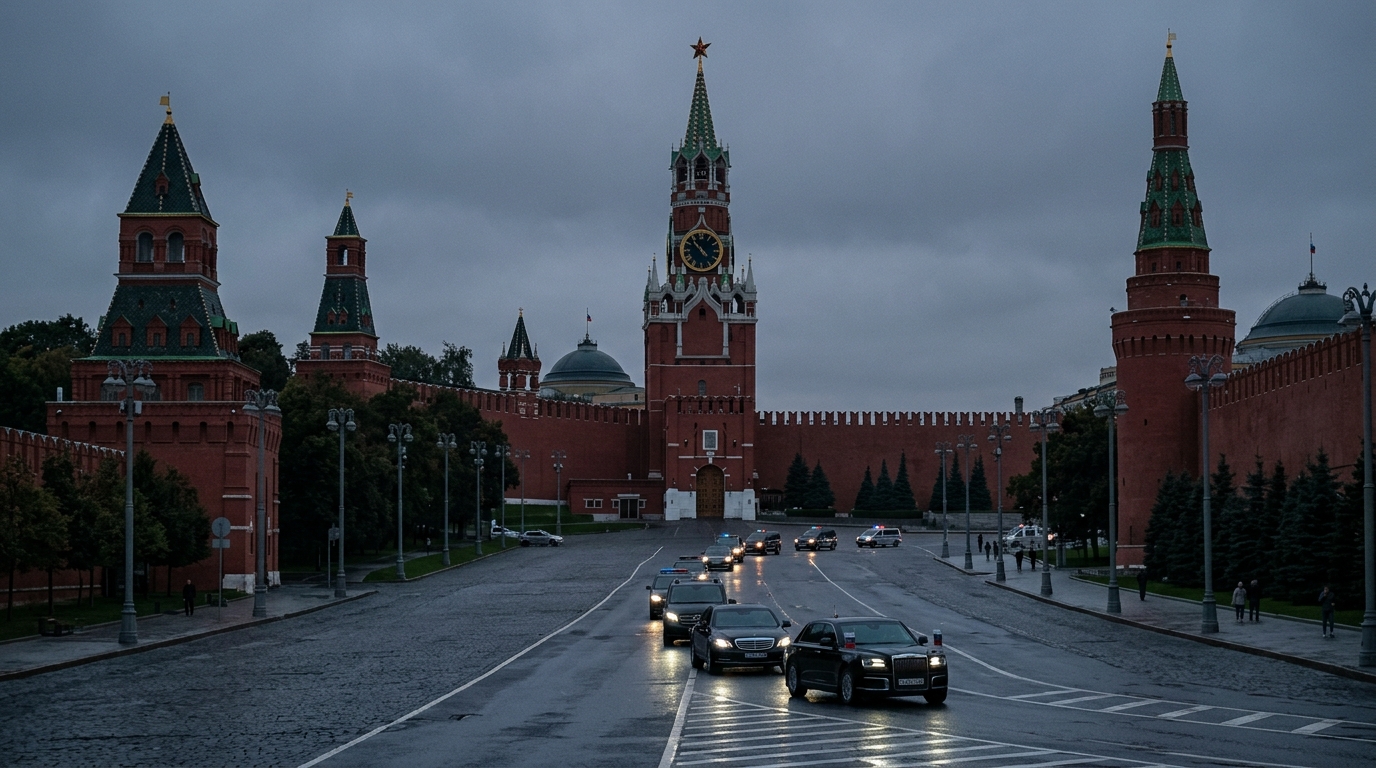
U.S. envoys Steve Witkoff and Jared Kushner landed in Moscow on Saturday, September 5, to restart peace negotiations between Russia and Ukraine, a visit both sides accompanied with a pause in their air strikes for the duration of the meeting.
The trip aims to revive a dialogue the Kremlin described as mired in a deep pause, one that was suspended in February when Washington's attention shifted to the conflict with Iran, according to El País. The meeting comes two weeks after CIA Director John Ratcliffe visited Moscow, a trip the Kremlin characterized as a contact between intelligence services. Donald Trump announced on Friday that his envoys were carrying a proposal to end the war, without disclosing its contents, and Ukrainian President Volodymyr Zelensky welcomed the continued active participation of the United States. For Mexico and Latin America, the takeaway is a market one: a prolonged conflict sustains volatility in energy and grain prices, inputs that weigh on the region's imported inflation, so each step toward a ceasefire eases that pressure.
In Moscow, Witkoff and Kushner were received at the airport by Russian presidential envoy Kirill Dmitriev, and are expected to meet with Vladimir Putin. Kremlin spokesman Dmitry Peskov said Putin ordered a 72-hour halt to attacks on Kyiv starting at midnight, and Zelensky announced the suspension of his country's attacks during the visit, according to The Guardian. Fundamental differences persist: Moscow holds its position that Ukraine cede four regions and not join NATO, a condition Kyiv rejects. On the ground, the front line has seen no significant advances in months, and both sides have intensified air strikes on increasingly distant targets.
The immediate agenda is verifiable: Witkoff and Kushner are scheduled to travel to Kyiv on Sunday, September 6, their first visit to the Ukrainian capital, in a window Moscow bounded with a 72-hour halt to attacks on the city. Washington's new proposal will be on the table, and how it is received will provide the next signal on the direction of the dialogue.
This article was drafted with artificial intelligence assistance from verified sources and reviewed by a human editor before publication.