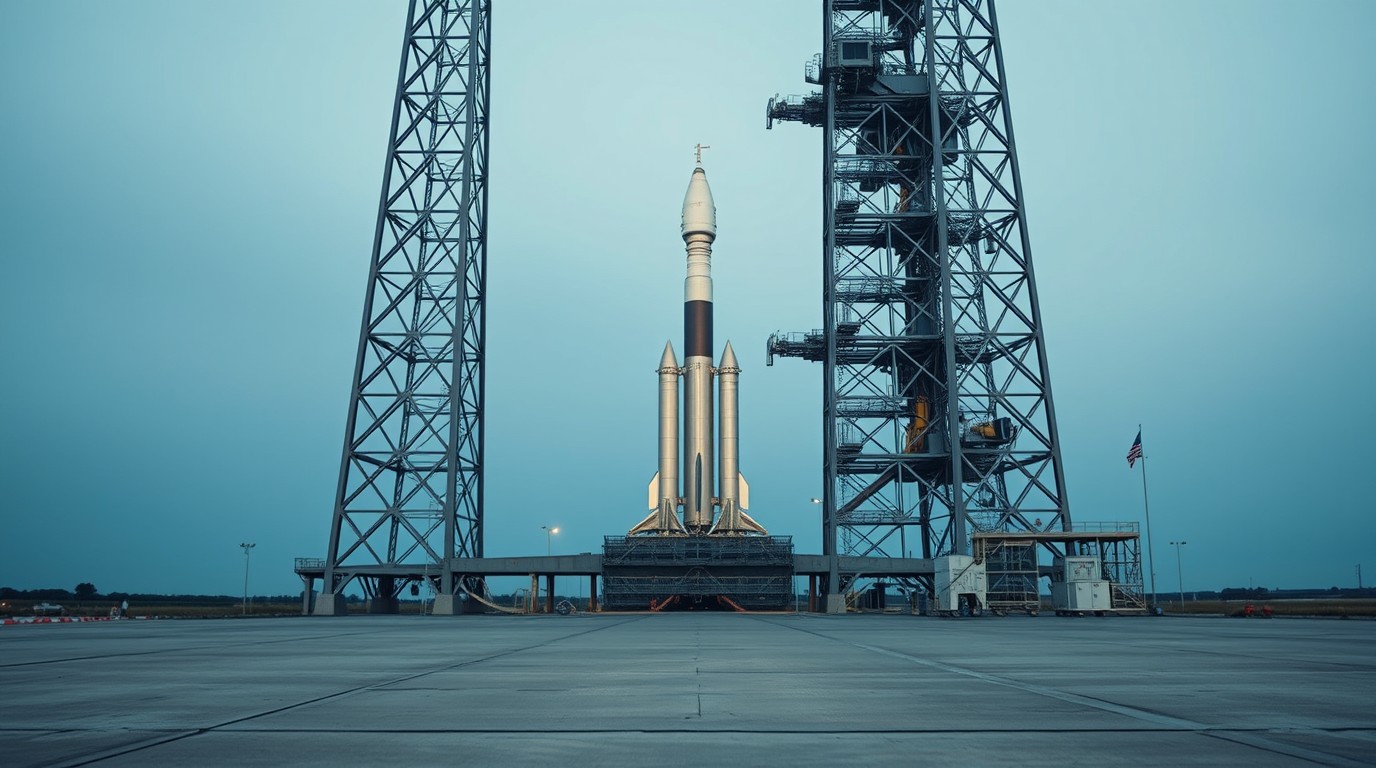
SpaceX recovered a complete Starship spacecraft on Saturday, November 14, for the first time in its history, catching it with the mechanical arms of its launch tower at Starbase, Texas, after 22 hours of flight and 14 laps around the Earth. The stainless steel spacecraft hung suspended over the platform after crossing the continent and descending in a vertical position.
Liftoff occurred on Friday, November 13, at 16:47 local time (22:47 GMT) from a base near the border between the United States and Mexico, and was the fifteenth test flight of a full-scale Starship since 2023, according to El Financiero. A dispatch from Aristegui Noticias notes that the recovery marks a milestone in the pursuit of fully reusable rockets, a goal aimed at reducing mission costs and enabling more frequent launches. For Mexico and Latin America the point of contact lies in that chain: the 26 Starlink satellites the spacecraft released in orbit expand a satellite internet constellation, and the launch cadence defines how much new capacity becomes available each year for localities beyond the terrestrial network.
SpaceX spokesperson Dan Huot summed up the maneuver during the broadcast: "We have caught a Starship and now everything changes." The spacecraft, the second stage of a 124-meter system, the largest and most powerful in the world, orbited at an altitude of 265 kilometers and streamed live video via Starlink; its capture proved more complex than the three previous booster recoveries because it descended at higher speed and from a greater altitude. The Super Heavy booster did not complete its return: its engines stopped thrusting early, the guidance system diverted it to the Gulf of Mexico and it self-destructed before touching the water. Company executives told journalists, on a tour of its 93,000-square-meter factory at Starbase, that the plant produces one spacecraft every two weeks and one booster every four.
SpaceX expects to begin launching Starship from the Kennedy Space Center in Florida in the coming months: it is the starting point for NASA's next Artemis mission, which will rehearse docking in Earth orbit. NASA aims for Artemis IV to carry out the first crewed Moon landing since the Apollo era in 2028.
This article was written with the assistance of artificial intelligence from verified sources and reviewed by a human editor before publication.