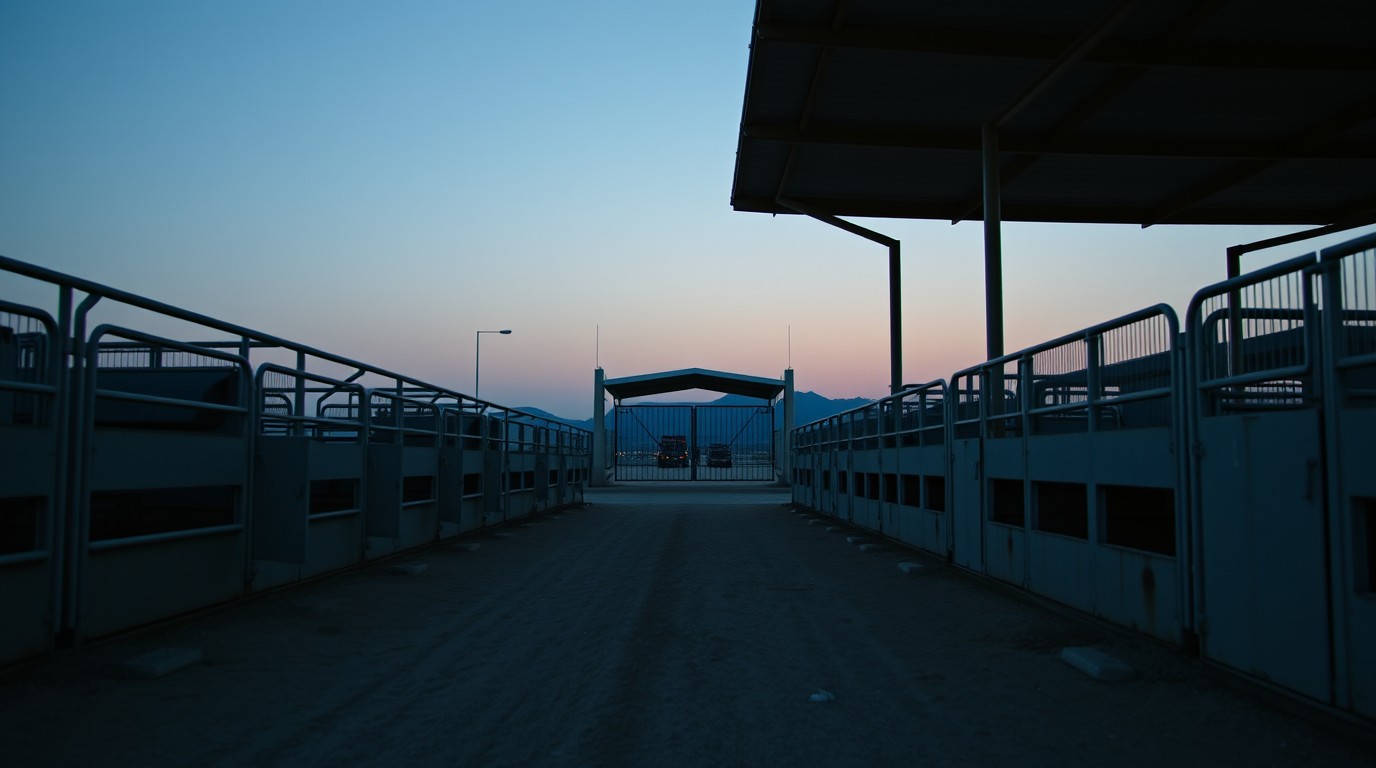
Cattle exports on the hoof from Sonora to the United States were suspended on Friday, October 16, 2026, after inspection personnel detected lesions in the mouth of a calf at the Agua Prieta quarantine station, the border crossing that connects with Douglas, Arizona.
The Unión Ganadera Regional de Sonora (UGRS) reported that the measure is precautionary while health authorities rule out foot-and-mouth disease, a notifiable disease. The Secretaría de Agricultura y Desarrollo Rural specified that the lesions may also correspond to vesicular stomatitis or bovine papular stomatitis, conditions previously identified in Sonora and Chihuahua that pose no animal health risk, and stressed that there is no confirmation of foot-and-mouth disease. The episode unfolds along a trade route that was only just regaining momentum: Agua Prieta resumed shipments on August 24, 2026, with about 750 head per day and a target of 1,500, after more than a year of interruptions due to the New World screwworm. For livestock producers in northern Mexico, access to that market defines prices, rural employment and the flow of foreign currency through the cattle chain.
Specialists from the Mexico-United States Commission for the Prevention of Foot-and-Mouth Disease (CPA) took samples that the Servicio Nacional de Sanidad, Inocuidad y Calidad Agroalimentaria (Senasica) is analyzing at the high-security laboratory in Palo Alto, in Mexico City. The UGRS reported that about 1,300 animals were returned to their ranches and that cattle destined for export were blocked for 60 days in the Registro Electrónico de Movilización (REMO); facilities are also being disinfected. The government of Sonora indicated that the crossing will resume on Tuesday, October 20, after applying the preventive health protocol, and Agricultura noted that the San Jerónimo station in Chihuahua is operating normally. Juan Carlos Ochoa Valenzuela, president of the UGRS, called on veterinarians to strengthen cattle inspections at their place of origin and to promptly report any findings to health authorities.
The immediate timeline depends on a laboratory result: if the tests rule out foot-and-mouth disease, export appointments resume next week and the flow toward Arizona recovers its curve. The signal is that the binational protocol is triggered by a single finding and that traceability at origin determines how long a pause lasts.
This article was drafted with artificial intelligence assistance from verified sources and reviewed by a human editor before publication.