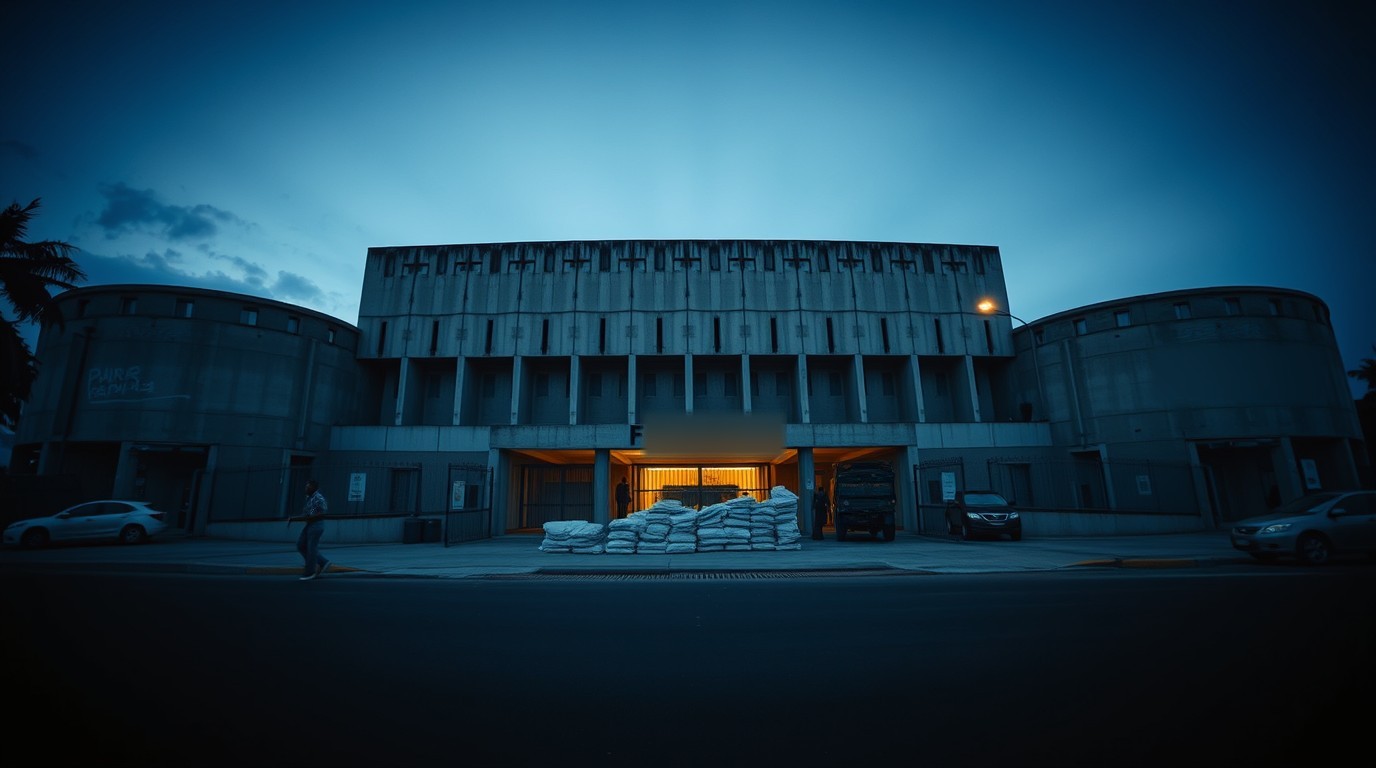
El Salvador has kept roughly 2,500 military personnel in Haiti since October 18, 2026, a deployment that this week added the recapture of the Sylvio Cator stadium in Port-au-Prince and that divides the Haitian population between relief and distrust. The operation began as a search for four missing Salvadoran aviation technicians.
The trigger was the disappearance, on October 18, of four Salvadoran aviation technicians attached to the UN-backed Gang Suppression Force, attacked near Port-au-Prince, according to Al Jazeera. President Nayib Bukele first sent about a hundred special forces and then expanded the operation to roughly 2,500 personnel, who act under a bilateral agreement with the Haitian government and, to a large extent, outside United Nations oversight. For Mexico and Latin America the case raises a public policy question: how far can a state's security be outsourced when it has areas outside institutional control, and under what rules of command and use of force.
The stadium, held by the gang of a leader known as Izo since 2024, was retaken by Haitian police and Salvadoran troops, who set up an operating base there, according to The Guardian. Displaced residents celebrated the troops and asked to return to their homes. Records from Armed Conflict Location and Event Data, cited by Al Jazeera, show a 46% rise in clashes and drone attacks in the 21 days after the deployment compared with the 21 before, with more than 100 people killed, at least 26 of them civilians. Haitian police reported 34 suspected gang members killed in an operation near the stadium. Amnesty International asked both governments to disclose the chain of command and the rules on the use of force; Vice President Félix Ulloa said the agreement will remain classified. Analysts consulted by Al Jazeera describe the gains as fragile, because there is no permanent presence after each incursion.
The calendar sets two tests ahead: El Salvador votes in February and its government has said the mission will conclude when the four technicians appear, whose fate remains unconfirmed. The debate over command, civilian oversight and duration will determine whether the model becomes a regional reference.
This article was written with the assistance of artificial intelligence from verified sources and reviewed by a human editor before publication.