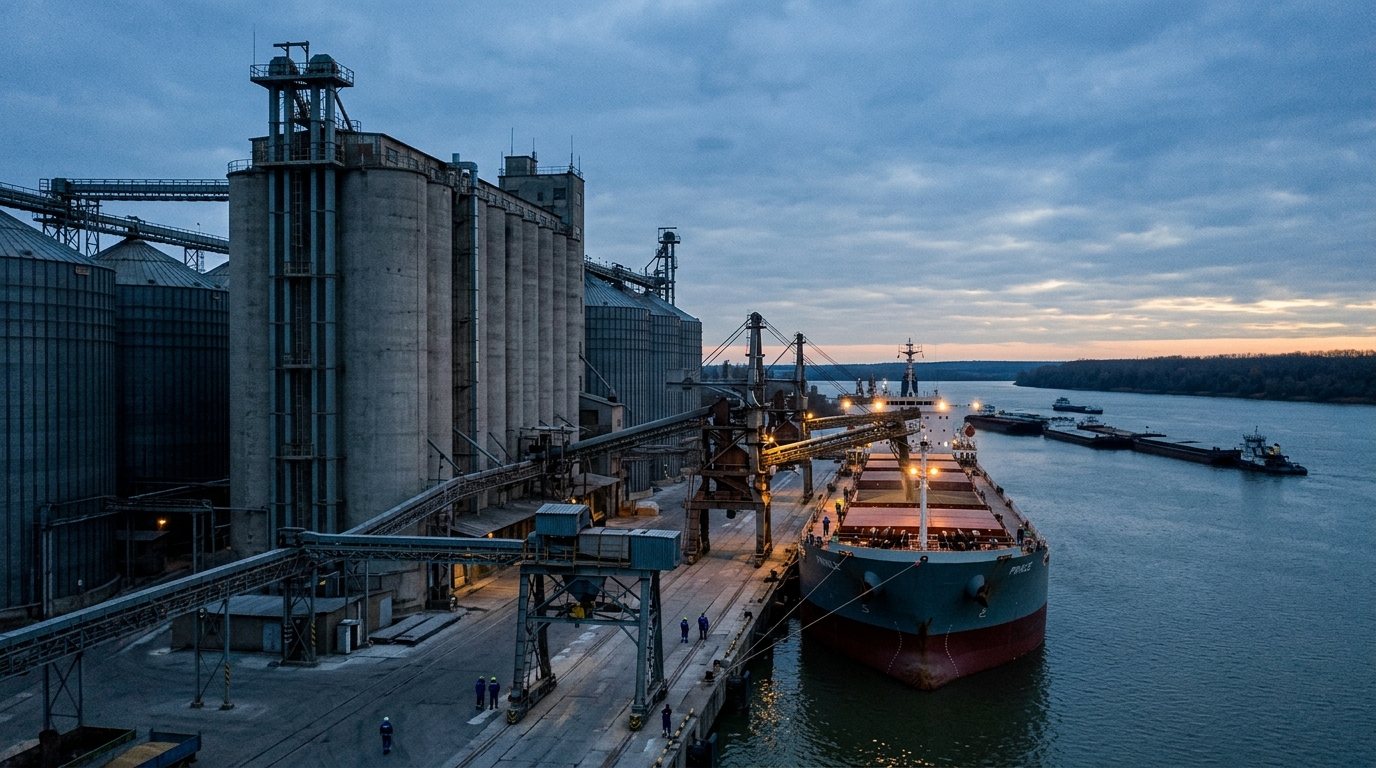
Ukraine's grain exports fell 76% in the current month of August compared to the same period in 2025, according to The Irish Times, as Russian attacks on Black Sea ports and vessels reduced shipments to a minimum. Ukraine's Ministry of Agriculture cut its export forecast for the 2026-2027 season by 12%, from 43 to between 38 and 40 million tonnes.
The pattern mirrors 2022: following the Russian invasion, the United Nations and Turkey brokered a grain deal that Russia abandoned the following year, and Ukraine responded by establishing its own maritime corridor along the western Black Sea coast. That route is again under threat: Russia has launched more than 70 attacks on port infrastructure and 62 on vessels, according to Ukraine's port administration, while Moscow maintains that its actions target military structures and ships transporting foreign weapons. Ukraine is rerouting grain through the Danube and rail routes to Romania, Poland, Hungary, and Slovakia, but these alternatives do not replace the Black Sea, through which the bulk of exports flowed. Mexico is a net importer of corn and wheat, grains it purchases in dollars, and this week's wheat price surge in Chicago illustrates how global supply drives the prices it pays.
Agriculture accounts for nearly 60% of Ukraine's export revenues, and the country's Central Bank estimates the blockade will cost approximately 2,500 million dollars in foreign exchange earnings for the remainder of the year, according to El País. Ukraine expects a harvest of close to 60 million tonnes this year, roughly the same as in 2025, and supplies around 6% of the world's wheat and 11% of its corn, according to Denys Marchuk, vice president of the Ukrainian Agrarian Union. In the early hours of Thursday, Russia attacked the port of Izmail, the most important Danube port, while Kyiv stepped up its own strikes against Russian facilities: on Wednesday, Ukrainian drones attacked Novorossiysk and Chicago wheat prices rose 3%, because Russia is the world's largest wheat exporter.
The corn harvest begins next month, and Ukraine's proposal to suspend attacks on civilian targets in the Black Sea, transmitted through an intermediary and still unanswered, will define the next stretch: if grain cannot find an outlet, Ukraine faces a potential storage shortfall of up to 11 million tonnes.
This article was written with artificial intelligence assistance based on verified sources and reviewed by a human editor before publication.