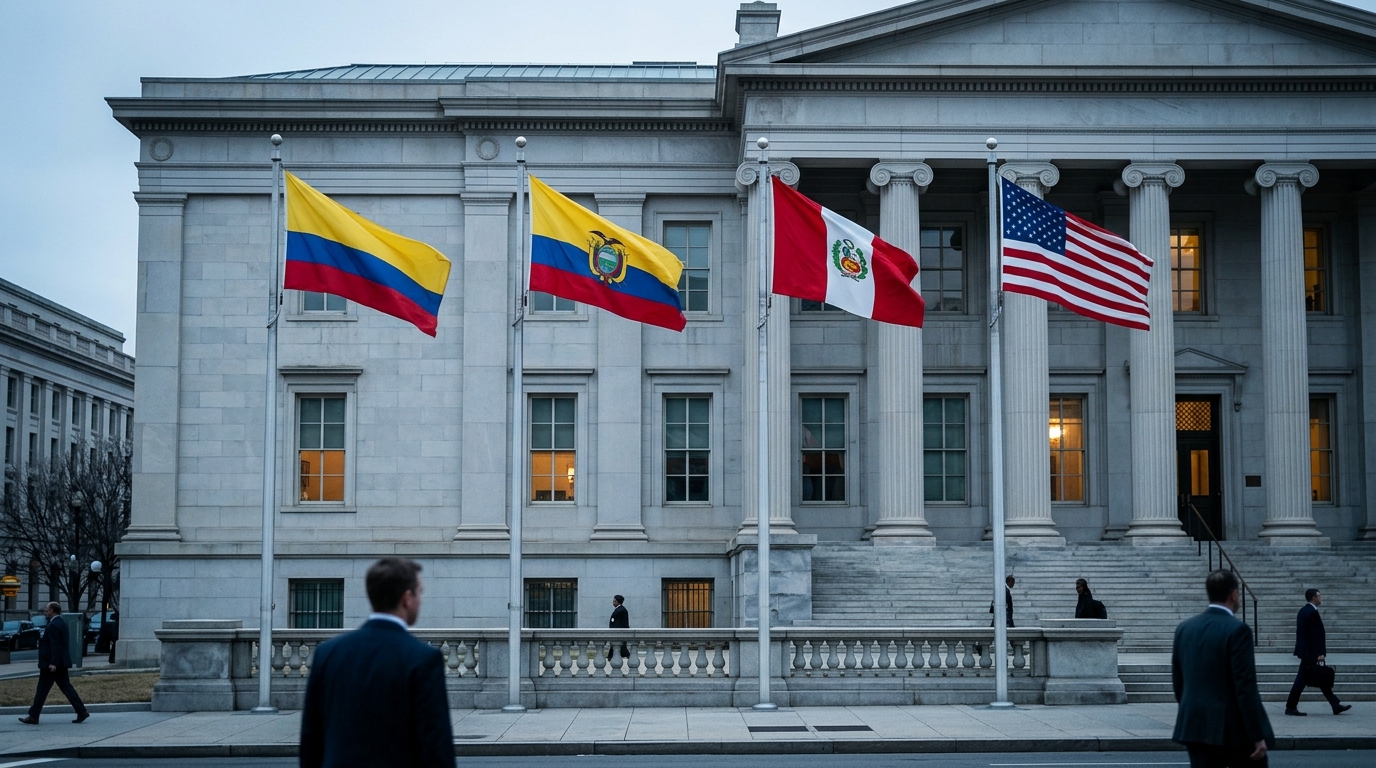
U.S. Secretary of State Marco Rubio begins a tour of Colombia, Ecuador, and Peru this Tuesday, September 8, running through September 10, according to the itinerary published by the State Department. The trip brings together three governments that have made security cooperation with Washington a priority.
The trip reflects the political turnover the region has experienced in recent months: Colombia inaugurated a new president in August, Abelardo de la Espriella, successor to Gustavo Petro; Peru installed its new president, Keiko Fujimori; and Ecuador continues under Daniel Noboa. According to Al Jazeera, the Donald Trump administration has reframed the fight against drug trafficking as a battle against narcoterrorism and has pushed for military-profile security agreements across the region. Beyond the three countries on the itinerary, the U.S. administration has also backed Nasry Asfura in Honduras and Rodrigo Paz in Bolivia, and maintains close ties with Javier Milei in Argentina and Nayib Bukele in El Salvador. That antinarcotics axis runs through the bilateral agenda the United States maintains with Mexico, making this tour a useful lens for reading where Washington's hemispheric security policy is headed.
The official agenda, released by the State Department on September 4, centers on three pillars: Washington's support for Colombia's response to last month's earthquake, which left at least 330 dead; enhanced cooperation against narcoterrorism; and the deepening of trade relations. Rubio will meet with de la Espriella in Bogotá, with Noboa in Quito, and with Fujimori in Lima. De la Espriella joined the Shield of the Americas in August, a group of 19 countries that, according to Al Jazeera, committed to using lethal force against the cartels, while Fujimori has offered to tighten the relationship with the United States and launch a military offensive against criminal groups in Peru. The State Department has not yet published a more detailed agenda for the trip.
The tour leaves two benchmarks to watch: the outcomes of the meetings over the next three days, and Brazil's presidential election in October, the next test of how far alignment with Washington extends across the region.
This article was written with artificial intelligence assistance based on verified sources and reviewed by a human editor before publication.