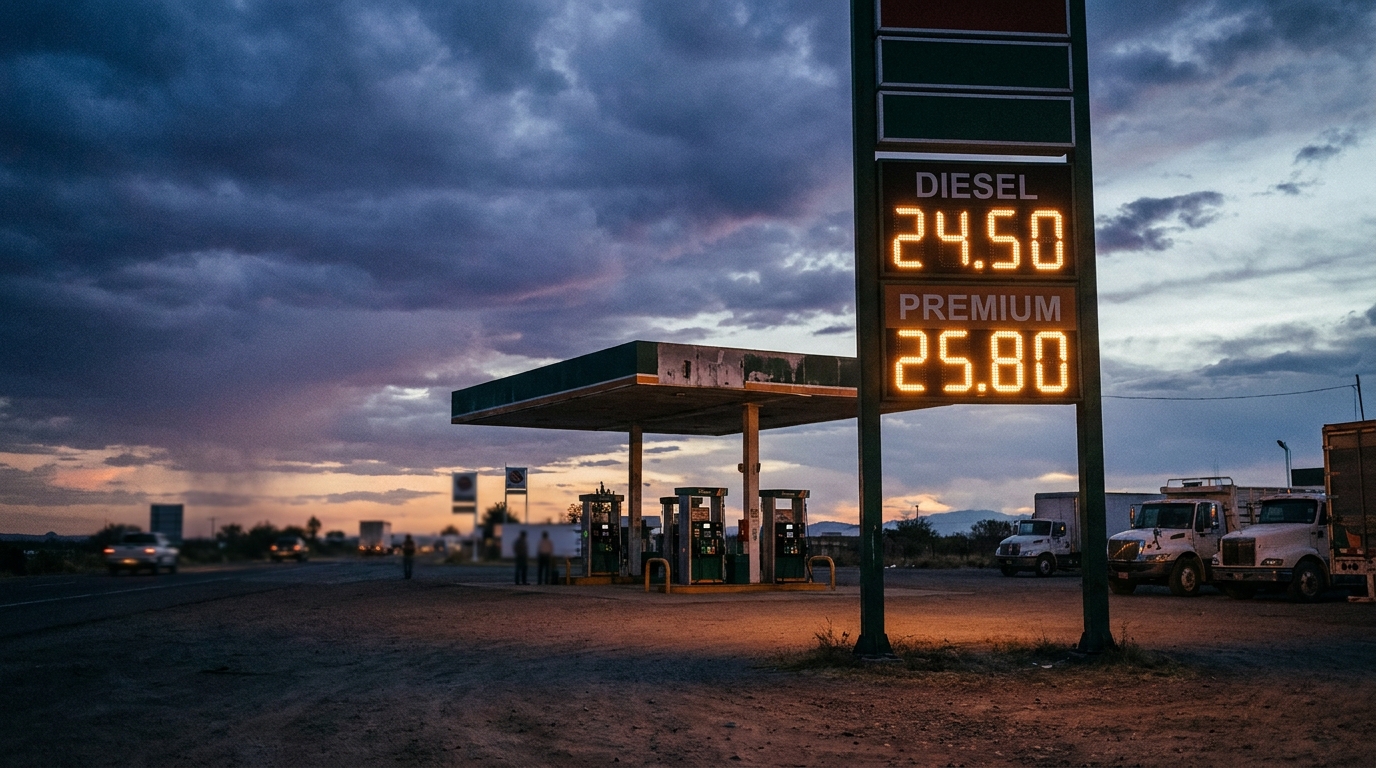
As of July 17, 2026, 83 percent of gas stations selling diesel in Mexico were honoring the 27-peso-per-liter cap, according to El Financiero. The three-percentage-point gain in less than a week followed the federal government's publication of lists identifying stations that were not complying with the Voluntary Agreement for Diesel Price Stabilization.
The transparency mechanism activated by the federal government on July 12 consisted of publishing the service stations selling fuel above the reference price. The initial list, released in the repository of the Secretariat of Energy, identified 2,163 gas stations with prices above 27 pesos per liter, as reported by La Jornada on July 13. Oversight of the agreement is shared by the Secretariats of Energy and Finance, Pemex, and the Federal Consumer Protection Agency (Profeco). The strategy is complemented by fiscal incentives on the IEPS excise tax, reduced electronic payment fees in coordination with the Association of Banks of Mexico, and Pemex supply at competitive prices with an expanded last-mile distribution network.
In the week since the lists were published, 435 gas stations joined the agreement, bringing the total number of participating stations to 8,481, according to figures gathered by El Financiero. Even so, 1,721 establishments continue to sell diesel above the cap. The states with the highest non-compliance rates are Baja California (231 stations), Tamaulipas (196), Sonora (122), and Jalisco (98). At the opposite end, Mexico City has three gas stations outside the agreement and Colima has two. In the northern border zone, the reference price drops to 25.39 pesos per liter due to the reduced 8 percent VAT rate.
The federal government has signaled that it will maintain the IEPS incentives and continue updating the public compliance lists. The adherence trajectory over five days demonstrates that transparency, without resorting to mandatory price controls, is consolidating its role as an instrument for fuel price stabilization in the Mexican market.
This article was drafted with artificial intelligence assistance from verified sources and reviewed by a human editor before publication.