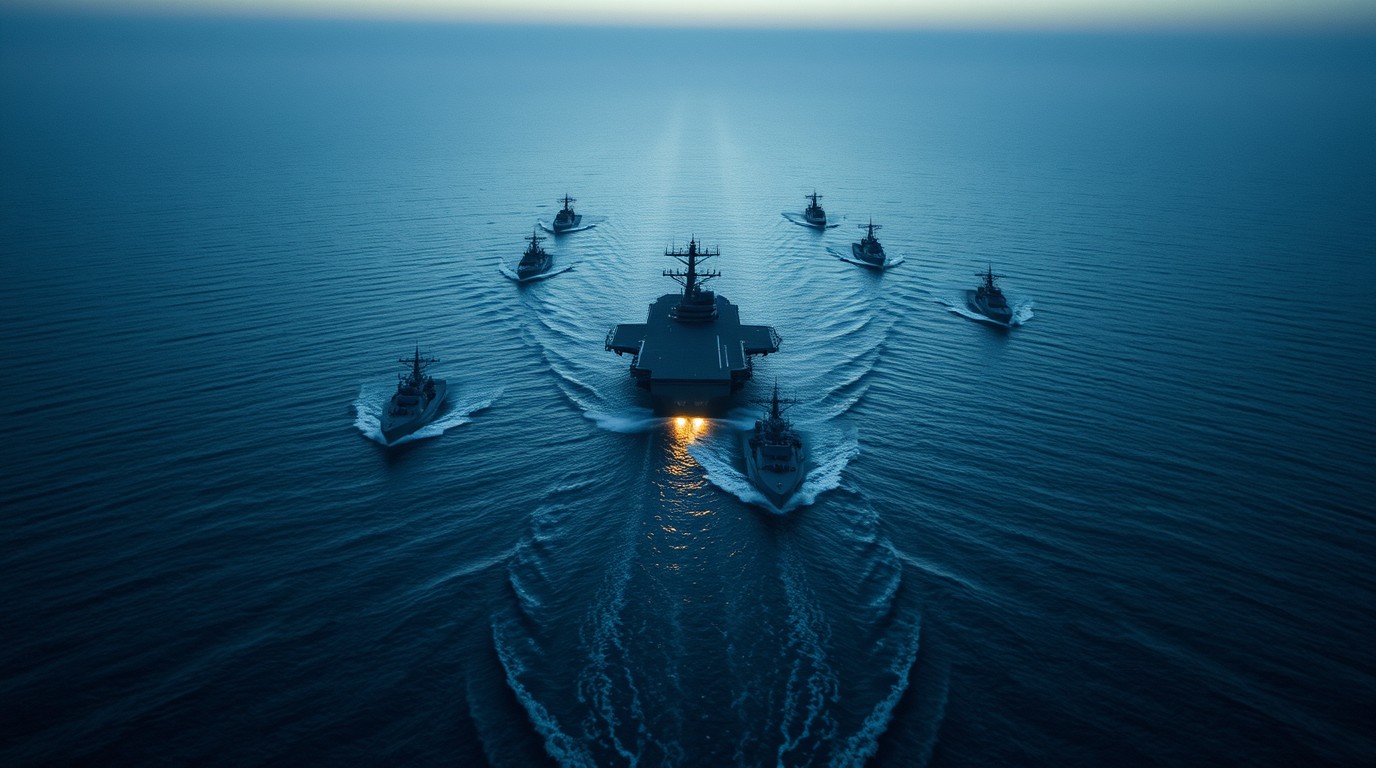
The United States Central Command (CENTCOM) has drawn up options for a new round of strikes against Iran and presented them to Defense Secretary Pete Hegseth, according to a report by The Hill published on October 24, 2026. The final decision rests with President Donald Trump, and the timeline described by the newspaper's sources falls after the legislative elections of November 3.
Al Jazeera picked up the report on October 25 and placed it within a war now in its eighth month. The outlet recalled that on October 21 the New York Times reported on joint United States and Israel plans for an operation after the vote, and that earlier in the month Axios reported that the Pentagon had instructed CENTCOM to complete preparations to resume large-scale combat operations. The targets described in those reports include energy facilities, infrastructure and nuclear sites. For Mexico and Latin America the point of contact is the energy market: a widening of the conflict in the Persian Gulf feeds through to the price of crude, to the cost of fuel and to inflation.
The preparations have verifiable components. The United States is deploying a third carrier strike group, the USS Theodore Roosevelt, along with roughly 10,000 additional troops and the 13th Marine Expeditionary Unit toward the end of November, according to Al Jazeera. A Pentagon official cited by The Hill said the department's job is to develop and present military options to the president and that it does not speculate on hypothetical situations or future operations. On the Iranian side, Revolutionary Guard spokesman Hossein Mohebi described a shift from a defensive doctrine to one that contemplates the offensive, and Al Jazeera cited Reuters on Tehran's plans to attack undersea cables in the Gulf. October has accumulated more than 120 attacks on vessels since the conflict began in February, the war's worst month on that record.
The calendar is bounded by two dates: the vote on November 3 and the arrival of the third carrier strike group at the end of the month. Their combination determines the risk premium the market assigns to crude in the final stretch of 2026, and with it the pressure on fuel prices in Mexico.
This article was written with the assistance of artificial intelligence from verified sources and reviewed by a human editor before publication.