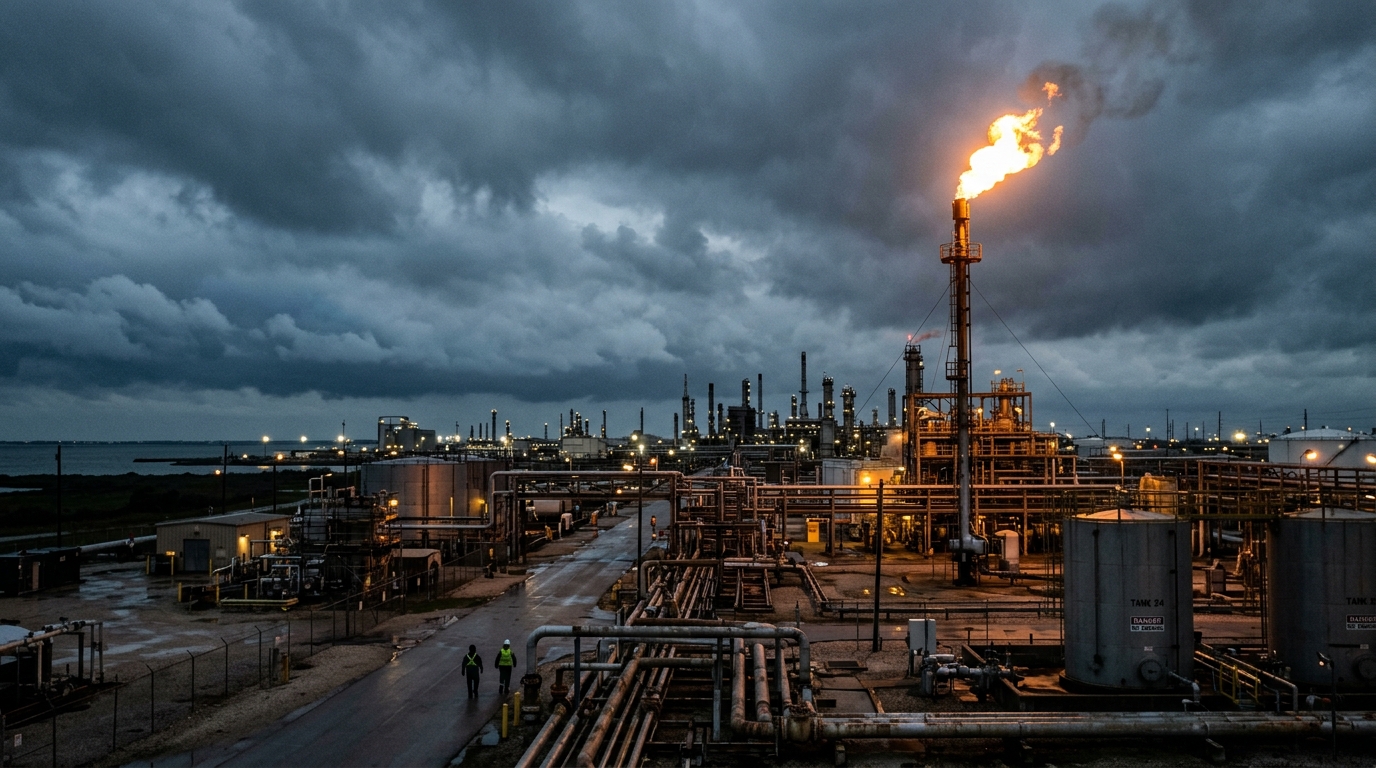
Pemex burned the equivalent of 778 million cubic feet per day of natural gas in the second quarter of 2026, a volume that doubles what was recorded in the same period of 2025 and represents 19% of the company's total gas production, according to Bloomberg Línea data published today. The primary cause is insufficient infrastructure to handle the associated gas from the onshore Ixachi field.
Gas flaring generates approximately 40,000 tonnes of CO2 per day, according to energy consultant Ramsés Pech, cited by Bloomberg Línea. The figure surfaces as Pemex reported record revenues in Q2 2026, per Expansión, against a backdrop of wage negotiations with its union that have escalated into strike notices. The operational paradox is structural: the company extracts more gas, but the absence of pipelines, processing plants, and compression capacity converts part of that increase into emissions. For Mexico, intensive flaring undermines the methane emission reduction commitments established under the Paris Agreement.
Beyond Ixachi, Bloomberg Línea reports restrictions at the Cactus and Nuevo Pemex complexes due to hydrogen sulfide content, and capacity limitations on the Quesqui 4-Jujo pipeline. Total gas production reached 4,000 million cubic feet per day, an 11% annual increase, meaning growth in extraction is outpacing growth in handling and processing infrastructure.
The coming months will determine whether Pemex activates the gas handling infrastructure investments announced for the second half of the year. The Q3 venting figure is the key indicator: records from that period will show whether the pattern reverses or consolidates as a structural trend in the company's operations.
This article was written with artificial intelligence assistance based on verified sources and reviewed by a human editor before publication.