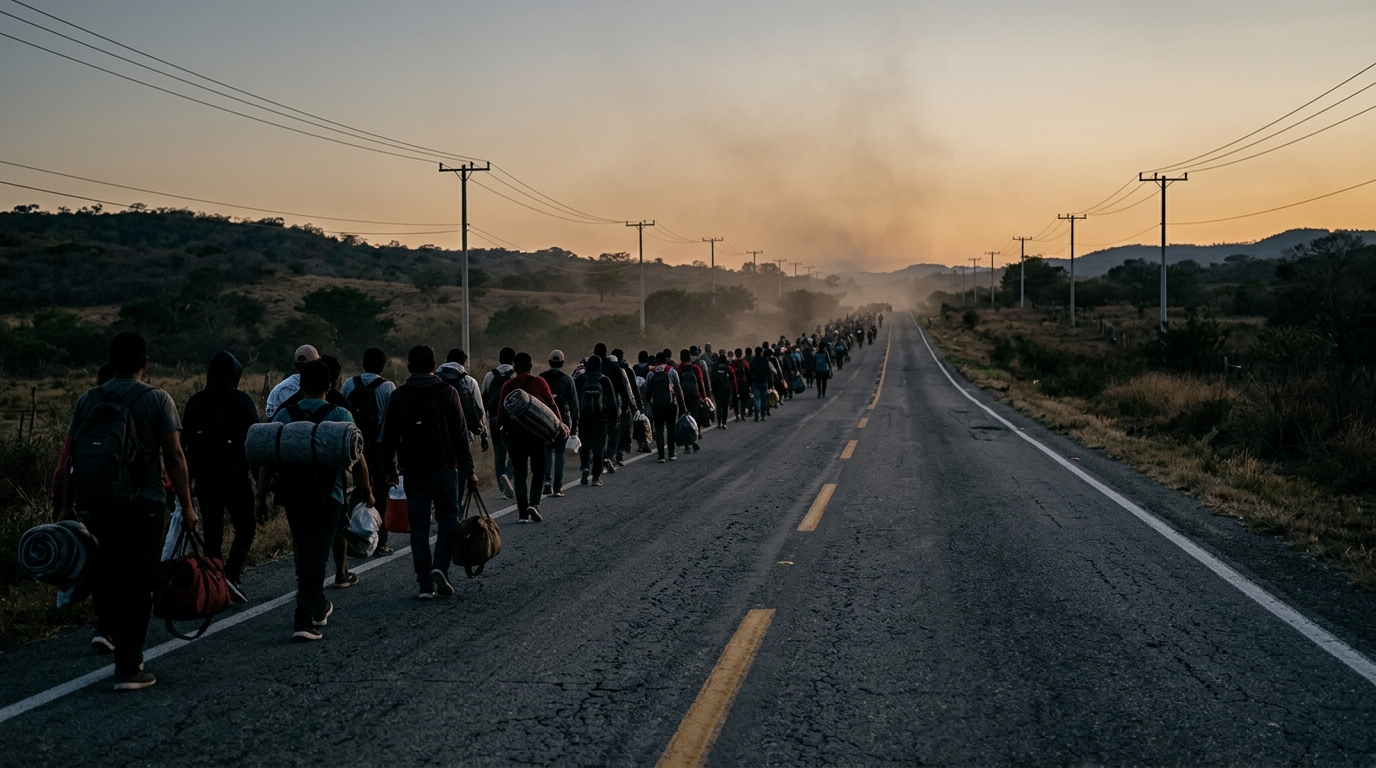
Some 800 migrants from roughly ten nationalities departed Thursday, August 20, from Tapachula in the caravan «Sueño sin Fronteras» (Dream Without Borders), with Mexico City as their first destination. The departure, reported by EFE, comes after months of waiting on the Comisión Mexicana de Ayuda a Refugiados (COMAR), as participants seek to regularize their status and access employment.
Caravan members have been waiting months for a COMAR response; several told El Universal that their refugee applications have gone unresolved for more than a year. Organizations estimate that some 65,000 migrants remain stranded along Mexico's southern border awaiting processing, according to EFE. A lack of employment and rising rents in Tapachula, roughly 15 kilometers from the Guatemalan border, compound the administrative backlog. The scale of that wait explains why people on the move are resorting to caravans, in a country that has shifted from a transit corridor to a destination as crossing restrictions into the United States have tightened.
The contingent includes families with children walking with backpacks and water bottles; participants hail primarily from Cuba, Haiti, Honduras, Guatemala, El Salvador, Colombia, and Venezuela. This is the fifth group to leave Tapachula so far this year, according to EFE, while El Universal placed the departure at just over half a thousand people. Honduran national Denisse Zacarías said she aims to reach Monterrey, where, she noted, «there is a lot of work,» adding that she emigrated to «see better results for the family.» The group plans to travel at night to avoid temperatures reaching up to 40 degrees, and state security forces along with personnel from the Instituto Nacional de Migración (INM) are accompanying the route. Several participants told El Universal that they have had to live on the streets due to the city's saturation and the cost of rent.
The caravan expects to reach Mexico City within the coming days and from there continue northward, where a number of participants are seeking to settle and work. The number of people who join along the route will serve as an indicator of how many remain waiting on a COMAR response.
This article was drafted with artificial intelligence assistance from verified sources and reviewed by a human editor before publication.