On Friday, August 28, Mexico installed the Technical-Scientific Council on the New World Screwworm, a body that will coordinate the federal government, all 32 states, academia, and producers to move from an emergency response to a national campaign of control and eradication of a pest now present in 30 of the country's 32 states.
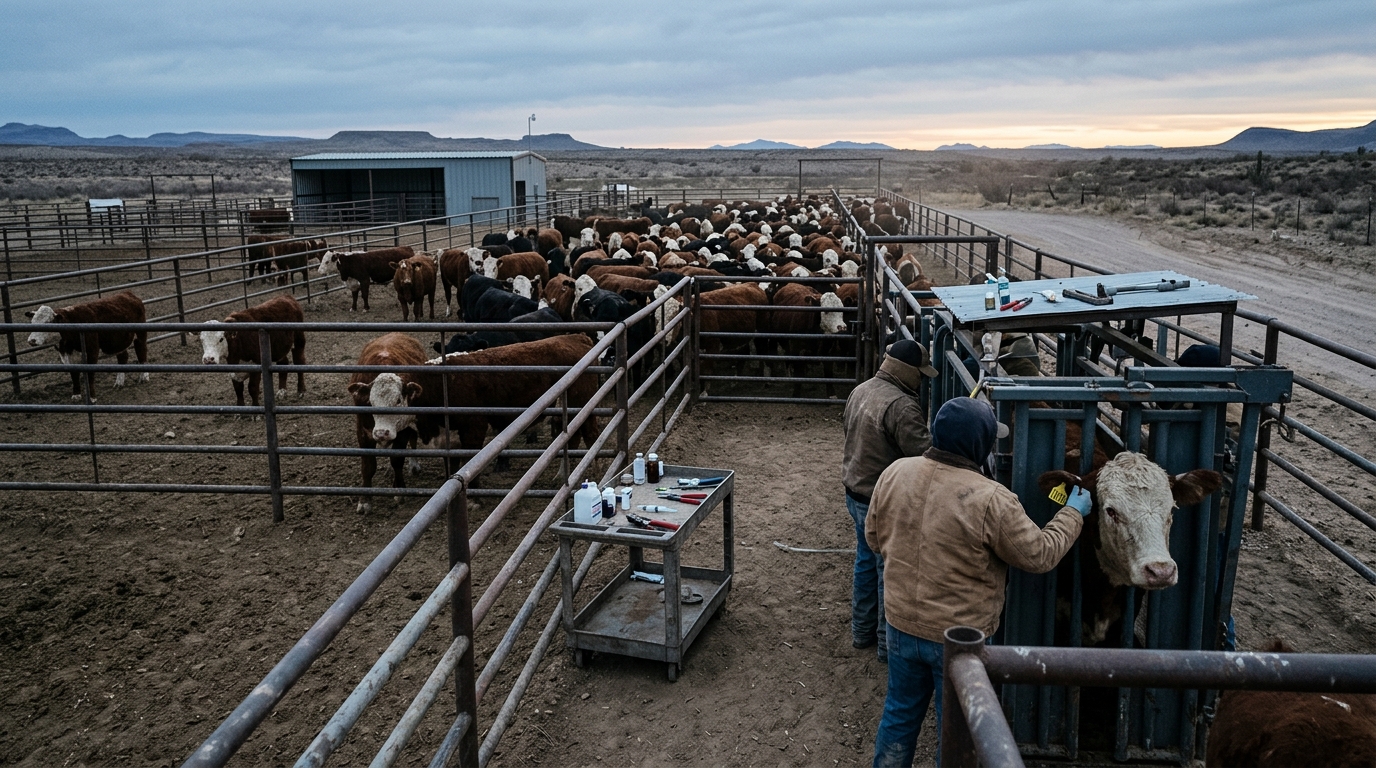
The installation was announced in a joint communiqué from the Secretariats of Agriculture and Rural Development (Agricultura) and Science, Humanities, Technology and Innovation (Secihti), distributed by Infobae. The measure responds to a directive from President Claudia Sheinbaum to coordinate efforts with state governments, academia, and the productive sector on the basis of scientific evidence, according to the secretariats. The shift matters for Mexico because livestock farming is the livelihood of millions of producer families and a pillar of the national food supply, and the normalization of cattle trade with the United States depends on controlling the pest. Trade resumed on August 25 at Agua Prieta, Sonora, with a first shipment of 750 head that will gradually rise to 1,500.
As of August 23, the National Service for Agrifood Health, Safety and Quality (Senasica) had recorded 39,470 cumulative cases since November 2024, of which 1,937 remained active. Baja California and Baja California Sur are the only regions without reported presence. Sonora and Chihuahua were the first states cleared to resume shipments given their lower sanitary risk, after roughly fourteen months of restrictions along the border corridor, and the reopening occurred days after Sonora confirmed its first case. The council's priority lines include strengthening surveillance and diagnostic systems, early detection, evaluation of new prevention and control methods, genetics and biotechnology studies, and the development of artificial intelligence tools.
The council institutionalizes the strategy that Agricultura has been running through Senasica for nearly two years, with lines of international cooperation, research, and technology transfer. Two indicators are worth watching: the active cases reported by Senasica and the Agua Prieta corridor, whose initial shipment of 750 head will gradually rise to 1,500.
This article was drafted with artificial intelligence assistance from verified sources and reviewed by a human editor before publication.