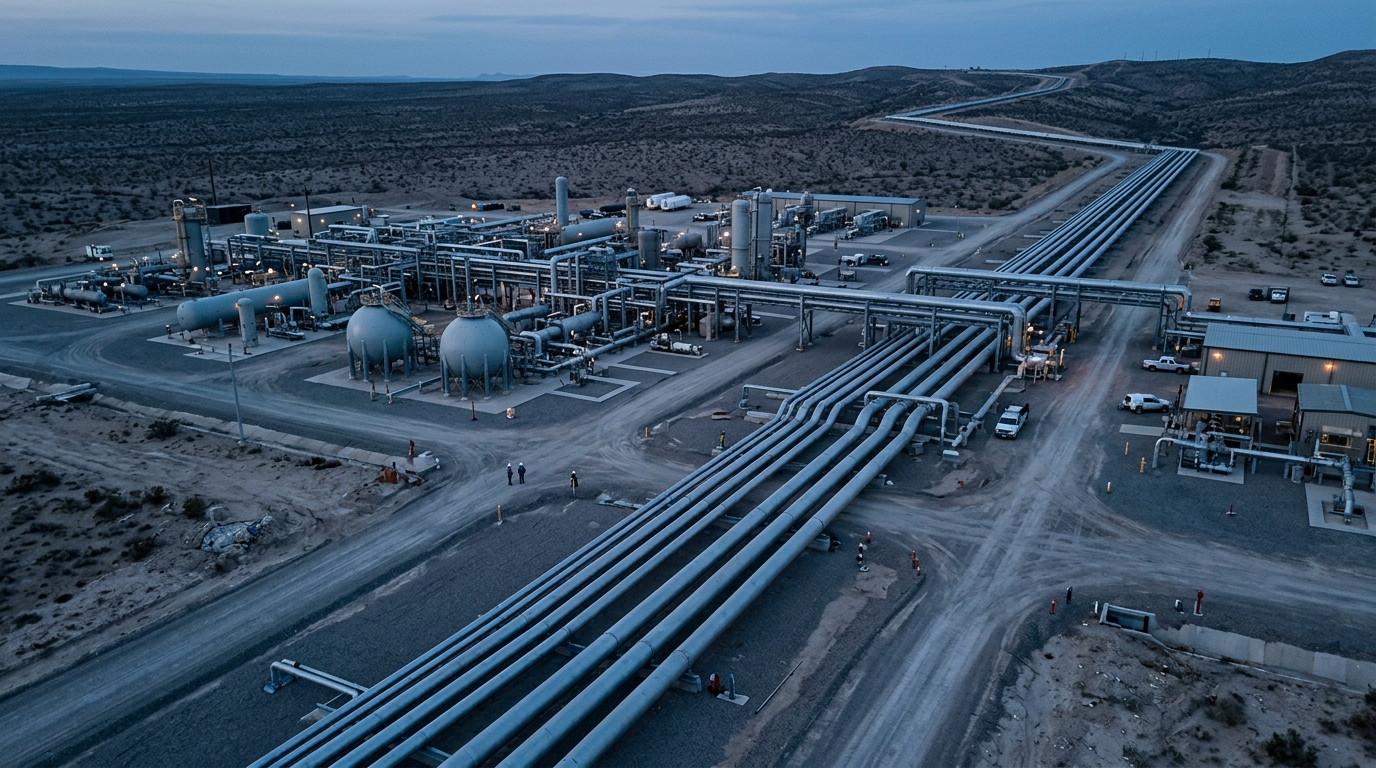
The natural gas flowing through Mexico's 21,000 kilometers of pipelines does not amount to a strategic reserve, analysts consulted by Bloomberg Línea warned on October 8, 2026, after the Centro Nacional de Control del Gas Natural (Cenagas) estimated that the country has up to three days of supply in the event of a cutoff of imports from the United States.
The technical distinction matters because Mexico imports close to 75% of the natural gas it consumes, and 62% of its electricity generation depends on that fuel. The episode began with a US notice of a reduction of around one fifth of pipeline flows. Cenagas attributed the decline to maintenance at the Inyección Ramones point, from September 29 to October 4, and to an unforeseen event on the El Paso Natural Gas system, according to La Jornada, which documented on October 8 that reliance on US gas will reach 84% in 2030 according to Bloomberg NEF. Energy sector agencies said they were coordinated to face restrictions of three, five or more days.
Eduardo Prud'homme, a partner at the energy firm GADEX and former head of Cenagas's technical management and planning unit, called the three-day figure "totally incorrect": three days of national natural gas demand equal 21,000 million cubic feet per day, while the network Cenagas operates carries a volume equivalent to one third of that. "If it drops to 5,500 million cubic feet per day, the system collapses and there is no way to move the gas," he said. David Rosales, managing partner at the consultancy Elevation Ideas and former general director of natural gas and petrochemicals at the Secretaría de Energía, agreed that gas in pipelines cannot be considered a reserve and noted that two of the country's three regasification terminals can provide limited help.
The benchmark for closing that gap is the public natural gas storage policy issued in March 2018, which set Cenagas the goal of holding five days of national consumption as strategic inventory, 45,000 million cubic feet, by 2026. The Instituto Mexicano para la Competitividad calculated the capital cost of those facilities at between 428 and 2,600 million dollars.
This article was written with the assistance of artificial intelligence based on verified sources and reviewed by a human editor before publication.