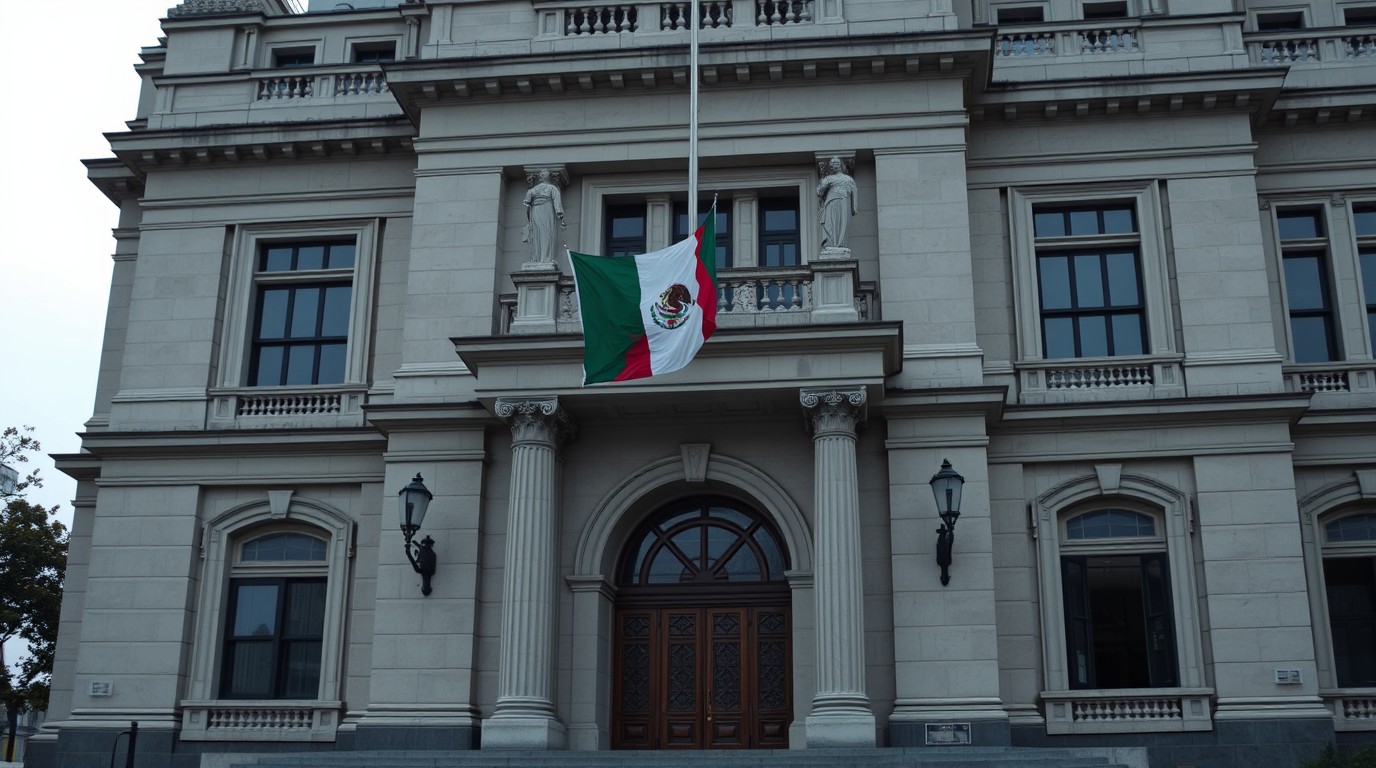
The Chamber of Deputies approved the 2027 Federal Expenditure Budget in general terms on November 9, with total net spending of 10 trillion 636 billion 488 million pesos, a rise of 1.3 percent in real terms compared with 2026, according to Infobae.
The bill received 372 votes in favor, from Morena, its allies and Movimiento Ciudadano, and 102 against, from PAN and PRI, according to the tally by Aristegui Noticias. Movimiento Ciudadano backed the project in general terms after the allocation of resources to two aqueducts in Jalisco and announced reservations on health, agriculture, highways and early childhood. The approved amount sets the public spending framework that states, companies and markets will use as a reference for their projections for the coming fiscal year, and it arrives with a reduction of 6 billion pesos to the National Electoral Institute. Priority programs receive 1 trillion 25 billion 388.5 million, equivalent to 2.6 percent of GDP.
Of total spending, 69.9 percent corresponds to programmable spending, at 7 trillion 432 billion 529.7 million pesos, with a real increase of 15 percent, and 30.1 percent to non-programmable outlays, at 3 trillion 203 billion 958.4 million. The budget deficit is set at 1 trillion 358 billion 558 million. Among sectoral allocations, education receives 1 trillion 256 billion 948.4 million, with a real rise of 8 percent; security and public order, 75 billion 671.1 million, 17.7 percent more; and federalized spending for states and municipalities amounts to 3 trillion 48 billion 223.2 million, 4.6 percent in real terms above 2026. For Petróleos Mexicanos, the bill sets a financial balance target of 95 billion 103 million pesos, and for the Federal Electricity Commission, of 25 billion 4 million.
After the approval in general terms, the Mesa Directiva reported that proposed modifications were submitted to all of the articles and annexes, and called the session to resume on November 10 for discussion in particular. That vote will produce the final version of the spending that will take effect from January 1, 2027.
This article was written with the assistance of artificial intelligence from verified sources and reviewed by a human editor before publication.