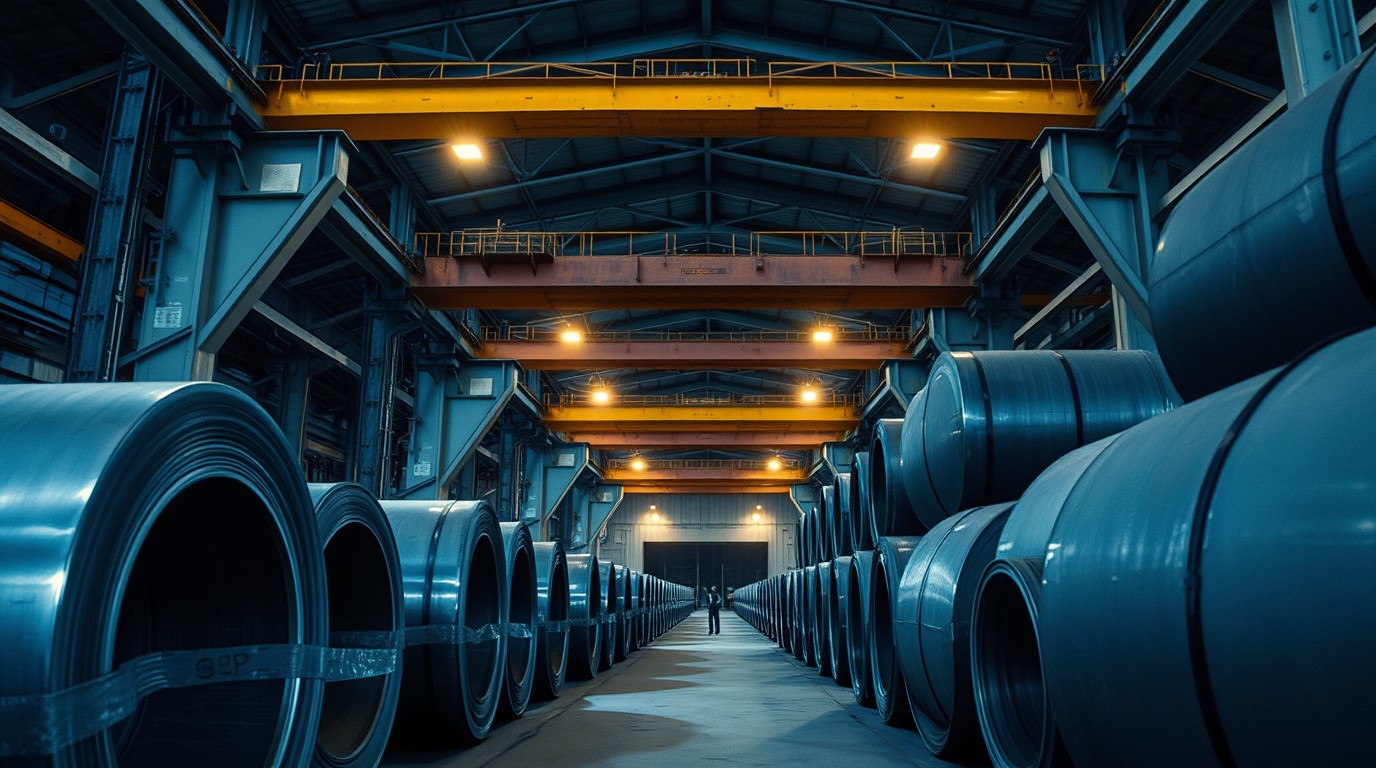
On November 10, 2026, Carlos Missirian, vice president of Business Development at Mundi, a financing firm specializing in international trade, said that Mexico remains in 15th place as a global steel producer and that tariffs change the rules, not the potential of Mexico's metalworking industry.
The assessment comes amid the review of the United States-Mexico-Canada Agreement (T-MEC) and a scheme that taxes steel, aluminum and copper at up to 50% since June 2025, according to the interview published by Milenio. On November 4, 2026, the Proyección comercial column in El Economista reported that the Office of the United States Trade Representative proposed to Mexico common external tariffs on steel in the T-MEC region, with an eye on the scheme already in force for the automotive sector. The issue matters for Mexico because steel supplies automotive, construction and machinery chains in northern states and the Bajío, where industrial employment depends on keeping orders and export sales.
Missirian explained that Mexico's steel industry is undergoing a transformation and that access to working capital determines which companies adjust their client mix, fill orders within short windows and keep their production chain active. He added that companies without that access lose contracts that do not come back. Pedro Augusto Reséndez, chief executive of Syvasa, added that tariffs reconfigured who buys and where, and that global demand will shift toward infrastructure, energy and high-technology industries. The El Economista analysis adds that Mexico asked Washington to reduce the 50% tariff on steel and aluminum, and that Ildefonso Guajardo, former economy secretary and T-MEC negotiator, considered it a priority not to lose the sovereignty of Mexican trade policy.
The next point to watch is the tariff negotiation that accompanies the T-MEC review. The industry will keep operating while it is decided whether the common external tariff scheme extends to steel, and that decision will set the supply windows for plants in the north and the Bajío.
This article was written with the assistance of artificial intelligence from verified sources and reviewed by a human editor before publication.