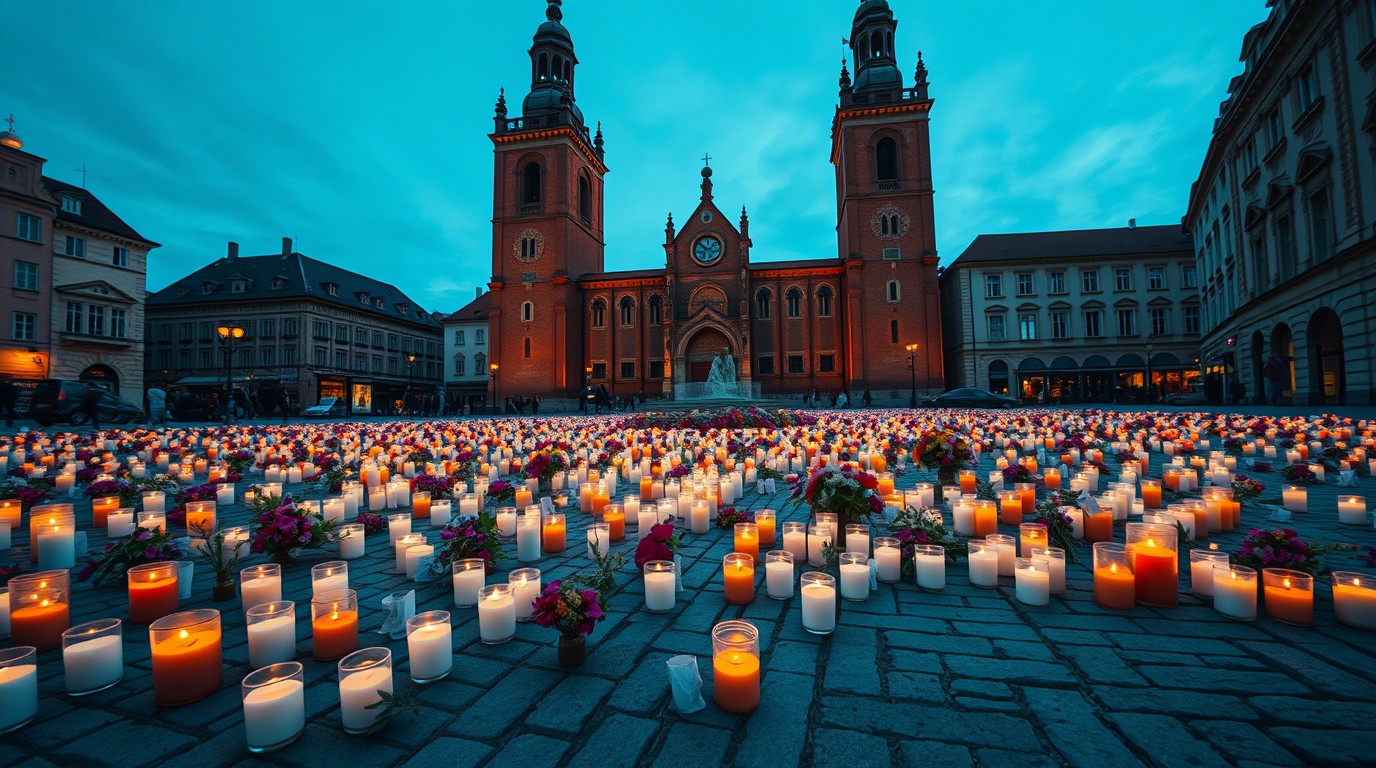
Poland's National Prosecutor's Office opened a terrorism investigation on November 8, 2026, following the November 7 shooting in Krakow's Main Square, which left six dead, including a British citizen, and 17 injured, according to The Guardian.
The prosecutor's office said on social media that the case covers the homicide of six people with a firearm and the attempted homicide of many others, including police officers, acts that constitute a terrorist offense, according to The Guardian. Police confirmed that the three bodies found at the suspect's family home in Ostrowiec Świętokrzyski, a town about 100 miles (160 kilometers) northeast of Krakow, were the suspect's father, mother and sister, according to The Guardian. The episode follows several school stabbings in October, which authorities linked to extremist content online. For Mexico, the public policy point lies in protecting historic centers and open tourist spaces, where surveillance is harder than in enclosed venues.
According to BBC News, 16 people were taken to hospitals, including two police officers and the attacker himself; DW specified that the injured include citizens of the United Kingdom, Austria, Germany, Portugal and Russia. The attack occurred shortly before 15:00 local time on November 7, when the assailant, wearing military clothing and a bulletproof vest, fired at random from a vehicle in the square, according to The Guardian. DW also reported that the suspect had no criminal record, that he and his father belonged to a shooting club, and that police seized several weapons at the home. Interior Minister Marcin Kierwiński said the suspect was fascinated by far-right ideologies and held ultranationalist views, according to The Guardian.
The case is now in the hands of the national prosecutor's office, which will define the formal classification of the acts and the scope of the charges. Two days of official mourning began on November 8 and end on November 9; police reinforced security in Warsaw and European Commission flags in Brussels flew at half-mast. The case adds to the European debate on online radicalization and the protection of public spaces, a discussion that also features on security agendas in Latin America.
This article was written with the assistance of artificial intelligence based on verified sources and reviewed by a human editor before publication.