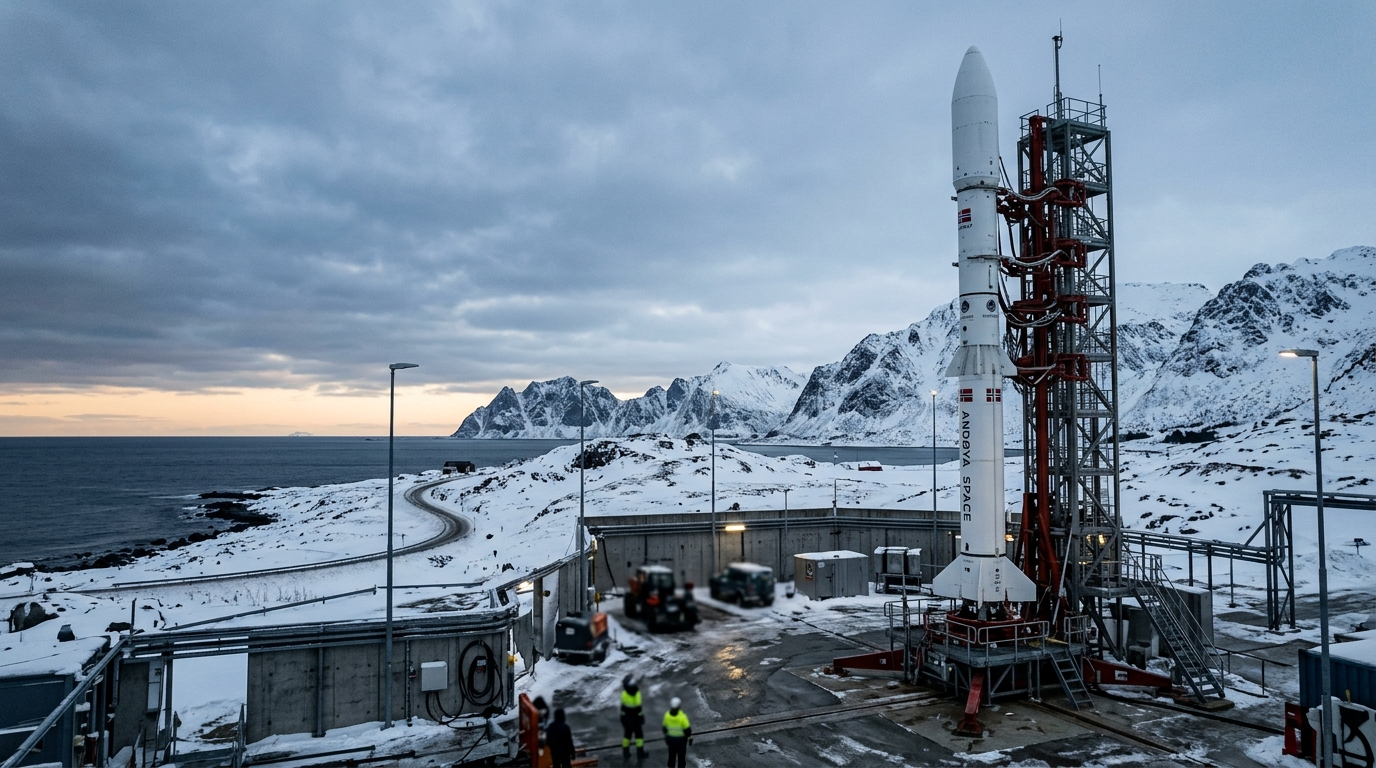
German company Isar Aerospace achieved on Saturday, September 5, 2026, the first commercial orbital launch from continental Europe. Its uncrewed rocket Spectrum lifted off from Andøya, in the Norwegian Arctic, carrying five small satellites and a technology experiment, according to The Guardian.
It was the company's second attempt: the first, 18 months ago, ended with the rocket falling into the sea shortly after liftoff from the same base, Bloomberg reported. Until now, European satellites reached orbit from the United States with SpaceX, or from Kourou, in French Guiana, where the Ariane 6 launcher operates, in South America. The success makes Andøya the first continental European base with operational orbital capability and gives Europe an alternative within its own territory. For Mexico and Latin America, the precedent is instructive: a mid-sized country, Germany, achieved its own orbital capability in just a few years by combining a private company with Andøya's state-owned spaceport, without depending on superpower launch facilities.
The launch came after several months of delays caused by weather conditions, technical reviews, and a vessel entering the safety zone. Isar has five more rockets in production and announced it will accelerate satellite deployment following the flight. CEO and co-founder Daniel Metzler said launch capacity is today the single greatest bottleneck across the entire industry. German Chancellor Friedrich Merz called the launch the beginning of a new era. European Commissioner for Defense and Space Andrius Kubilius noted that Europe's independent access to space received a significant boost.
The next indicator to watch is Isar's launch cadence from Andøya and, further ahead, from Nova Scotia, where the company is developing a second base. Its stated goal of 40 missions per year defines the scale of the next chapter: converting European orbital access from a one-time milestone into a recurring operation.
This article was drafted with artificial intelligence assistance from verified sources and reviewed by a human editor before publication.