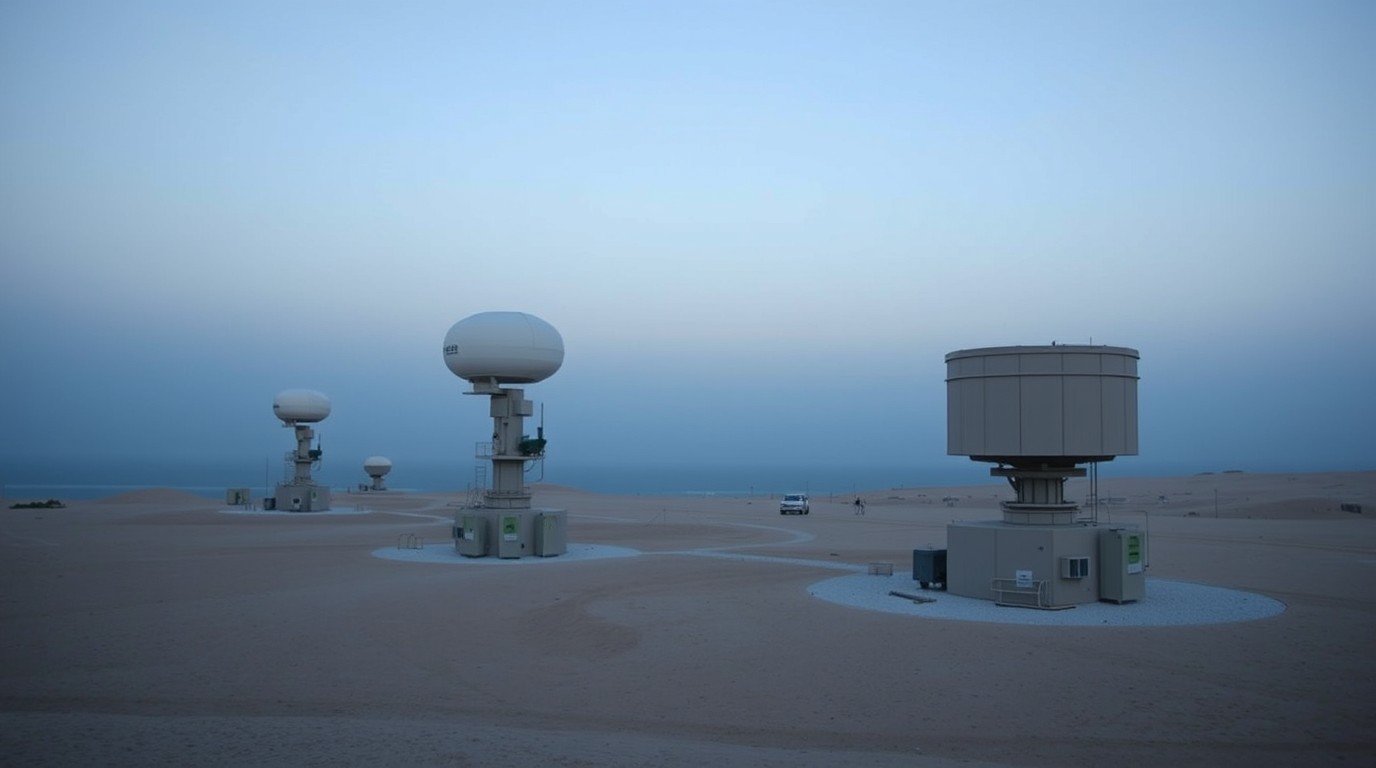
Iran's Revolutionary Guard claimed on November 15, 2026 that it launched six drones against a US air defense radar at the Al-Riffa helicopter base in Bahrain, home to the command of the US Navy's Fifth Fleet. The Guardian's report notes that Bahraini authorities said their air defenses intercepted the aircraft before they reached their targets.
Before the announcement, Bahrain's Interior Ministry issued two alerts over a possible threat, the first since September, according to the EFE news agency. The episode fits into a conflict that began on February 28, 2026 with US and Israeli attacks on Iran and that has since alternated between pauses and renewed hostilities. For Mexico, the sensitive point is the cost of energy: the country imports gasoline and depends on stable maritime flows, so a disruption in the Strait of Hormuz passes directly through to the prices paid by households and businesses. On the same day, Yemeni government forces backed by Saudi Arabia withdrew from the Bab el-Mandeb area, according to The Guardian.
Iran's military described the operation as a second wave of retaliation and maintained that the Strait of Hormuz remains closed, a claim Washington has not confirmed. Bahrain attributed the attacks to a systematic hostile approach by Tehran and said its defenses neutralized the offensive. Two days earlier, the same force had claimed the destruction of another US early-warning radar, while the US military denied any damage and reported intercepting two drones. In parallel, an estimate by The Wall Street Journal cited by The Guardian calculates that Iran retains between 1,500 and 2,500 missiles despite the damage to its production facilities this year.
Negotiations to end the conflict remain deadlocked, and the United States maintains its naval blockade while Iran holds its control over Hormuz. The coming reports on freight rates and fuel prices in the Gulf will show how much of this escalation reaches the Mexican economy.
This article was written with the assistance of artificial intelligence from verified sources and reviewed by a human editor before publication.