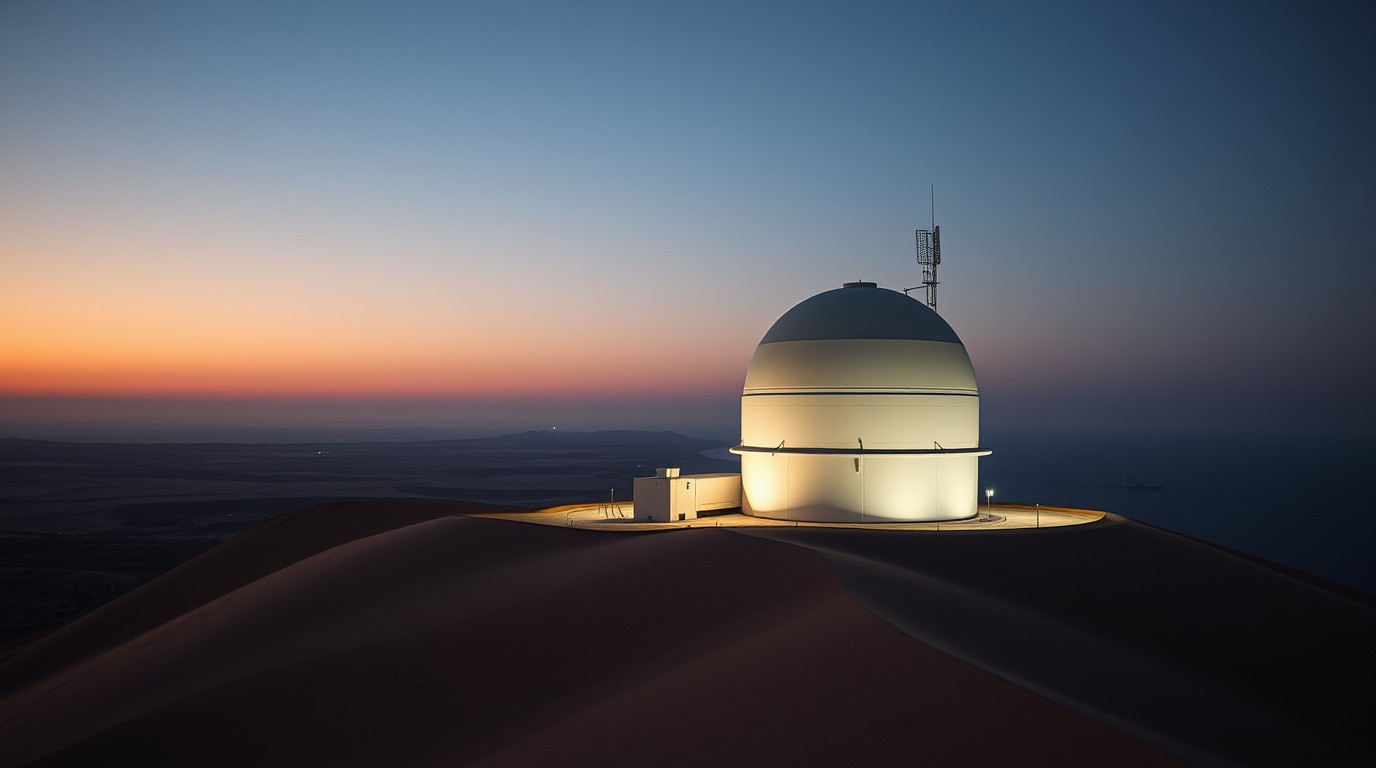
Iran's Revolutionary Guard (IRGC) reported on Friday, November 13, 2026, that it destroyed a US early-warning radar in Bahrain, in retaliation for a prior airstrike against a communications tower in Sirik, in southern Iran. It is Tehran's first direct attack on US military facilities in months, according to The Guardian.
Bahrain hosts the headquarters of the US Navy's Fifth Fleet, according to The Associated Press. Al Jazeera reported that the IRGC presented the action as a response to an enemy airstrike and included the Strait of Hormuz in its warning. The episode unfolds within the framework of a conflict between the United States and Iran that remains active and has already included strikes on bases in the Gulf and restrictions on maritime transit. For Mexico, the sensitive point is the price of crude: the Strait of Hormuz concentrates a relevant share of the oil traded by sea, and any escalation there feeds through to the energy costs of an importing economy. As of the publication of this text, neither the United States nor Bahrain had confirmed the event.
The IRGC described the attack as a serious warning to the aggressor enemy to halt what it called aerial provocations and oil smuggling in the Strait of Hormuz, and warned that it will respond without restrictions to further violations, according to The Guardian. President Donald Trump said in interviews that he will attack Iran only if necessary and that Gulf countries, such as Saudi Arabia, asked him to show restraint. A YouGov poll for the Council for Arab-British Understanding, cited by the same outlet, found that 65% of the British public opposes resuming the war and 14% supports it. In parallel, Iran's Assembly of Experts called for reviewing the country's membership in the Nuclear Non-Proliferation Treaty.
The review of the Non-Proliferation Treaty raised by the Assembly of Experts and the pending verification by the International Atomic Energy Agency (IAEA) of Iranian facilities mark the next points to watch. The pulse of transit through Hormuz will, in turn, shape how energy markets read the situation.
This article was drafted with the assistance of artificial intelligence from verified sources and reviewed by a human editor before publication.