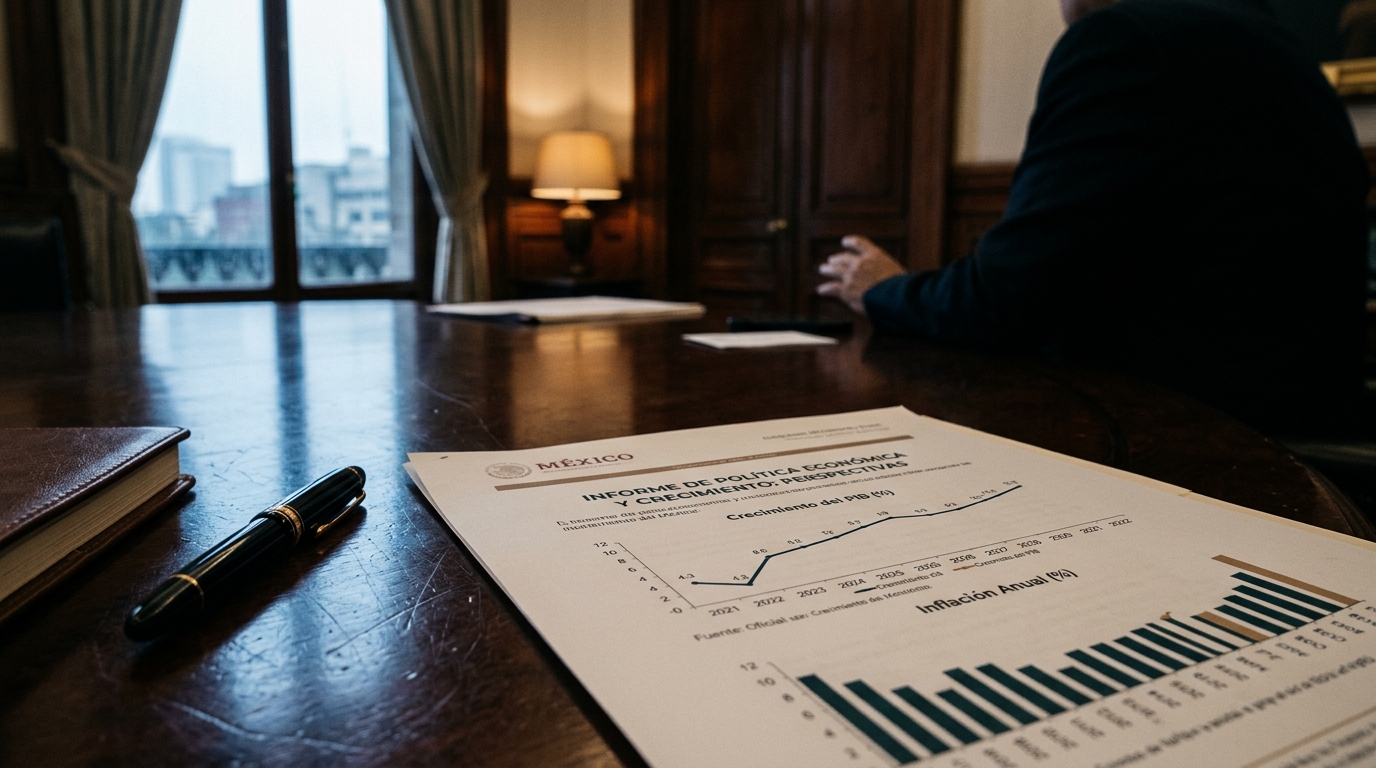
Some one hundred economists from universities, research centers, and the private sector will deliver, between August 17 and 18, a document of proposals to accelerate Mexico's growth to the Secretaría de Hacienda y Crédito Público and Congress.
The document is the result of the Forum for Sustainable and Equitable Growth, which brought together approximately 100 specialists in Mexico City this week. The initiative emerged from economists convened by President Claudia Sheinbaum in January to discuss growth, though the forum's organization does not form part of that prior dialogue, according to Bloomberg Línea. Mexico's economy grew 0.8% during 2025, according to INEGI data, in a context of commercial realignment between the United States and China that, according to the Forum, opens an opportunity to attract foreign direct investment and integrate Mexican companies into global value chains, El CEO reports.
The proposals are organized into six axes, according to Bloomberg Línea:
- A national strategy for the US-China trade realignment, and a body to connect foreign investment with local suppliers.
- Legal certainty for investment, with stable rules.
- A more progressive tax system with spending targets for health and infrastructure.
- Greater financing for innovation and research, including an artificial intelligence fund.
- Education and health as productivity policy.
- Greater financing and tax simplification for SMEs.
Ana María Aguilar Argáez, executive director of the Consejo Mexicano de Negocios, captured the spirit of the gathering: "we want to grow now. We don't want to wait any longer." The forum was financed by the Consejo Mexicano de Negocios and the Open Society Foundation. Participating institutions included the UNAM Faculty of Economics, CIDE, Tecnológico de Monterrey, El Colegio de México, and UAM, among others, according to El CEO.
The document will reach Hacienda in the same week the ministry is preparing to submit the 2027 Budget Bill to Congress, positioning it as a direct input to the budgetary discussion. How the six working tables are received, and whether their proposals find an echo in next year's budget, will be the next signal to watch.
This article was written with artificial intelligence assistance from verified sources and reviewed by a human editor before publication.