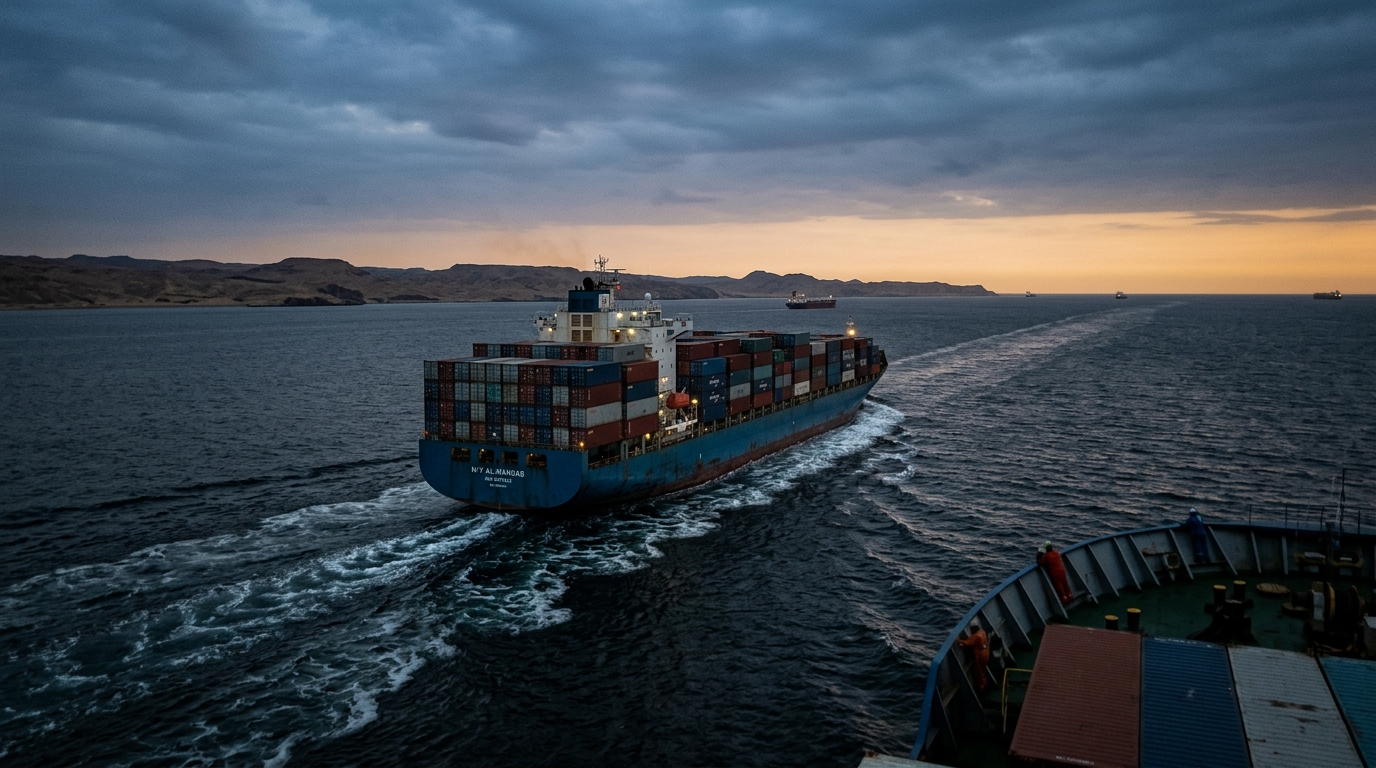
Yemen's Houthi rebels claimed control of the port of Mocha, in Taiz province, on 10 September 2026, their widest territorial advance on the Red Sea coast since the UN truce of April 2022. With the move, Iran and its allies edge closer to dominating two chokepoints of global maritime trade.
According to The Guardian, the Houthis also claimed the inland city of Hays and the Khalid ibn al-Walid camp, the region's largest military base, in an offensive aimed at pressuring Saudi Arabia and the United States to lift the blockade on Iranian oil tankers in the Gulf. The conflict monitor Acled counted 276 deaths in the previous five days. Saudi Arabia launched up to 40 airstrikes on Thursday and oil topped 100 dollars a barrel after weeks near 80. For Mexico, costlier crude and the diversion of vessels around Africa are raising freight and insurance costs for cargo entering and leaving through the Pacific ports.
The commander of the Yemeni government forces, Major General Tareq Saleh, acknowledged a strategic withdrawal south of Mocha to regroup, according to The Guardian. In an Al Jazeera analysis, Saudi Arabia faces two connected threats: attacks on its territory and the disruption of maritime routes on which regional trade depends. Bab al-Mandeb connects the Indian Ocean with the Red Sea and the Suez Canal, and the kingdom retains a partial alternative in its East-West pipeline to Red Sea terminals, which reduces its dependence on Hormuz.
US President Donald Trump acknowledged on Wednesday that he does not expect the war with Iran to end before November's midterm elections, The Guardian reported. Acled analyst Sherwan Hindreen Ali said the fighting will remain concentrated on the Red Sea coast fronts, in Hodeidah and Taiz, where both sides are seeking control of the Bab al-Mandeb strait.
This article was written with the assistance of artificial intelligence from verified sources and reviewed by a human editor before publication.