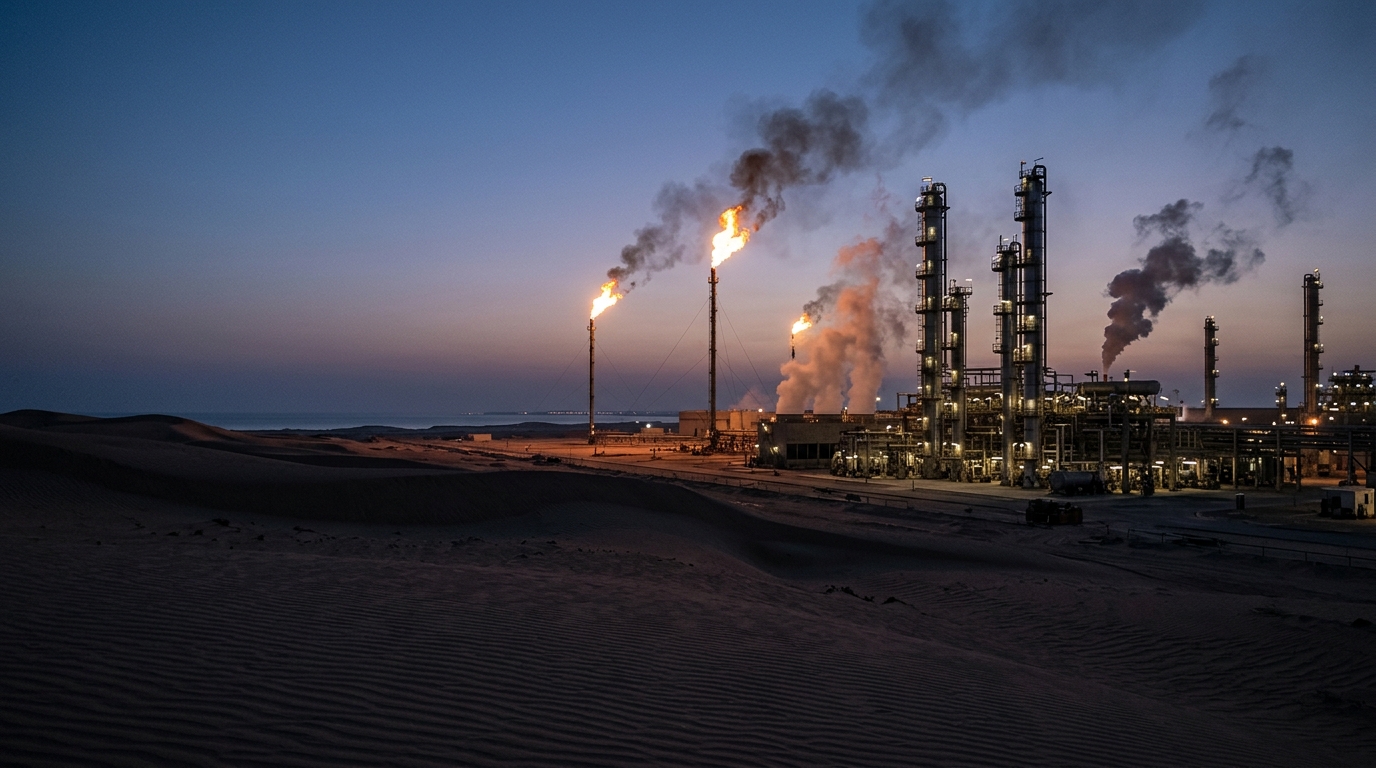
On September 8, Houthi forces from Yemen struck four cities in southern Saudi Arabia, wounding at least 73 people and setting fire to facilities belonging to state oil company Aramco. Brent crude, the global benchmark, climbed more than 2% on the day and traded above $99 per barrel, The Guardian reported.
The attack comes as the Middle East conflict once again tightens energy supply. Saudi Arabia's Ministry of Energy confirmed that projectiles struck oil facilities and public utility sites in the kingdom's southern provinces, Al Jazeera reported. The Jizan refinery, one of the kingdom's largest, with a processing capacity of 400,000 barrels per day, sits in the border zone with Yemen. The escalation is the most serious since the UN-brokered ceasefire of 2022 and refocuses attention on the maritime routes through which crude oil travels: in 2024, approximately 4.1 million barrels per day passed through the Bab al-Mandeb Strait, whose weight as a Saudi export route has grown amid restrictions at the Strait of Hormuz.
Houthi military spokesman Yahya Saree described the operation as a response to Saudi attacks on Yemeni territory, deploying drones and ballistic missiles against an air base in Khamis Mushait, Aramco facilities in Abha and Najran, and the Jizan refinery. Women and children are among the wounded. Saudi Arabia warned it will take whatever measures are necessary to defend its sovereignty and demanded a halt to attacks on its territory and on oil tankers in the Red Sea. For Mexico, a gasoline importer, Brent sustained near $100 per barrel pressures fuel costs and the public spending allocated to fiscal subsidies that cushion the final pump price.
The key variable to watch is whether Brent crosses the $100 threshold and whether the Saudi response alters its export flows through the Red Sea. That trajectory reaches Mexico through gasoline prices and the fiscal headroom available to contain them.
This article was written with the assistance of artificial intelligence based on verified sources and reviewed by a human editor before publication.