Guanajuato Governor Libia Dennise García Muñoz Ledo unveiled the state's new economic policy, 'Guanajuato Suma, Un Nuevo Rumbo para Nuestra Gente,' on August 10, 2026. The initiative encompasses 17 investment projects totaling 2,558 million dollars and the direct creation of 3,567 jobs, as reported by Excélsior.
The plan responds to the reconfiguration of global supply chains driven by nearshoring, artificial intelligence, and the energy transition. The governor cited these forces as the rationale for evolving the state's productive model with a horizon to 2050. Over three decades, Guanajuato built a foundation of industrialization, infrastructure, connectivity, and investment attraction; the new strategy seeks to distribute economic activity across more regions and into higher-value sectors. Quadratín Bajío reported that the policy is organized around five strategic pillars and targets projects in data centers, semiconductors, artificial intelligence, advanced manufacturing, medical devices, electromobility, and clean energy. This sectoral diversification positions the state as a reference case for subnational economic policy design within the country.
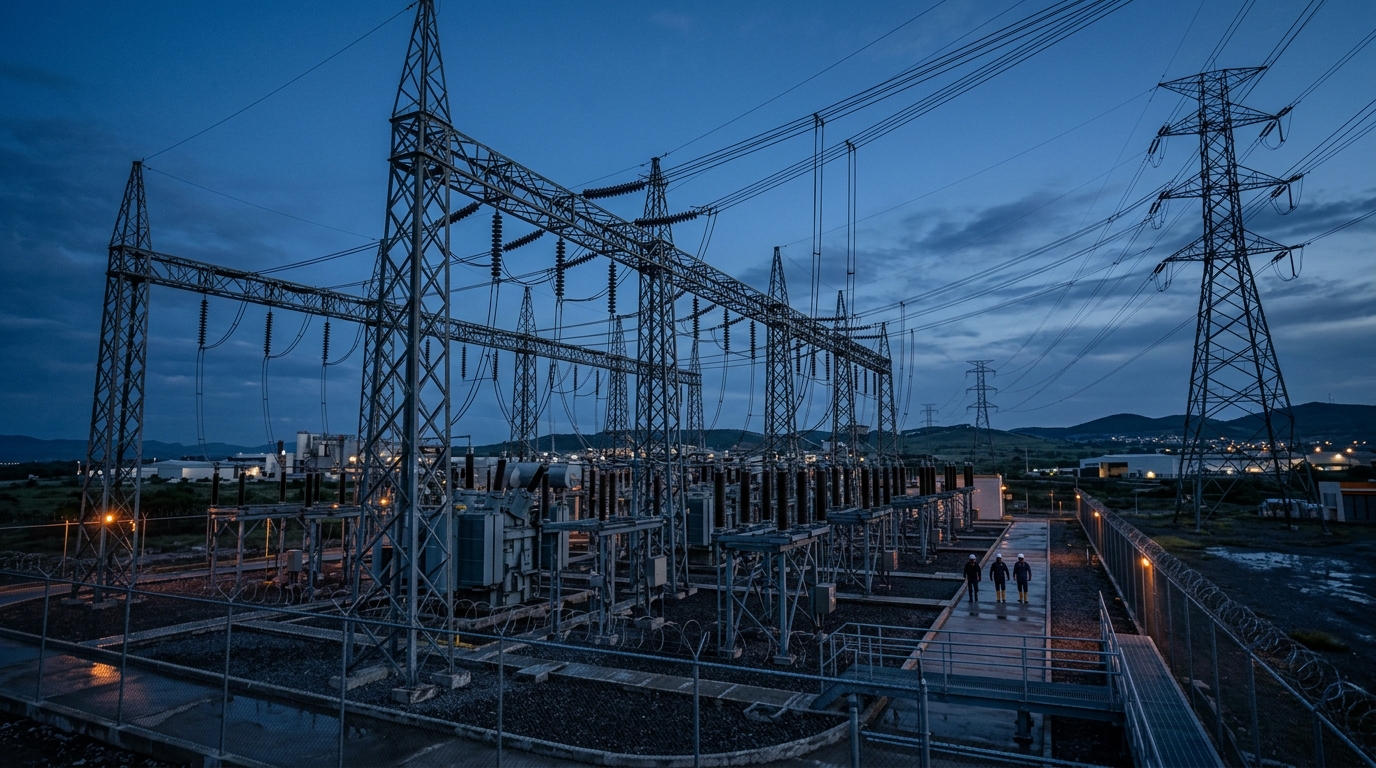
With the projects announced this week, the administration has accumulated 76 investments totaling 6,406.55 million dollars and 18,811 committed jobs, representing 80.08 percent of the six-year capital attraction target. The strategy sets a 2030 horizon to attract 8,000 million dollars in cumulative investment, generate 50,000 jobs, support 14,000 micro, small, and medium-sized enterprises, and certify 7,000 local suppliers. The new projects span sectors including automotive, mining, construction, data centers, real estate development, and energy. 'The future is built through collaboration, synergies, and teamwork,' the governor stated. On the same tour, the governor inaugurated the Business Polygon Energy Plant in San Miguel de Allende, developed by Corral Energy with a first-stage investment of 45 million dollars and a substation with a capacity of 60 megawatts.
With 80 percent of the six-year target already reached, this package sets the pace the administration intends to sustain through the remainder of the term. The target of 8,000 million dollars in cumulative investment and 50,000 jobs by 2030 provides the concrete benchmark against which to measure whether productive diversification is advancing at the announced rate.
This article was drafted with artificial intelligence assistance from verified sources and reviewed by a human editor before publication.