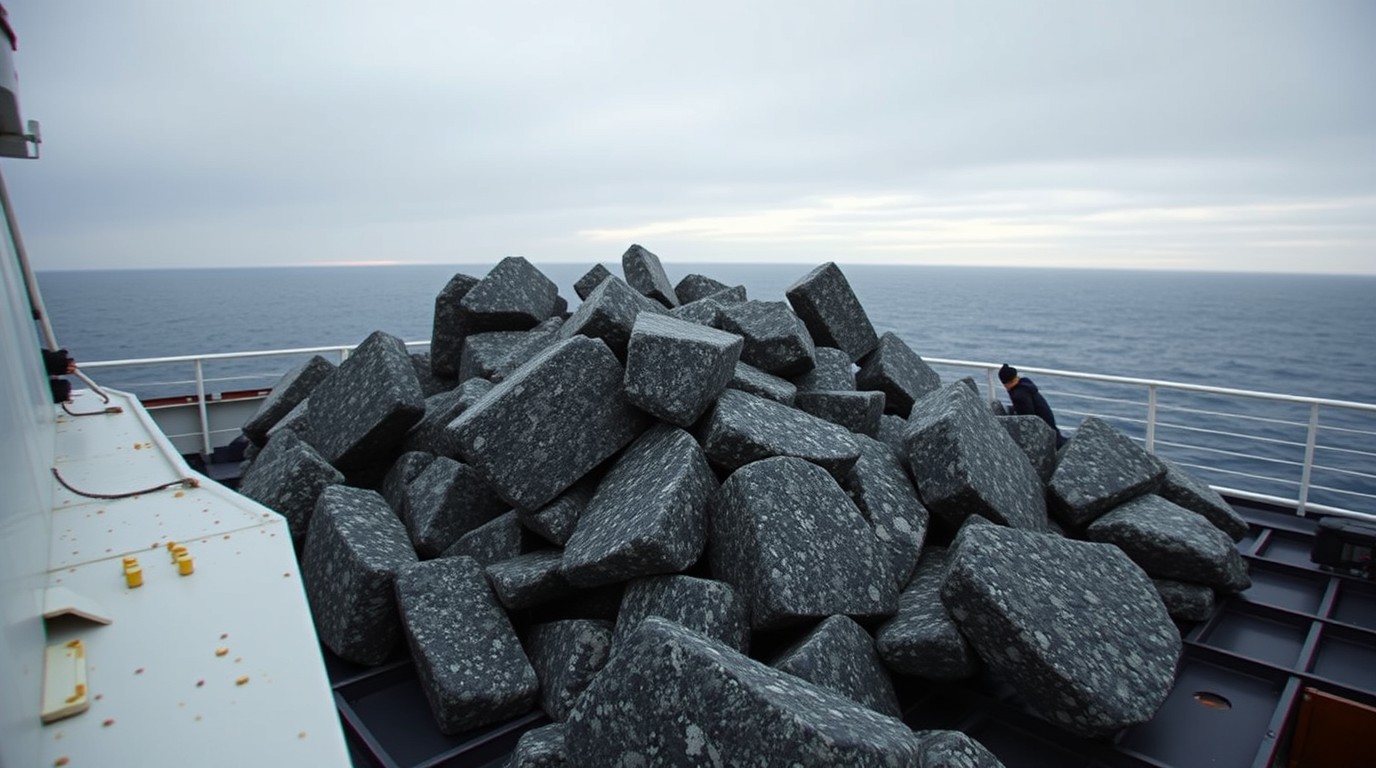
Greenpeace dropped some 15 tonnes of rocks onto the North Sea seabed off Norfolk in early November 2026 to block trawling, and most landed inside the planned area for Norfolk Vanguard East, one of the two wind farms the UK backs off that coast, according to The Guardian.
The Marine Management Organisation (MMO), the British marine authority, published on 2 November and updated on 12 the ten reported rock positions, coordinates it said Greenpeace relayed through the Coast Guard and that it has not independently verified. The maneuver was carried out without authorization from that authority and coincided with the premiere of the BBC's Blue Planet III documentary; Greenpeace surveyed the seabed for cables and shipwrecks, but was unaware of the Vanguard East plans. The episode exposes a tension that accompanies offshore wind deployment: marine spatial planning must accommodate conservation, fishing and infrastructure in the same strip of sea, a dilemma Mexico and other countries in the region will face when planning marine projects.
Behind the site is a 50:50 joint venture between RWE and KKR. The British National Wealth Fund committed 1,000 million pounds, 500 million for each farm, within a 12,800 million pound financing package. The two projects total 2.8 gigawatts of combined capacity, equivalent to the consumption of about three million UK households. Offshore construction will begin in early 2027 and full operation is expected by 2030, with around 2,300 annual jobs during the works. RWE, developer of Vanguard East, is in talks with Greenpeace to verify the exact location of the rocks and update seabed surveys; a spokesperson described the communication as constructive. Will McCallum, co-executive director of Greenpeace UK, called the idea that the rocks represent a real obstacle absurd and recalled that energy companies routinely remove natural rocks up to ten times heavier from the seabed before building.
With offshore construction planned for early 2027, the coming months will determine whether the rocks are removed in time and how the seabed surveys are adjusted. The case leaves a signal for marine energy planning: early coordination among developers, the authority and environmental groups matters as much as financing.
This article was written with the assistance of artificial intelligence from verified sources and reviewed by a human editor before publication.