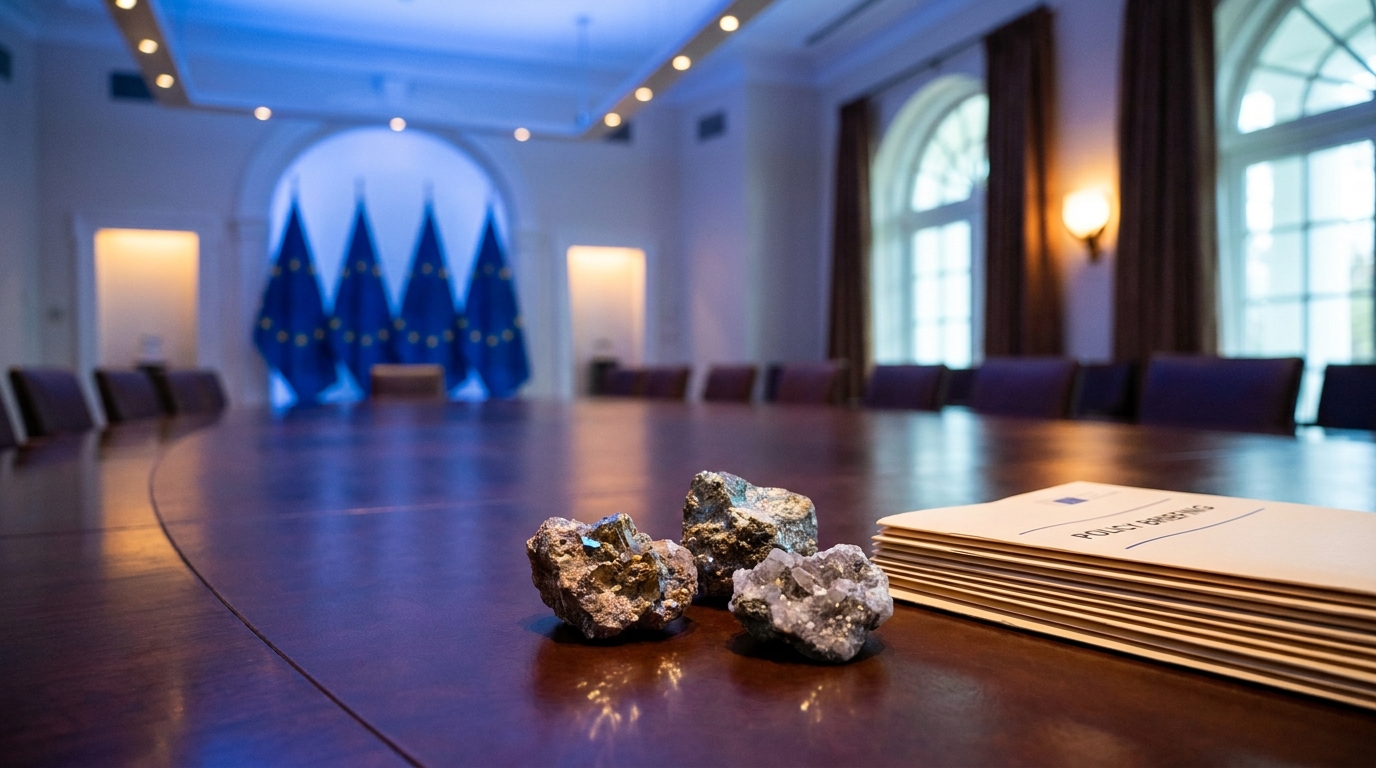
The 52nd G7 summit opens this Monday, June 15, in Évian-les-Bains, France, with critical minerals as the central thread and under pressure from the reopening of the Strait of Hormuz. Washington's proposal to set minimum prices for rare earths meets European caution and has divided the global mining industry.
According to [U.S. News and Reuters](https://www.usnews.com/news/world/articles/2026-06-15/trumps-critical-minerals-pricing-plan-faces-skeptical-g7-divided-industry), the U.S. administration is bringing to Évian a plan to build a Western trade bloc that would unwind dependence on China in cobalt, lithium, rare earths, and minerals essential for semiconductors, military equipment, and servers. The initiative, presented in February by Vice President JD Vance, seeks price floors to stabilize investment in processing outside China, a country that dominated the market by producing at a loss. Allies consulted by the wire report differences over governance and cost. The French presidency, together with the European Commission, Germany, Italy, the United Kingdom, Japan, and Canada, is evaluating how to institutionalize coordination without locking in shared reserves.
The bloc is working from sectoral documents rather than a joint communiqué, according to [The National](https://www.thenationalnews.com/opinion/comment/2026/06/15/us-iran-strait-of-hormuz-eu-g7-resources-energy-critical-minerals/), which describes the summit as a resource-security effort running in parallel with the Hormuz diplomatic thaw. The bilateral declaration between the United Kingdom and Japan on resilient supply chains previews the logic of the new axis: aligned partners, ethical mining, refining, recycling, and common rules against economic coercion. The summit closes on June 17 and includes Brazil, India, South Korea, Egypt, and Kenya as guests, with focus on economic security, artificial intelligence, and development. G7 trade ministers had already set the framing in May with a communiqué committing the seven economies to preventing the use of mineral dependencies as a tool of economic coercion.
The signal for Mexico and Latin America is unambiguous: the new resource-security perimeter is being drawn around politically aligned partners, and the clock is ticking ahead of the USMCA review on July 1. Industrial policy over the next twelve months will determine whether national lithium and regional technology manufacturing enter the arrangement as a reliable supplier or are left outside the emerging perimeter.
Fuentes:
- https://www.usnews.com/news/world/articles/2026-06-15/trumps-critical-minerals-pricing-plan-faces-skeptical-g7-divided-industry
- https://www.thenationalnews.com/opinion/comment/2026/06/15/us-iran-strait-of-hormuz-eu-g7-resources-energy-critical-minerals/